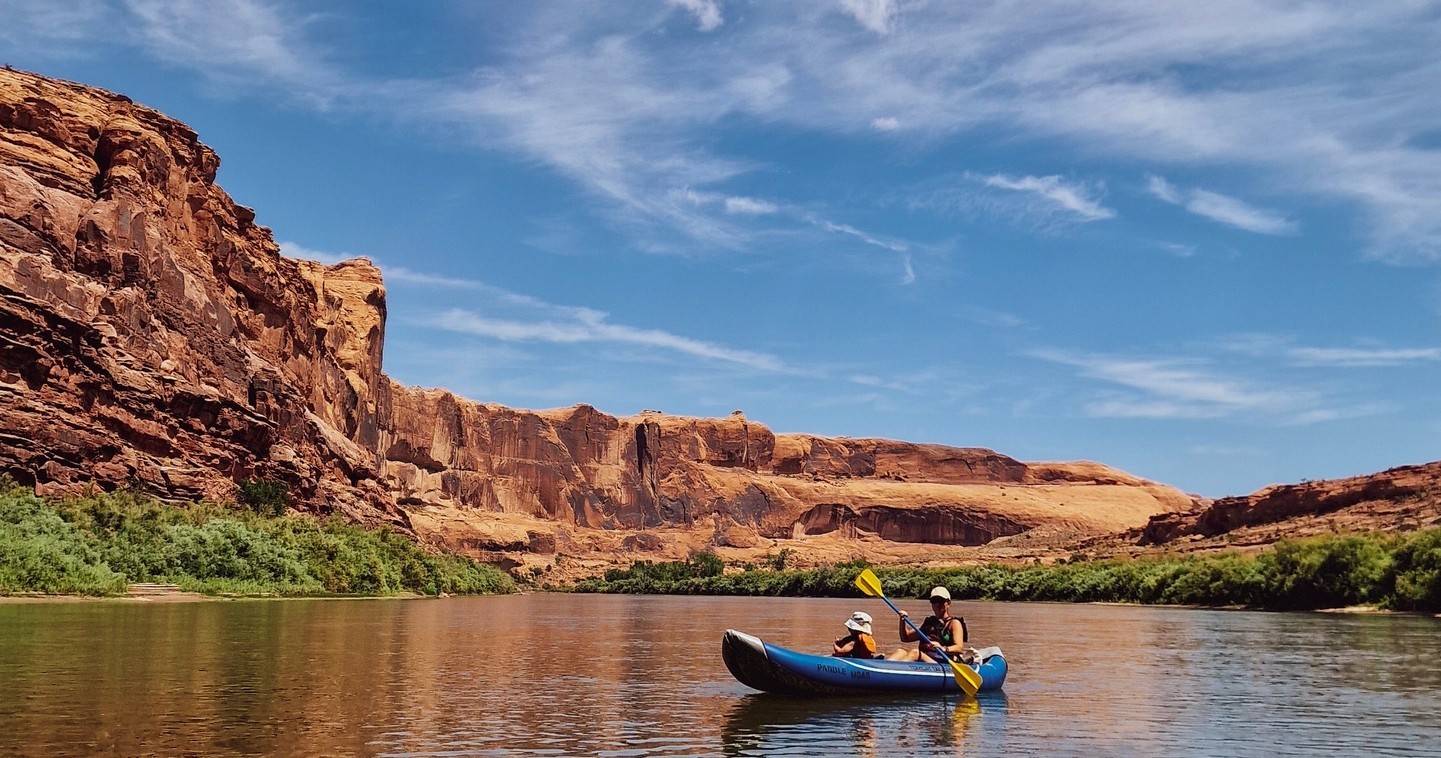
The wind moves first. It noses over the red rim and presses its palm against your chest, reminding you how big the void is and how small you are. Below, the Colorado River curls through a corridor of sandstone, green cottonwoods bright against rust-colored walls. Somewhere a raven laughs—because ravens always laugh at the humans—and you clip your leash, settle your harness, and slide onto the line. Here, above Moab’s cinematic cliffs, you begin the slow conversation between balance and fear.
A full day on a highline is less about heroics and more about process: stand, breathe, fall, climb back up, repeat. The “Full Day Highline Course - Beginner or Intermediate” places you in that process with the safety net of professional rigging and one-on-one coaching. The guide meets you in town, then caravans out toward the junction of US-191 and UT-128, the gateway to the Colorado Riverway. After a safety briefing and a walk to the anchors, a beginner line goes up—short and approachable, yet undeniably thrilling. You learn how to tie your leash, how to mount the line, how to sit and scoot and roll, and how to climb the leash after a fall without panicking. Your first small win comes not from walking, but from breathing: five steady inhales, five steady exhales, the line beginning to quiet under you.
Moab is a natural amphitheater for this kind of work. The sandstone mesas hold heat and history. On the breeze, you can almost hear echoes of uranium boomtown days and modern desert legends. Highliners have long gathered in the canyons around town, building community and skill atop improbable spans. This course folds you into that lineage without the guesswork. The instructor rigs an appropriate length—maybe 45 feet for a first go, stretching to 200 feet if your skills and comfort grow—offering real-time feedback on posture, foot placement, and what to do when the line starts to hum. They teach mental tactics too: name the fear, watch it pass, then move anyway. The desert approves of small, steady courage.
By midday, the rhythm takes hold. The sun lifts, the rock radiates, and you shade up under a brimmed hat. Hydration becomes part of your strategy—three liters per person is a baseline here—and so do snacks that won’t melt in a pack. The highline, meanwhile, becomes a kind of mirror. When you rush, it bucks. When you soften your gaze and trust your core, it quiets. You start to understand why highlining isn’t straight adrenaline; it’s a study in control, an honest relationship with exposure.
There’s a practical side to the magic. This is an eight-hour day, best attempted with sturdy approach shoes for the scramble to the anchors, sun protection dialed in, and an openness to learning. No slacklining experience? That’s fine. The curriculum is built to meet you where you are. If you’ve dabbled at the park or backyard line, the guide can push you further: standing and walking, dealing with wobbles, recovering after a fall, and crafting a warm-up routine. Either path comes wrapped in best practices—redundant rigging, careful checks, and clear protocols—so you can focus on the work in front of you.
Highlining’s roots here are linked to a culture of mentorship and shared wisdom. When you book, you’re not just reserving equipment; you’re tapping into a network of seasoned practitioners. If you want to connect with vetted, on-the-ground advice, talk to local experts in Moab—start with these local experts to clarify conditions, meeting points, and what to expect seasonally. It’s the kind of intel that turns a good day into a great one.
Speaking of seasons, Moab’s calendar matters. Spring and fall are prime—mild temperatures, crisp mornings, and calmer winds. Summer turns the dial hot, turning hydration into strategy and shade into currency. Winter can be starkly beautiful, the red rock lit by low-angle sun; it can also deliver biting winds that test your resolve and your layering. Your guide will read the forecast and pick a venue suited to the day, often along the river corridor where cliffs rise like pages of an open book.
Beyond the line, the local landscape doesn’t stop giving. The Lions Park pedestrian bridge is a sunset staple, perfect for decompressing after hours of tension and triumph. Grandstaff Canyon, just up UT-128, threads into a ribbon of green and sandstone capped by the famous Morning Glory Arch—a stretch for your legs and your perspective. The Moab area rewards those who look closely: cryptobiotic soil budding like tiny coral, ravens riding thermals with a studied nonchalance, bighorn sheep showing up where cliff and shadow conspire.
In the late afternoon, the course circles back to intention. The guide walks you through a warm-down routine and a mental debrief: What worked? What didn’t? Where did fear show up? Where did you surprise yourself? With a few more reps—sits, stands, maybe a step or three—you collect small wins that stack into future confidence. You unclip and shoulder your pack. The wind still moves first, but now it feels like a nudge rather than a shove.
If you’re thinking about logistics, keep it simple. Meet in town, caravan to the site, and be prepared for a short hike over uneven terrain. Bring more water than you think you need. Sunscreen and a sun hoodie are worth their weight here. And if you’re curious whether highlining is for you, ask the pros. A quick consult with Moab local experts will help you gauge fit, pick the right season, and dial the details.
And the payoff? A steady breath while perched above a desert river, the line alive beneath your feet, the canyon asking you to trust it for one more second. You answer by standing taller. Then you step.