The van eases off Portland’s cobblestones and the harbor opens like a moving postcard—masts ticking in the breeze, gulls heckling the tide, salt lifting off the bay with a clean edge. You settle into a window seat and the coast starts telling stories. Granite shoulders lean into the Atlantic, breakwaters finger out to meet the swell, and the lighthouses—those white sentinels with black crowns—wait where land and water negotiate. The ocean has been pushing at this shore for thousands of years, and the lighthouses answer with a steady, unblinking stare. If your time in Maine is short, this two-hour lighthouse tour is the simplest way to see the region’s maritime soul without giving up your whole day. Check-in happens at Portland Beer Hub on Fore Street, a relaxed launchpad with local cans, cozy couches, and staff who know the coastline like neighbors. From there, it’s out to three historic beacons—each with its own orientation to sea and sky, each framed by classic New England textures: weathered shingles, lobster buoys, slick rock, sea roses. The drive is short, the walking minimal, but the sense of place lands quickly. On days when the fog pulls a gray curtain across Casco Bay, the scene hums with atmosphere; clear days deliver that brilliant, north-coast color palette—pine green, ocean steel, a lighthouse shining in clean, salt-washed light. Maine’s lighthouse story is older than the United States itself. After statehood was still a dream, early mariners threaded these rock-studded approaches by dead reckoning and luck; by 1791, the nation’s first president commissioned Maine’s oldest beacon to make the approach safer. As shipping grew—timber, fish, later coal and ice—the network of lights expanded across headlands and ledges. Each tower carries a specific character, defined by its lens, height, and siting. Some stand atop grassy bluffs, some sit out on granite jetties, stubborn as a cork in the tide. From the van you’ll watch the coastline change shape as glacially carved bays trade places with armored headlands and tidal rivers. The land feels deliberate here. Even the wind seems to choose when to cut and when to coast. If you’re lucky, a school of harbor porpoises will stitch the surface, or a cormorant will lift off a buoy, water falling off its wings like beads of glass. This is an easy outing—short walks from parking areas to viewpoints, time to wander the paths and read the interpretive signs, and plenty of chances for photos. You won’t go inside the lighthouses, but you will feel what they’ve watched for generations: storm lines sweeping in from the southeast, lobster boats shouldering through chop, ferries popping between island silhouettes. It’s a lived-in, working seascape, and the lighthouses are still on the clock. Geology gets a say in the show. Maine’s coast is a jigsaw of metamorphic bedrock and intrusive granite, planed by ice and fractured by freeze and thaw. You’ll see the results in the ledges—those flat shelves that invite you to edge closer. Respect the rope lines and signage; the ocean here has a sneaky reach, and even on bluebird days a rogue wave can slap the rock slick. Local history keeps pace outside the windows: Civil War–era defenses guarding the harbor mouth, shipbuilding yards that once launched wooden schooners by the dozen, and neighborhoods that grew from fishing villages into corners of the city. Your guide will stitch it together with stories—how keepers tended the lights through storms, why fog signals evolved from bells to horns, which light’s lens pattern reads as a unique signature in the dark. The rhythm of the tour feels like a coastal walk with a tailwind: stop, explore, roll on. There’s time for a locally made Maine snack and a water, time to ask questions, time to let the soundtrack of wind and tide do its work. And there’s a rare practicality to it: in two hours you get grand views, straightforward logistics, and a crash course in a signature Maine experience. Coach shoes and a camera are enough; enthusiasm takes care of the rest. Photographers will like the options. Framing a lighthouse against shifting sky is a masterclass in reading light. Use railings, paths, and breakwaters as leading lines. A circular polarizer can tame glare off wet rock and deepen the Atlantic blues. On hazy days, embrace the mood and go high-key; on clear days, shoot low with the foreground rock leading you in. Early or late light is best, but even midday delivers if you move, experiment, and wait for a gull or lobster boat to animate the frame. Families, solo travelers, and curious first-timers all fit in here. If you’re new to Portland, this tour doubles as a coastal orientation—a way to map the city to the water it faces. Guides are generous with recommendations, from beach strolls to where to get an after-tour lobster roll. And because tours run rain or shine when conditions are safe, you get a true sense of place in all its forms: sunlit, wind-bright, or fog-softened. That’s the quiet magic of a guided lighthouse tour—it’s not just a look at pretty towers; it’s a compact, living lesson in how a city and a coastline learned to talk to each other. Ready to let the beacons lead? Book the Portland lighthouse tour, show up fifteen minutes early at Portland Beer Hub, and let the road unspool toward the edge of the map. The ocean will do its part. The lights will do theirs. And you’ll come away with a smarter sense of Maine—brisk, briny, grounded, and pointing you seaward.

Guided by Beacons: Portland’s Two-Hour Lighthouse Tour Along the Coast
Short on time, big on scenery—three historic lighthouses, coastal views, and Maine lore in just two hours.
Continue ReadingPlan your visit
Trail Wisdom
Aim for Early or Late Light
Golden hour delivers softer light and fewer crowds for cleaner compositions and calmer viewpoints.
Wear Grippy Footwear
Wet rock and seaweed can be slick—closed-toe shoes with tread make short walks safer and more comfortable.
Respect Rope Lines and Signs
Stay off unstable ledges and sensitive dunes; waves and tides move fast here, even on calm days.
Pack a Light Shell
Coastal wind changes quickly; a windproof, water-resistant layer keeps the chill off near the water.
Local Knowledge
Hidden Gems
- Fort Preble’s granite casemates for a dramatic harbor perspective
- Willard Beach’s dune path overlook for a quiet, sunrise view of the bay
Wildlife
Harbor porpoise, Common eider
Conservation Note
Stay on marked paths to protect fragile coastal grasses and nesting shorebirds; pack out all trash, and respect posted closures near storm-damaged areas.
Seasonal Guide
spring
Expect cool temps, budding greens, and occasional fog that adds atmosphere—bring layers and a light rain shell.
summer
Warm days and long light windows make summer ideal; arrive early for easier parking and softer light.
fall
Autumn’s clean light and thinner crowds are prime for photography and relaxed pacing—pack a warm layer.
winter
Winter offers dramatic surf and solitude; dress warm, tread carefully, and expect limited amenities at some stops.
Photographer's Notes
Arrive early or late for soft side-light on the towers; use breakwaters and fences as leading lines. A circular polarizer cuts glare off wet rock and deepens skies. On foggy days, meter for the whites and shoot for mood; on windy days, brace against a railing or use a small tripod to steady long exposures of moving water.
What to Bring
Windproof/Water-Resistant Shell
EssentialCoastal breezes and surprise sprinkles are common—stay comfortable at the viewpoints.
Closed-Toe Shoes with Tread
EssentialWet rock, sand, and uneven paths call for stable footwear.
Camera with Polarizer
A circular polarizer cuts glare off water and boosts sky contrast for sharper images.
Compact Daypack
Carry water, an extra layer, and snacks without juggling pockets.
Common Questions
How much walking is involved?
Minimal. Expect short walks on paved paths or packed trails from parking areas to the viewpoints.
Can we go inside the lighthouses?
No. Access is typically exterior only, with plenty of time for photos and learning the history from your guide.
Is the tour suitable for kids and older adults?
Yes. It’s designed for all ages with frequent stops, short walks, and time to rest between sites.
What happens in bad weather?
Tours run rain or shine when conditions are safe. Fog and light rain can make for atmospheric viewing—bring a shell.
Are restrooms available?
Yes, at the check-in location and typically at or near major viewpoints, though availability can vary by season.
Can I bring a tripod or drone?
Small tripods are fine if you’re considerate of others. Drones are not recommended and may be prohibited—follow posted rules.
What to Pack
Did You Know
Quick Travel Tips
Local Flavor
Logistics Snapshot
Sustainability Note
Topics
More from the Journal
Keep exploring
Portland, Maine
Windows Down to the Atlantic: Portland’s City and Lighthouse Tour
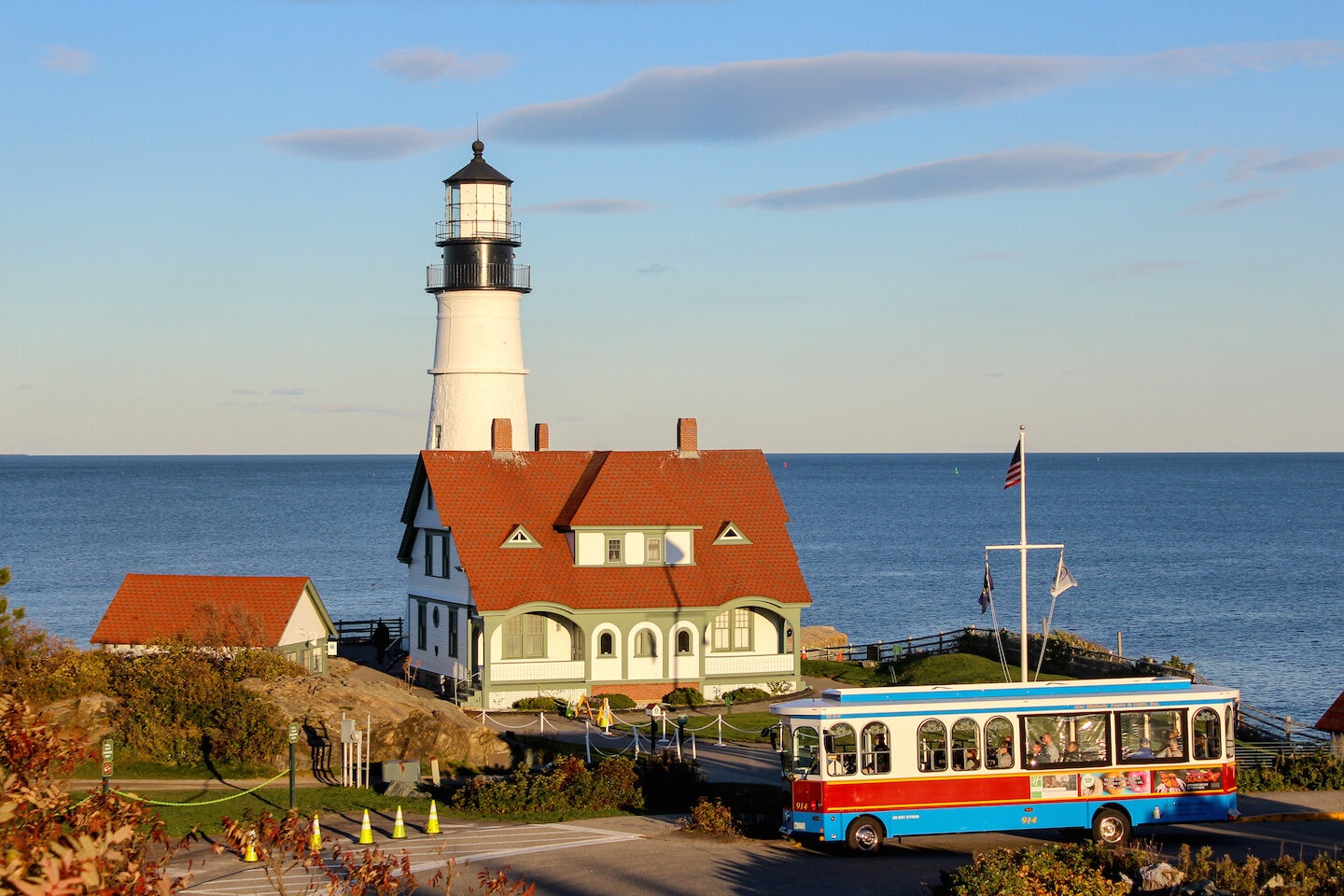
Cobblestones, sea cliffs, and Maine’s most storied light—seen with the windows down.
Read story →
Portland, Maine
Hauling Traps in Casco Bay: Portland’s Hands-On Lobstering Excursion
Read story →
Portland, Maine