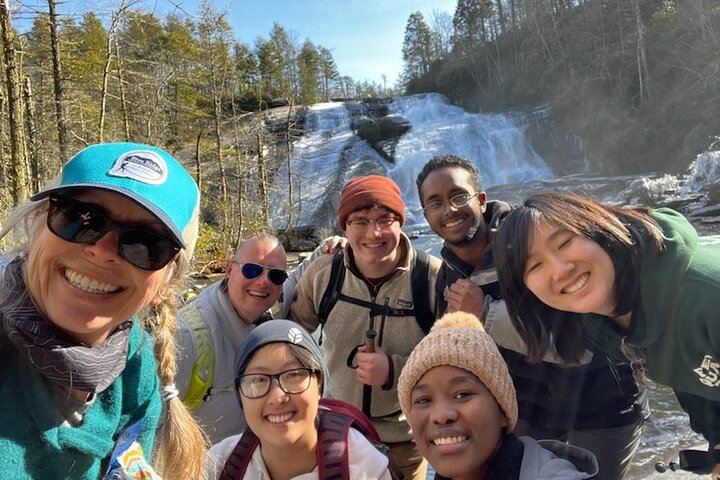
At 8:30 a.m. in downtown Asheville the street still smells faintly of coffee and woodsmoke. Your guide arrives on time with a smile, a clipboard, and a few options folded into memory: a waterfall that thunders behind a fern curtain, a ridge that opens onto a cathedral of oak and birch, or a steeper climb that tops out near 6,000 feet for a sweeping panorama. The plan is simple—tell the guide what you want, and they’ll build a half-day route for the group. What starts on a leafy city corner becomes an intimate, private passage into the Blue Ridge: forested singletrack, mossy stream crossings, wildflower-lined steps, and pockets of granite that frame the view.
This is not a fixed trail; it’s a flexible experience tailored to your pace and appetite for scramble. That flexibility is the product’s promise—and its charm. In one morning you can be standing beneath a cascade, listening to water dare the rocks, and in the next hour be moving through a sunlit clearing where the ridge seems to breathe. Guides here read the forest like a book: which switchback collects the best spring ephemerals, what morning favors a fog-blanketed valley, and where a side trail will reward a short scramble with fewer people and a better viewpoint.
The surrounding geology explains the hike’s quiet drama. The Blue Ridge is an old mountain chain—weathered, folded, and full of mica-studded rock that glints in low-angle light. Trails climb on soils leached thin by time, then tuck into coves where deeper earth holds rhododendron and hemlock. That variation creates microclimates: shady hollows where salamanders thrive and sunny outcrops where asters paint the late-season slopes. There are echoes of the region’s deeper history, too. Long before the arrival of tourists and trail maps, the Cherokee called these ridgelines home. Their paths and place names threaded the landscape; today’s trail network follows some of those same natural corridors.
Asheville’s culture is the perfect complement to a half-day on the trail. The city is both gateway and celebrant—breweries and bakeries line the same streets that host outdoor outfitters. Guides who meet you in town will not just point you uphill; they’ll answer where to get a post-hike sandwich, which brewery keeps local hops on tap, and the best coffee for the drive home. That civic ecosystem—hospitality, gear, and knowledge—makes booking a private hike an easy, low-friction way to experience the mountains.
Practically speaking, this is a 4–5 hour commitment that includes a short transport window; you’re hiking for roughly two to three hours depending on route and pace. Snacks are provided, and guides can loan trekking poles if you want them. The trip runs rain or shine, but severe weather will prompt cancellations for safety. Because the hike is private, it’s ideal for mixed-ability groups: families with older kids, couples who want a more intimate walk, or hikers who prefer one-on-one coaching. It’s also a good choice for anyone who wants to sample the region before committing to a longer, overnight trek.
When you’re planning, be realistic about goals. If you crave waterfalls and wildflowers, spring and early summer deliver the best display. Fall is unmarred by bugs and offers crisp air and color; late-season hikes can reveal a different kind of beauty—sparse trees and long-distance views. For a summit-oriented outing toward 6,000 feet, choose a crisp morning and be prepared for wind and quickly shifting temperatures.
Safety and comfort are straightforward. Sturdy footwear matters more than fashion—grippy midsoles and ankle support make rocky descents less punishing. Bring a rain shell, even on sunny mornings; mountain weather changes faster than schedules. Hydration is non-negotiable: plan for at least a liter per person for a half day, more if you’re tackling a steeper route.
Reserve in advance during peak seasons—guides book up, and private trips often fill with guests who want a curated, low-effort way into the landscape. The price point is reasonable for a private guiding service and includes an experienced local who knows where to avoid crowds and when to linger for the best light. For an easy-to-swing morning or an adventurous afternoon, this guided half-day is an efficient, meaningful way to connect with the Blue Ridge.
If you leave with just one impression, it should be this: the guided half-day is less about ticking a trail name off a list and more about having a local interpreter of place. The guide shortens the learning curve, points out subtle botanical quirks and geological features, and helps you set a pace that keeps the hike feeling like a discovery rather than a test of endurance. Back in town you’ll trade your boots for a cold local brew and realize that the morning’s cliffs and coves have already made the city feel like a softer, greener place.