Hatta Rock Pools: Mountain Pools, Wadi Trails, and a Day in the Hajar

Hatta Rock Pools: Mountain Pools, Wadi Trails, and a Day in the Hajar

A rocky oasis in the Hajar—swims, short hikes, and a safe, scenic escape from the city

Continue Reading

You slip off the road where the asphalt narrows and the Hajar Mountains press in, raw and folded like a map someone forgot to finish. Sunlight hits the limestone, throws back a white so bright it makes the pools look impossibly blue. From the clearing, the first rock basin appears: shallow at the edge, then suddenly deep, water cool and honest after a desert drive. Around you, the wadi speaks in the language of stones—smoothed ledges that dare you to hop across, terraces carved by seasonal floods, and the steady, patient drip of groundwater where life clings to cracks.

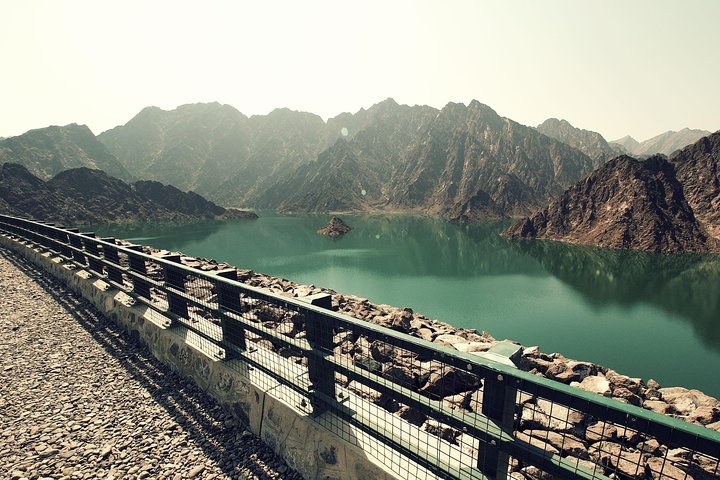
Hatta Rock Pools are a set of freshwater basins carved into the Hajar’s gray rock, close to the village of Hatta on the borderlands between the United Arab Emirates and Oman. The place reads like a contradiction: a mountain oasis tucked into an arid region, a patchwork of turquoise formed by rainfall and seepage, surrounded by ridges that funnel winter storms into sudden, sculpting torrents. People come for the water—swimming between basins and jumping from low cliffs—but they stay for the setting: terraced wadis, the sight of traditional farms clinging to slopes, and the clean geometry of the mountains.

Geologically, Hatta sits where the Arabian Plate buckles and rises, creating the Hajar range. Those forces pushed up older sedimentary layers, then rain and flash floods took over the long work of shaping the terrain into pools and gullies. Historically, Hatta has always been a crossroads. Long before modern borders were drawn, tribes moved through these valleys; later, the town developed links with Oman, and today Hatta is a mountain outpost that feels distinct from the coastal metropolis of Dubai. The Hatta Heritage Village nearby gives a quick, grounded look at stone houses and a pastoral past that helps explain why people have lived off these slopes for centuries.

The culture here is straightforward: local hospitality and a practical relationship with the land. You’ll see small farms, date palms clustered where water is reliable, and the varnished ruins of terraces—an old method of wringing value from steep ground. More recently, Hatta has built a modest adventure economy: mountain-biking trails cut into dusty slopes, a heritage village preserved for visitors, and community-led initiatives to protect the watershed.

Practically, Hatta is best approached as an active day trip from Dubai or Ras Al Khaimah. The road climbs as you leave the suburbs and the traffic, and within an hour to two you’re in a different biomechanics: lighter air, hotter rocks, an arroyo soundscape. The pools are a short walk from informal parking areas; there’s no big visitor center, and amenities range from basic to non-existent—bring what you need. The pathways can be uneven: expect short hikes on polished limestone and loose gravel. Depending on the season, water levels shift dramatically. After autumn and winter rains the pools are full and brilliant; in late summer they shrink to a string of smaller basins.

How to spend a day: start early to beat the heat and the weekend crowds. Walk the main wadi systems, swim between pools, and respect the rock—don’t use soaps or oils that stain the stone or affect the ecosystem. If you like a bit more structure, combine a visit to the pools with a short hike up one of the adjacent ridgelines for panoramic views. Mountain-biking is excellent in the surrounding hills—the Dubai-hosted Hatta Wadi Hub has mapped trails for varying skill levels. For culture, visit Hatta Heritage Village and buy local honey or date products from village vendors.

Safety is straightforward but not trivial. Flash floods can appear after rain upriver; if storms are forecast, stay out of the wadi channels. Rocks are slick where water flows—wear shoes with sticky soles for scrambling and sturdy sandals for beach-to-pool sections. Hydration is essential: the sun is intense even when the water feels inviting. Leave no trace: pack out everything you bring and use existing paths.

If you come in cooler months, the pools are almost cinematic: rich blues against pale rock, with the mountains making a quiet boundary. Summer brings bright light and smaller crowds but also the need for rigorous sun protection and shorter swims. For photographers, first light and late afternoon provide the best shadows to reveal texture; midday catches that crystal blue but flattens the stone.

Hatta Rock Pools do one thing very well: remind you that water, even in small, intermittent flows, changes a landscape and how you experience it. For travelers who want a low-tech, high-savor day away from the city—where a hike, a swim, and some quiet mountain time are the reward—Hatta is a rare find: accessible, scenic, and honest.

Duration2–5 hours
Plan your visit

Trail Wisdom

Start early

Beat the heat and weekend crowds—arrive before 9 AM to find parking and cooler water temperatures.

Footwear matters

Wear shoes with good grip for scrambling on worn limestone and a pair of sandals for pool access.

Watch the weather

Avoid wadis during or after heavy rain upstream—flash floods can be sudden and dangerous.

Leave no trace

Pack out trash and avoid soaps or sunscreens that can pollute the pools and harm aquatic life.

Local Knowledge

Hidden Gems

  • A short unnamed ledge hike above the main pools for quiet views
  • Small terraced farms near Hatta Heritage Village showing traditional irrigation

Wildlife

Nubian ibex (often seen on ridgelines), Desert larks and migratory waterfowl after rains

Conservation Note

Visitors are asked to avoid soaps and leave no trace; local initiatives at Hatta Wadi Hub focus on sustainable trail management and water conservation.

Hatta has long been a mountain settlement with historic ties to Oman; the Heritage Village preserves stone houses and traditional craft displays.

Seasonal Guide

spring

Best for:wildflower spotting, full pools, cool hikes
Challenges:occasional runoff, moderate crowds

Spring brings moderate temperatures and full basins—ideal for swimming and short ridge hikes.

summer

Best for:early-morning swims, fewer tourists, clear skies
Challenges:very high temperatures, reduced water levels

Summer is hot and water can be low—visit early, carry shade, and limit midday exertion.

fall

Best for:post-rain pools, photography, comfortable hiking
Challenges:unpredictable storms, crowds on weekends

Fall often delivers the best combination of full pools and mild weather—perfect for day trips.

winter

Best for:scenic hikes, fullest pools after rains, wildlife spotting
Challenges:cooler water, chilly mornings

Winters are cool and the pools can be at their fullest—bring a warm layer for after swims.

Photographer's Notes

Shoot early or late for low-angle light that brings out texture in the limestone; use a polarizer to deepen the water’s blue and reduce glare, and include a person in-frame for scale on the rock basins.

What to Bring

Trail shoes with sticky sole

Essential

Provide traction on polished limestone and loose gravel during approaches and scrambles.

Lightweight daypack with hydration bladder

Essential

Keeps water and essentials accessible; hydration is critical in the exposed terrain.

Swimwear and quick-dry towel

Essential

For jumping between basins and drying off quickly before hikes back to the car.

Sun protection (hat, SPF 50 sunscreen, sunglasses)

Essential

Direct sun and reflective stone raise exposure—protect skin and eyes on all outings.

Common Questions

Is it safe to swim in Hatta Rock Pools?

Yes—many people swim here, but check water depth before jumping, avoid pools after heavy rain due to debris, and be cautious on slick rocks.

How far is Hatta from Dubai?

Expect a roughly 90–120 minute drive from central Dubai, depending on traffic and your starting point.

Are there entrance fees or facilities?

There is no formal entrance fee; amenities are limited—bring water, snacks, and be prepared for basic parking.

Can I visit year-round?

Yes, but winter and post-rain periods offer cooler air and fuller pools; summer is very hot and water levels can be lower.

Are there guided tours or activities nearby?

Yes—Hatta has guided mountain-biking, heritage tours, and organized hikes available through local operators and Hatta Wadi Hub.

Is Hatta Rock Pools family-friendly?

Generally yes for families with older children who can manage uneven terrain; supervise kids around water and slippery rocks.

What to Pack

Trail shoes (traction on rock), 2L water (hydration), sun protection (hat + SPF), quick-dry towel (swim and dry off)

Did You Know

Hatta is a mountainous enclave associated with the emirate of Dubai, located near the Oman border; its wadis have supported communities and terraced agriculture for centuries.

Quick Travel Tips

Drive early to avoid city traffic; carry cash for small purchases in Hatta village; fill up on fuel before leaving urban areas; check local weather for upstream storms.

Local Flavor

Stop at Hatta Heritage Village for traditional Emirati coffee and local date sweets; buy Hatta honey from village vendors—the region is known for small-scale beekeeping.

Logistics Snapshot

Drive 90–120 minutes from Dubai; informal parking near the pools; limited facilities—bring water and sun protection; best visited in fall to spring.

Sustainability Note

Respect the fragile wadi ecosystem: avoid introducing pollutants, stick to established paths, and support local conservation projects like Hatta Wadi Hub.

Topics