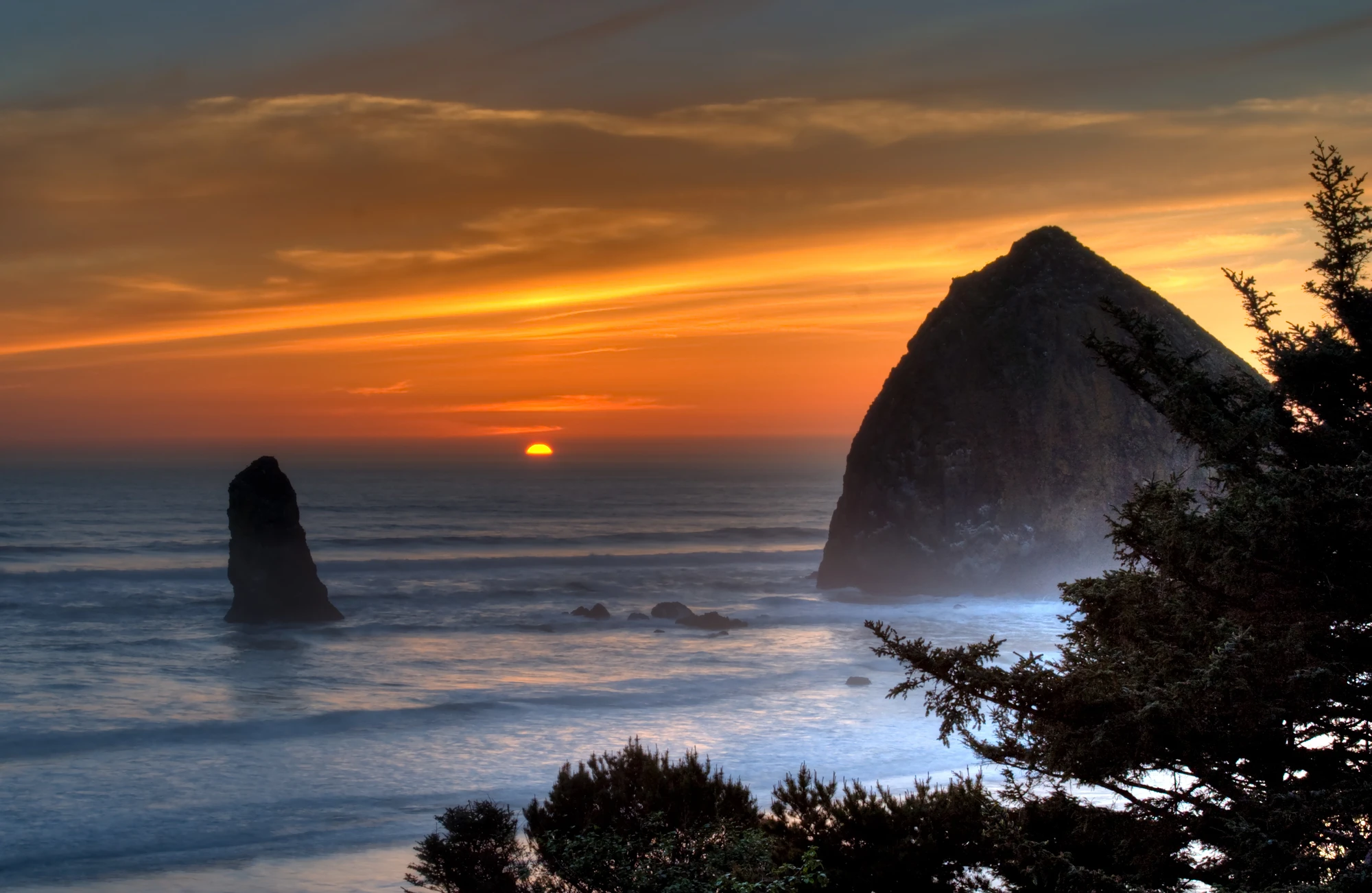
High Tide and Sea Stacks: Sunset at Cannon Beach

High Tide and Sea Stacks: Sunset at Cannon Beach

A photographer’s paradise and a tidepool classroom — where basalt towers meet the Pacific.

Continue Reading

The first time light finds Haystack Rock, it takes its time — a slow, deliberate burn across the wet sand that turns the basalt monolith into a lantern you can walk toward. At Golden Hour the ocean becomes a long, shifting mirror, the tide inching like a thoughtful animal toward the base of the sea stacks. Standing on Cannon Beach with a cool wind carving patterns in your hair, the place feels engineered to hold your attention: a perfect foreground for the Pacific’s unhurried drama.

Cannon Beach is small in scale but wide in personality. The town sits on Oregon’s north coast, a low-slung ribbon of cottages, galleries, and seafood shacks that feed off the view. The real show, though, is on the sand. Haystack Rock — a 235-foot volcanic sea stack — anchors the shoreline and a sprawl of tidepools that teem with life at low tide. To the north, Ecola State Park drops steep forested bluffs and offers viewpoints where you can watch waves cleave around offshore rocks and sometimes glimpse migrating gray whales slicing the horizon.

Geology here reads like a slow-motion action scene. Haystack Rock and the smaller Needles are remnants of lava flows that resisted the relentless chiseling of wind and water. Over millennia, the softer rock washed away, leaving these stacks as solitary guardians. The tide charts tell another story — one of daily invasions and retreats that expose an undersea garden between the waves. The Marine Garden at Haystack Rock is a protected area for anemones, sea stars, and bull kelp, and the rock’s ledges host tufted puffins and common murres during nesting season.

Cannon Beach has always been a meeting place between land and sea. Indigenous people of the Clatsop and Tillamook bands lived along this coastline for generations, harvesting clams and fish and navigating the estuaries. In the 20th century the town evolved into an artists’ enclave and seaside destination; Ecola State Park and the beach earned international notice when parts of The Goonies were filmed on nearby shores, forever linking the landscape with a kind of cinematic nostalgia.

What keeps travelers coming is the balance of easy access and elemental wildness. You can stroll the main beach in sneakers for an hour and be back in time for coffee, or you can stage a full day: tidepooling at low tide, hiking the Ecola Head Trail for sweeping panoramas, and finishing on the west side of Haystack Rock for a sunset that deepens into cobalt. For photographers, the composition options are endless: foreground stones, reflective wet sand, sea stacks punctuating a pastel sky. For families, the tidepools are like a living museum where crabs, limpets, and anemones form tactile exhibits for curious hands.

Practical planning makes the difference between a satisfying trip and a soggy one. Start with the tide table: many of the best tidepools and channels reveal themselves only a couple of hours around low tide, and the water can rush back faster than you expect. Footwear matters — waterproof shoes or neoprene booties keep you comfortable on cold surf and slick rocks. Weather shifts quickly on the coast; layered, windproof clothing is essential. If you plan to walk north to Indian Beach or the Ecola Head viewpoint, expect short, steep sections and some stairs. The Ecola Head Trail from the parking area to the viewpoint and down to Crescent Beach can be a 2–3 hour out-and-back commitment depending on stops.

Respectful behavior is part of the experience. Haystack Rock is a Birds and Marine Garden; signs and roped-off areas protect nesting birds and intertidal life. Keep a distance from bird colonies, never remove creatures or shells, and follow posted closures. Regarding safety, watch the surf: sneaker waves can appear on calm-looking days and pull you into cold, strong water. Never turn your back on the ocean.

For those who want to extend the adventure, rent a kayak or join a guided wildlife cruise from nearby ports to see the coastline from the water: seals, sea lions, and occasional porpoises are common, and fall months can bring gray whale migrations close offshore. Back on land, the town’s galleries and seafood restaurants offer delightful counterpoints to outdoor fatigue — chowder, local Dungeness crab (seasonally), and excellent artisan coffee.

Timing your visit helps. Late summer and early fall bring the driest weather and calmer seas, while spring brings abundant birdlife and dramatic storms for those who love moody skies. Winter can be raw and spectacular but demands proper gear. Whichever season you choose, prioritize daylight around the tides and plan your route so you’re not scrambling across slick slabs as the tide returns.

Cannon Beach is a place that rewards curiosity and good planning. Walk slow enough to spot a hermit crab, pack for the wind, and bring a camera with a wide lens — but also take a few minutes to look up and simply watch the surf. The place will give you a sunset that’s both cinematic and honest, framed by rock and tide and the steady, relentless patience of the Pacific.

Duration2–4 hours (self-guided beach + short trails)
Plan your visit

Trail Wisdom

Time your tide visit

Plan tidepooling for 1–2 hours around low tide and always check the local tide chart before heading out.

Dress for wind and spray

Layer a breathable windproof jacket over insulating mid-layers — conditions can shift from sun to drizzle quickly.

Protect the wildlife

Stay behind roped areas at Haystack Rock and avoid disturbing nesting birds or tidepool organisms.

Watch for sneaker waves

Never turn your back on the ocean; larger waves can appear unexpectedly and sweep across the sand.

Local Knowledge

Hidden Gems

  • The Ecola Head Trail viewpoint for broad coastal panoramas
  • Tolovana Park and quieter west-facing coves for less crowded sunsets

Wildlife

gray whales (on seasonal migration), harbor seals and seabird colonies

Conservation Note

Haystack Rock Marine Garden is protected and managed to preserve tidepool habitats and nesting seabirds; visitors are asked to observe closures and Leave No Trace practices.

Cannon Beach developed as an artists’ colony in the early 20th century and gained pop-cultural fame when nearby locations were used in the film The Goonies.

Seasonal Guide

spring

Best for:birdwatching, wildflower viewing, tidepool life
Challenges:cooler temperatures, variable rain and wind

Spring brings migrating birds and an active intertidal zone; pack layers and expect occasional storms and brisk winds.

summer

Best for:calmer seas, long daylight, family beach days
Challenges:larger crowds, limited parking

Summer offers the most stable weather and pleasant sea conditions, but arrive early to beat crowds and secure parking.

fall

Best for:photography, whale watching, fewer crowds
Challenges:shorter days, cooler evenings

Early fall is arguably ideal — warm lingering weather, clear light for photography, and thinning visitor numbers.

winter

Best for:storm watching, dramatic skies, solitude
Challenges:cold, wet conditions, strong winds and high surf

Winter delivers dramatic ocean moods; come prepared with heavy layers and respect surf advisories.

Photographer's Notes

Shoot during golden hour for warm side-light on Haystack Rock; use a low angle and include wet sand reflections to add foreground interest; a tripod and neutral-density filter help with long exposures to smooth surf; when photographing birds, switch to a telephoto and maintain distance so nesting birds aren’t disturbed.

What to Bring

Waterproof hiking shoes or neoprene booties

Essential

Keeps feet warm and provides traction on wet sand and slick tidepool rocks.

Windproof rain jacket

Essential

Shields you from coastal spray and sudden squalls while staying breathable.

○

Wide-angle camera lens and polarizer

A wide lens captures sea stacks and sweeping beach vistas; a polarizer reduces glare and deepens skies.

Tide chart app or printed tide table

Essential

Knowing low and high tides is essential for safe and productive tidepooling and beach planning.

Common Questions

When is the best time to visit Haystack Rock?

Low tide during early morning or late afternoon offers the best tidepool access and softer side-light for photos; check local tide charts for exact times.

Can you climb Haystack Rock?

No — Haystack Rock is a protected Marine Garden and bird sanctuary; climbing is prohibited to protect nesting birds and fragile tidepool life.

Are dogs allowed on Cannon Beach?

Dogs are allowed on much of Cannon Beach but must be leashed or under voice control per local ordinances; avoid bird nesting areas and check seasonal restrictions.

Is parking difficult at Cannon Beach?

Parking at the main beach and Haystack Rock can fill quickly on summer weekends; arrive early or use nearby lots and be prepared to walk a short distance.

Are there guided tours for wildlife viewing?

Yes — local outfitters and state park ranger programs offer guided tidepool walks, birding tours, and kayak trips for marine wildlife viewing.

What safety hazards should I be aware of?

Watch for sneaker waves, slippery rocks, and rising tides; stay off wet, algae-covered surfaces and never turn your back on the ocean.

What to Pack

Waterproof shoes for traction on wet rocks; windproof jacket for coastal spray and gusts; tide chart or app to plan low-tide exploration; camera with wide-angle lens to capture sea stacks and reflective sand.

Did You Know

Haystack Rock is approximately 235 feet (72 meters) tall and is part of a designated Marine Garden that protects intertidal organisms and nesting seabirds.

Quick Travel Tips

Arrive early to secure parking; check tide charts before exploring tidepools; bring layered clothing for wind and spray; respect roped-off bird nesting areas.

Local Flavor

Cannon Beach blends seaside dining with a thriving arts scene — sample local Dungeness crab or clam chowder, stroll independent galleries, and pick up handcrafted souvenirs from coastal artisans.

Logistics Snapshot

Nearest town: Cannon Beach, OR. Parking: limited at peak times; arrive early. Tides: consult local charts. Facilities: restrooms and shops near the main beach; limited services in shoulder seasons.

Sustainability Note

Support protected habitats by staying on marked trails, observing bird closures at Haystack Rock, packing out all trash, and avoiding collecting shells or marine life.

Topics