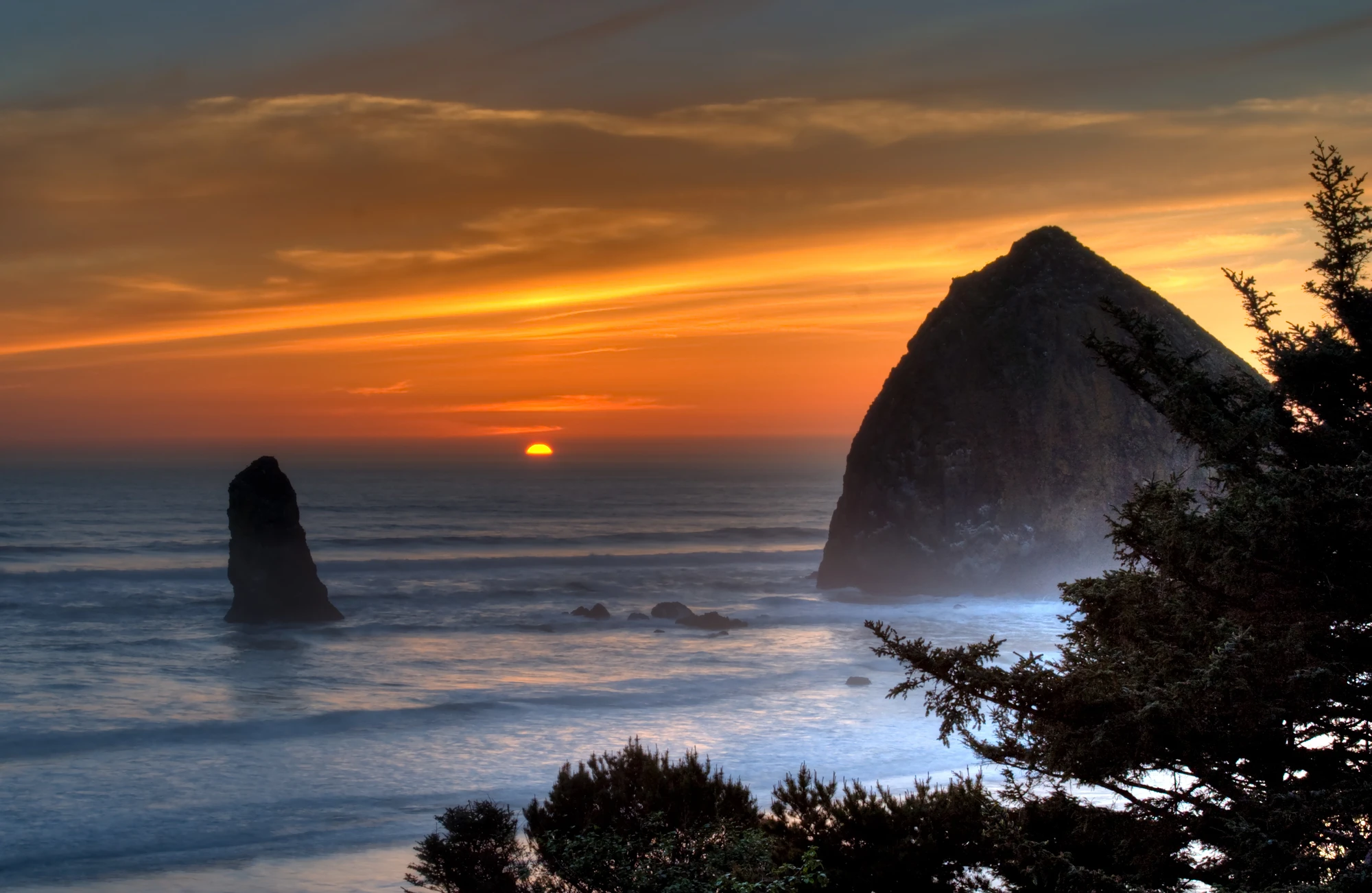
Tide, Timber, and Fog: A Day Along the Oregon Coast

Tide, Timber, and Fog: A Day Along the Oregon Coast

Walk the edge where spruce meets surf — guided hikes, tidepools, and scenic drives on US-101

Continue Reading

On a damp morning the ocean announces itself before you see it — a low, rolling hush that edges closer as you descend toward the beach. Salt threads the air and the highway gives way to a narrow ribbon of trees; Sitka spruce and western hemlock lean like sentries over a trail that slips through moss and ferns. Then the forest opens, and the coastline unfurls: sheer basalt headlands, stacks rising from surf, and the iconic silhouette of Haystack Rock at Cannon Beach. The Oregon Coast is a place of contrasts — a shore that is both tender with tidepools and hard with the geology of a restless Pacific.

The best way to understand this coastline is to walk it. Local guides favor a measured approach: a morning spent tracing a forested ridgeline, an afternoon on wide, public beaches, and slow stops at towns that remember their maritime roots. Guided options range from a Cannon Beach hiking tour—studded with old-growth groves, brisk low-elevation climbs and tidepool forays—to full-day drives along US Highway 101 that stitch together viewpoints, wildlife stops and dinner in a harbor town. Each itinerary is a mosaic of basalt and spruce, salted wind and small-town cafés.

Geology explains much of the coast’s character. The shoreline is a product of uplifted sedimentary beds and volcanic intrusions, sculpted over millennia by the Pacific’s power. Offshore monoliths like Haystack Rock are remnants of lava flows hardened against the relentless erosion of waves; tidepools at their bases host miniature ecosystems, where anemones and starfish hold onto a world that alternates between drowning and drying every day. Inland, Ecola State Park and similar pocketed forests shelter trees that predate the automobile — trunks wrapped in liverwort, branches hosting an underworld of epiphytes.

Cultural history is braided through the landscape. The coastal strip has been home to Indigenous peoples — including the Clatsop, Tillamook and other tribes — for millennia, who fished the bays and used cedar for tools and canoes. European explorers and later settlers established fishing ports, lumber mills and seaside resorts. Today’s coastal communities reflect both that legacy and a modern turn toward conservation and tourism: oyster bars and artisan cheese shops flank ranger stations and interpretive signs about seabird nesting sites.

Wildlife arrives in dramatic scrums. Near shore you can spot tufted puffins and common murres nesting on offshore rocks; gray whales migrate past in spring and autumn, spouting in tidal churns. Elk and deer browse headlands above the surf, and harbor seals haul out on quieter beaches. Guided tours emphasize respectful distance — binoculars and a pair of patient eyes are often more rewarding than a hurried approach.

Practicalities matter here as much as the poetry. Trail hikes on the northern coast are generally low-elevation but can include short steep sections: expect hikes of 2–6 miles round-trip with elevation gains of 250–600 feet on popular viewpoints like those in Ecola State Park. Beaches are wide and accessible but subject to tides; mapping low-tide windows before you set out prevents being cut off on headlands or missing exposed tidepools. If you’re coming from Portland, the classic approach is a 1.5–2 hour drive to Cannon Beach (roughly 80–90 miles), while Astoria sits another hour north and makes a fine overnight base for exploring northern reaches.

Guided Cannon Beach hikes intentionally move at a human pace. A typical day tour blends a shoreline walk at Haystack Rock — where interpretive stops highlight tidepool ecology and seabird colonies — with forest sidetracks to viewpoints that look down on hidden coves. A private northern coast tour expands that palette to include wine- or cheese-tasting stops, or a visit to a family-run smokehouse. A full-day tour from Portland threads US 101 into its itinerary, stopping for vistas and small-town lunches; the road itself feels like part of the program, with pullouts that frame the ocean like living postcards.

For those who want to self-guide, basic planning sharpens the day: scope tide tables, layer clothing against wind and fog, and carry a daypack with water, snacks and a compact rain shell. Footwear matters — trail shoes or low hikers with good traction handle both muddy forest roots and gritty sand. Respect for the land is non-negotiable: stay off fragile dunes, keep dogs leashed in nesting areas, and pack out what you bring in.

The Oregon Coast doesn’t rush you, but it rewards curiosity. Sit on a driftwood log and watch a storm boil up from the horizon; spend twenty minutes with a tidepool and be surprised by the industry of hermit crabs; linger in a seaside café and talk to the person behind the counter about where the best cinnamon roll is hidden (it’s a local competitive sport). That’s the shape of most good days here: part movement, part observation, all slow revelation.

If you go with a guide, lean into local knowledge. A guide will point out elusive seabirds, recommend a hamlet for the best pie, and know which viewpoints avoid the crowds. Whether you’re an easy day-hiker or someone chasing a coastal photography session, the Oregon Coast provides a tactile lesson in how ocean, forest and human history can be threaded into a single, unforgettable itinerary.

Duration3–8 hours (half- to full-day options)
Plan your visit

Trail Wisdom

Time your tide

Check local tide charts before walking headlands or exploring tidepools — low tide exposes the best marine life and prevents getting stranded by rising water.

Layer for wind and fog

Weather shifts quickly; wear a breathable rain shell over insulating layers to stay dry and warm between forest shade and open beaches.

Respect nesting birds

Give rookeries a wide berth during spring and summer — use binoculars instead of getting closer to photograph nesting seabirds.

Choose footwear for mixed terrain

Trail shoes or hikers with good grip work on muddy forest trails and sandy beaches; avoid smooth-soled sneakers that slip on wet rocks.

Local Knowledge

Hidden Gems

  • Secret viewpoints along Ecola State Park’s less-traveled side trails
  • Small-town bakeries in Cannon Beach and nearby Manzanita for legendary cinnamon rolls

Wildlife

gray whale, harbor seal

Conservation Note

Much of the coast is protected public land with active conservation programs for seabird nesting areas and dune restoration; visitors are encouraged to follow Leave No Trace and respect seasonal closures.

Indigenous peoples including the Clatsop and Tillamook lived along this coast for millennia, relying on seafood and cedar; later, 19th-century maritime trade and timber shaped the region’s towns.

Seasonal Guide

spring

Best for:wildflower blooms, gray whale migration, fewer crowds
Challenges:unpredictable weather, strong onshore winds

Spring brings migrating whales and early blooms; pack layers and be prepared for blustery conditions between sunny windows.

summer

Best for:clearer skies, tidepooling at low tide, longer daylight
Challenges:popular beaches can be crowded, marine layer (coastal fog) in mornings

Summer is the most comfortable for beach walks and drives on US-101, though mornings may start foggy before clearing into warm afternoons.

fall

Best for:calmer seas for wildlife viewing, dramatic storms later in season, quieter trails
Challenges:shortening days, early-season storms

Late summer into early fall is often the sweet spot: milder weather, fewer crowds, and excellent wildlife sightings.

winter

Best for:storm-watching, off-season solitude
Challenges:heavy rain, strong winds, slippery trails

Winter delivers dramatic surf and near-empty beaches; go prepared for rain and limited daylight and seek shelter during storm peaks.

Photographer's Notes

Shoot at golden hour for warm light on stacks and headlands; use a polarizer to deepen skies and reduce glare on wet rocks; include a human element (boots on driftwood, a walking silhouette) to convey scale; bring a telephoto (200–400mm) for seabirds and distant whales and a wide lens for sweeping shoreline panoramas.

What to Bring

Waterproof rain shell

Essential

Protects against sudden coastal drizzle and wind-driven spray while keeping layers dry.

Sturdy trail shoes

Essential

Grip for muddy forest paths, rocky viewpoints, and wet driftwood on beaches.

○

Binoculars

Aids in viewing seabird colonies, offshore stacks and migrating whales without disturbing wildlife.

Daypack with water and snacks

Essential

Keeps hydration and energy on hand for hikes and long viewing stops along US-101.

Common Questions

Do I need a guide to visit Haystack Rock and nearby beaches?

No — Haystack Rock and many beaches are public and accessible on your own, but a guide can enhance tidepool interpretation, point out wildlife, and recommend less-crowded viewpoints.

When is the best time to see gray whales?

Gray whales are most commonly seen during their northbound migration in spring (March–May) and the southbound migration in fall (November–December); coastal viewpoints and guided tours improve spotting odds.

Are tidepools safe to explore with kids?

Yes, at low tide and with supervision — watch slippery rocks, avoid crossing onto wet algae-covered surfaces, and never remove animals from the water.

How far is the Oregon Coast from Portland?

Cannon Beach is about a 1.5–2 hour drive (80–90 miles) from Portland; Astoria is roughly 2 hours north of Portland.

Is parking available at trailheads and beaches?

Most state parks and public beaches have parking, but lots can fill quickly on summer weekends — arrive early or plan a guided tour that includes transit.

Can I bring my dog to the beach and trails?

Rules vary by location; many beaches require dogs to be leashed during certain seasons for bird nesting, so check local regulations before bringing pets.

What to Pack

water bottle (stay hydrated during hikes), layered rain shell (wind and drizzle protection), binoculars (wildlife viewing without intrusion), sturdy trail shoes (traction on mud, roots and wet rocks)

Did You Know

Haystack Rock at Cannon Beach is a protected marine garden and National Wildlife Refuge where certain tidepool areas and seabird nesting seasons are legally protected — trampling is prohibited to preserve intertidal life.

Quick Travel Tips

check tide tables before visiting tidepools; arrive early on summer weekends to secure parking; bring cash for small-town vendors though many accept cards; download offline maps for US-101 stretches with spotty cell service

Local Flavor

Seaside cafés, small-batch artisan bakeries and family-run smokehouses flavor the coast — try local oysters, a cinnamon roll from a coastal bakery, and chat with shop owners about the best hidden viewpoints.

Logistics Snapshot

Closest base: Cannon Beach (1.5–2 hrs from Portland). Expect mixed beach and forest terrain, tide-dependent itinerary windows, and easy-to-moderate hiking distances (2–6 miles). Guided half- and full-day options available.

Sustainability Note

Stick to established trails and public beach access points, respect seasonal wildlife closures, and avoid collecting shells or living creatures to minimize habitat disturbance.

Topics