The boat slides away from Hoonah’s small harbor with a gentle sigh; spruce and fir hug the shoreline while the bay opens to a grid of deep-blue water that seems to breathe. In Icy Strait, the sea is patient and expectant—an actor waiting for cue. Within twenty minutes the shoreline softens into a distant silhouette, and the captain points the bow toward the corridor where salmon funnel and halibut lurk beneath cold, clear water. On a typical 3.5-hour shared trip, the rhythm becomes simple: cast, wait, feel, and reel. When a line goes tight, the boat’s quiet conversation snaps to attention. That tug is the currency here—sometimes a chrome-bright king salmon, sometimes a heavy Pacific halibut, sometimes only the distant blow of a humpback reminding you which species really write the rules.
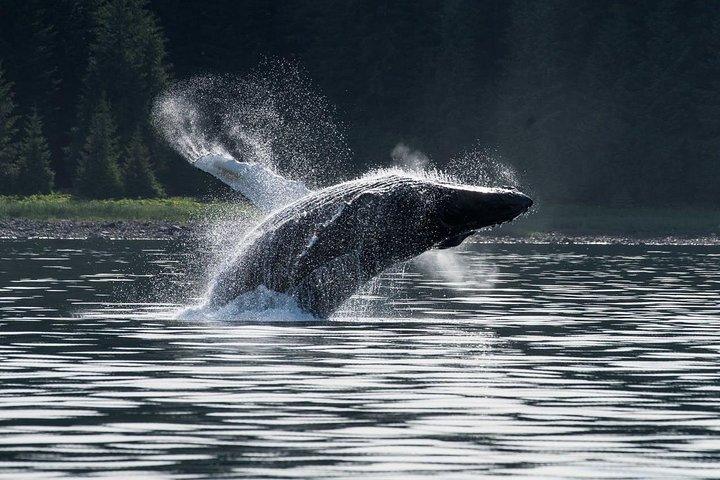
Icy Strait is more than a productive fishing ground; it is a story written in glacial geology and Tlingit stewardship. The coast was carved by ice, leaving steep fjords and ridges that funnel ocean currents and create nutrient-rich pockets at depth. Those currents sculpt salmon runs and, in turn, attract a dense marine food web—herring, sea lions, porpoise, and the humpbacks that frequently punctuate day trips with lunges and tail slaps. Nearby Hoonah is one of the largest Tlingit communities in Alaska. For generations, people here read the seasons differently: by salmon runs and berry ripening, by ice and tide, knowledge passed alongside place names and clan stories.
On the practical side, the trip is a precise, comforting affair. Shared charters launch from Icy Strait’s calm waters close to shore, so there’s no long transit before the lines go in. The operator provides rods, basic tackle, and instruction—ideal if you’re new to Pacific northwest fisheries. Expect a maximum of about 3.5 hours on the water and a price point starting near $360 per person, making it a solid half-day option that still leaves time to explore Hoonah’s cultural spots or the Icy Strait Point visitor complex once you’re back ashore.
The fishing itself is straightforward but requires attention. Salmon are caught with trolling or drifting rigs; halibut fishing uses heavier gear dropped to bottom in quieter, deeper channels. The captain’s local knowledge is the multiplier: where currents converge, where the bottom shelves to the right depth, when to switch lures. Wildlife encounters are likely—humpbacks are encountered on most trips—so keep your camera ready and respect the animals’ space. Onboard, the crew will often help with fish handling and cleaning, and they’ll advise on local regulations: know the season and size rules, and carry any required fishing licenses.
Timing matters. Spring sees rivers clearing and the first runs arriving; summer is peak salmon and the busiest time for wildlife viewing; fall brings larger, later-season halibut but can kick up rougher weather. The sea is typically calmer near shore in summer, but conditions in Alaska change fast—layering and waterproof gear are not optional, they’re essential. For photographers, the light off the water is crystalline; short bursts with a fast shutter freeze action, while a longer exposure at golden hour tames ripples for landscape frames.
Beyond rods and rigs, Hoonah offers a cultural coda to the morning’s work. The Huna Tribal Corporation-developed Icy Strait Point has a restored cannery, a zipline that arcs over the forest, and exhibits that contextualize Tlingit history alongside the commercial changes that came with tourism. Eating locally means picking a place that honors the sea—fresh salmon or halibut grilled simply, with a view of where your catch came from.
If you’re considering this trip, plan the approach: most visitors connect through Juneau (fly in) and then take a short local flight, ferry, or water taxi to Hoonah—there are no road connections to Juneau. Book early in summer when cruise ships call and charters fill quickly. Bring patience: Alaska’s best moments are rarely rushed, and the sea will often reward those who watch and wait.
At its best, a shared fishing adventure in Icy Strait is a compact course in coastal ecology, cultural continuity, and the immediate pleasures of the catch. It’s not a test of endurance; it’s a concentrated lesson on timing, respect, and simple, sharp luck. Return to shore with a cooler full of fillets or with stories of a whale breach seen from a respectful distance—either way, you’ll have spent a morning listening to a place that, despite the frequent presence of boats, still feels like it’s calling its own shots.