Dawn is a blue whisper over Banff when the van door slides open and the day’s cold rushes in—clean, electric, and full of promise. Steam rises from travel mugs as you roll west along the Bow Valley Parkway, frost feathering the window corners, peaks shouldering into view like sentinels. Outside, the Bow River keeps its winter pace, muscling beneath shelves of ice, daring you to keep up. Inside, your guide outlines the day: frozen waterfalls, mountain light, a lakeshore rink that looks borrowed from a postcard. Eight hours. One national park that knows how to put on a show.
Johnston Canyon warms you up by cooling you down. The trail is a ribbon of packed snow and steel catwalks clinging to limestone walls, a clever human weave against a canyon carved by persistence. The creek murmurs beneath ice, its breath caught mid-syllable where waterfalls have frozen into curtains of milky blue. Ice cleats bite and sing underfoot, a steady percussion—provided gear you’ll be glad to have the first time a slick corner tests your attention. Frost clings to your scarf. The canyon narrows and the wind elbows through, reminding you that winter is in charge here. The place feels alive and watchful: the cliff faces lean in for a better look; the river nudges your ankles with cold air; even the snow seems to hush you as you walk.
Geology tells the story while you move through it. Over millennia, the creek undercut soft seams in the ancient limestone, carving chambers and overhangs where today’s ice takes hold. The catwalks arrived in the 1930s, inviting the public out over the water without erasing the canyon’s voice. You cross bridges and peer into chasms that seem cut with a sculptor’s patience. This is Banff National Park at its most tactile: you don’t just see winter—you feel how it shapes rock and river.
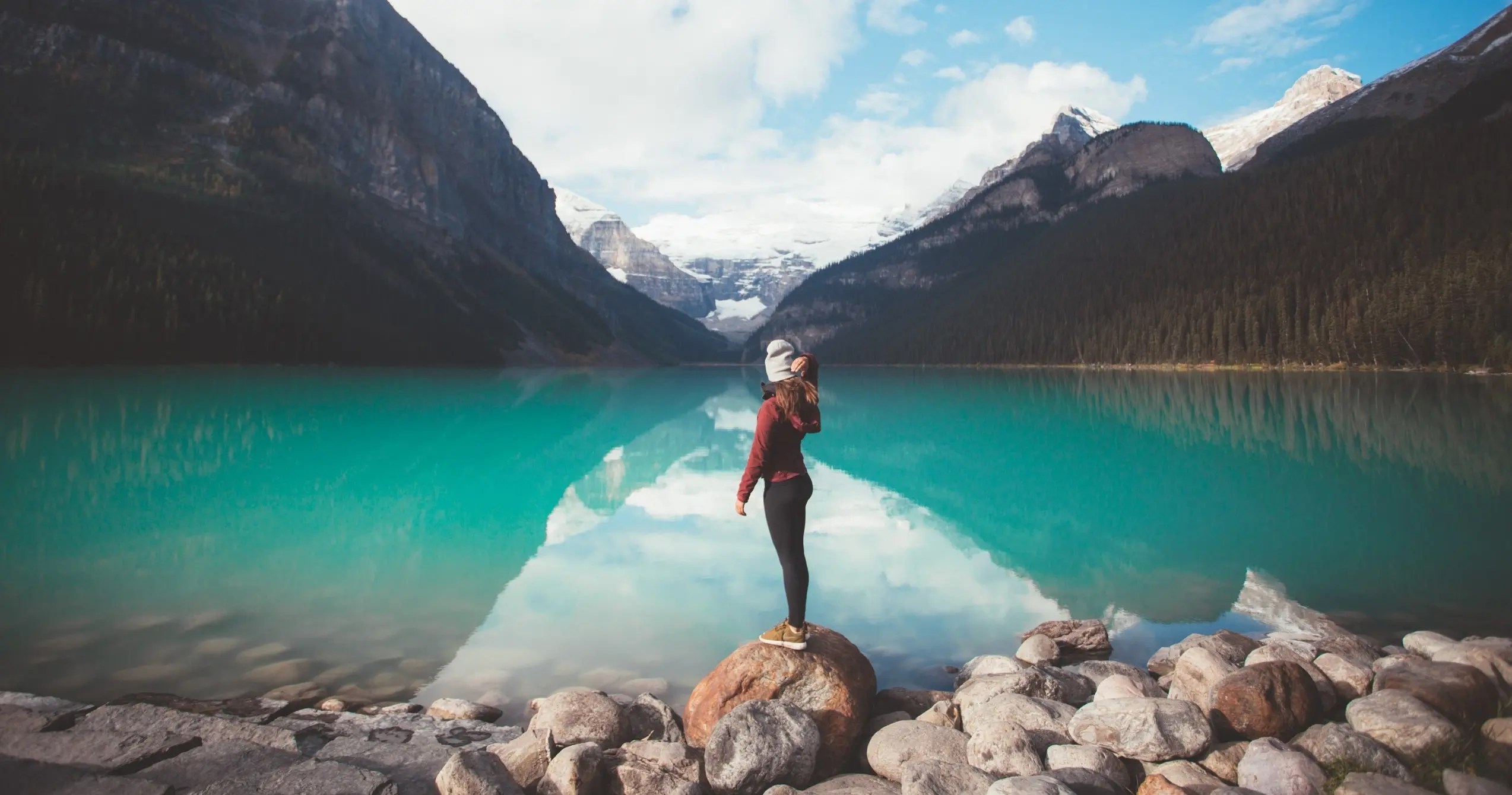
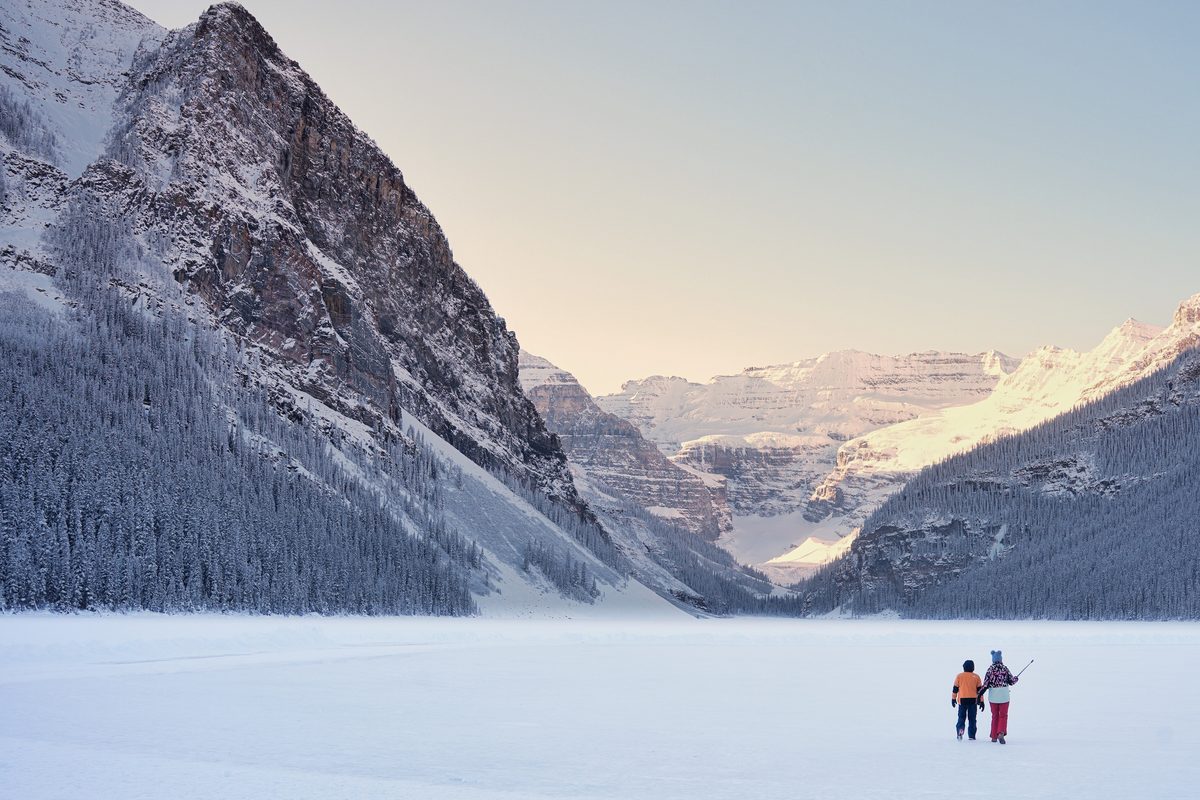
By midday, the van noses toward Lake Louise, and the mountains open like a theater. The lake is a flawless sheet of ice, hemmed by spruce and the stone shoulders of Mount Victoria and the Victoria Glacier. At this time of year, the surface is cleared into a web of rinks by the lakeside hotel; the scene hums with a soft joy even on the coldest days. Skates whisper. Camera shutters click. If conditions allow, you lace up (skates are available on tour) and let the ice do what it wants—draw you out to the center, where the world goes quiet and every breath hangs like a small cloud. The lake seems to tilt the light toward you; alpenglow drifts across the peaks like a slow promise.
History anchors the grand scene. Lake Louise takes its name from Princess Louise Caroline Alberta, daughter of Queen Victoria, and the lakeside lodge traces its roots to the golden age of Canadian railway travel. Banff National Park, established in 1885, is Canada’s first national park—a fact that still hums beneath your boots as you pack down snow on trails generations have wandered before you. Indigenous histories run deeper, belonging to the Stoney Nakoda, Blackfoot, and Tsuut’ina peoples whose connections to these valleys predate any map.
Your guide threads local insights throughout. The Bow Valley Parkway doubles as a major wildlife corridor; keep your eyes scanning the edges for elk slides, the quick punctuation of a pine marten, or the poised silhouettes of bighorn sheep. Afternoon may bring a detour to a local secret, a turnout few visitors notice, where freight trains sketch the river’s curves or a frozen fen gleams in low sun. It’s the kind of stop that reminds you why you chose a private outing: a little more quiet, a little more time, a little more space for winter to speak.
This day is built for accessibility with a practical edge. The distances aren’t extreme and the van is warm, but winter in the Rockies asks for respect. Temperatures can drop well below freezing. Traction devices and poles help keep your footing sure. Layering is critical—think insulated boots, wool base layers, windproof shells—and hot drinks (included) help take the sting out of the shade. Bring a reusable water bottle; refills are provided and hydration matters in dry, cold air. If you’re concerned about skating, snowshoeing is often an option and gentle lakeside trails let you swap blades for boots without missing the view.
It helps to understand the rhythm of the day. Mornings in Johnston Canyon are calmest; you feel the canyon’s pulse before the crowds. Lunch in the village keeps the energy steady—there’s a packed picnic provided, simple, hearty, and best enjoyed with a view of snow drifting off eaves. The lake’s afternoon light is generous, rim-lighting the ridgelines and giving skaters a halo as they turn. With daylight short in mid-winter, timing is everything, and it’s handled for you—pickups in Banff or Canmore, smooth transport, and a pace that spares you from logistics so you can watch the sky do its work.
Travelers come for the beauty and leave with an appreciation for balance: wildness and access, silence and shared moments, mythic landscape and small human comforts. Nature has plenty of personality here. The wind likes to test your zippers. The glacier insists on being the last word in any photograph. The ice—on the lake, in the canyon—makes its case for attention in textures you’ll feel in your calves later and see again on your camera roll. For a deeper primer and to book this private outing with trusted local experts, explore the full overview at Private Winter Wonderland | Lake Louise & Johnston Canyon. If you’re aiming for the richest experience, bring curiosity, respect for the cold, and a willingness to let the Rockies set the tempo.
A winter day in Banff doesn’t need to be epic to be unforgettable. It needs good company, a guide who reads the weather like a novel, and a landscape that does the heavy lifting. Here, you have all three. For more on planning and seasonal nuances, see our trusted guide at Private Winter Wonderland | Lake Louise & Johnston Canyon—then pack your layers and step into the quiet.