Into the Lowcountry: Walking the Audubon Swamp Garden at Magnolia Plantation

Into the Lowcountry: Walking the Audubon Swamp Garden at Magnolia Plantation

A slow walk through cypress cathedrals and bird-rich blackwater—the Lowcountry's best easy immersion.

Continue Reading

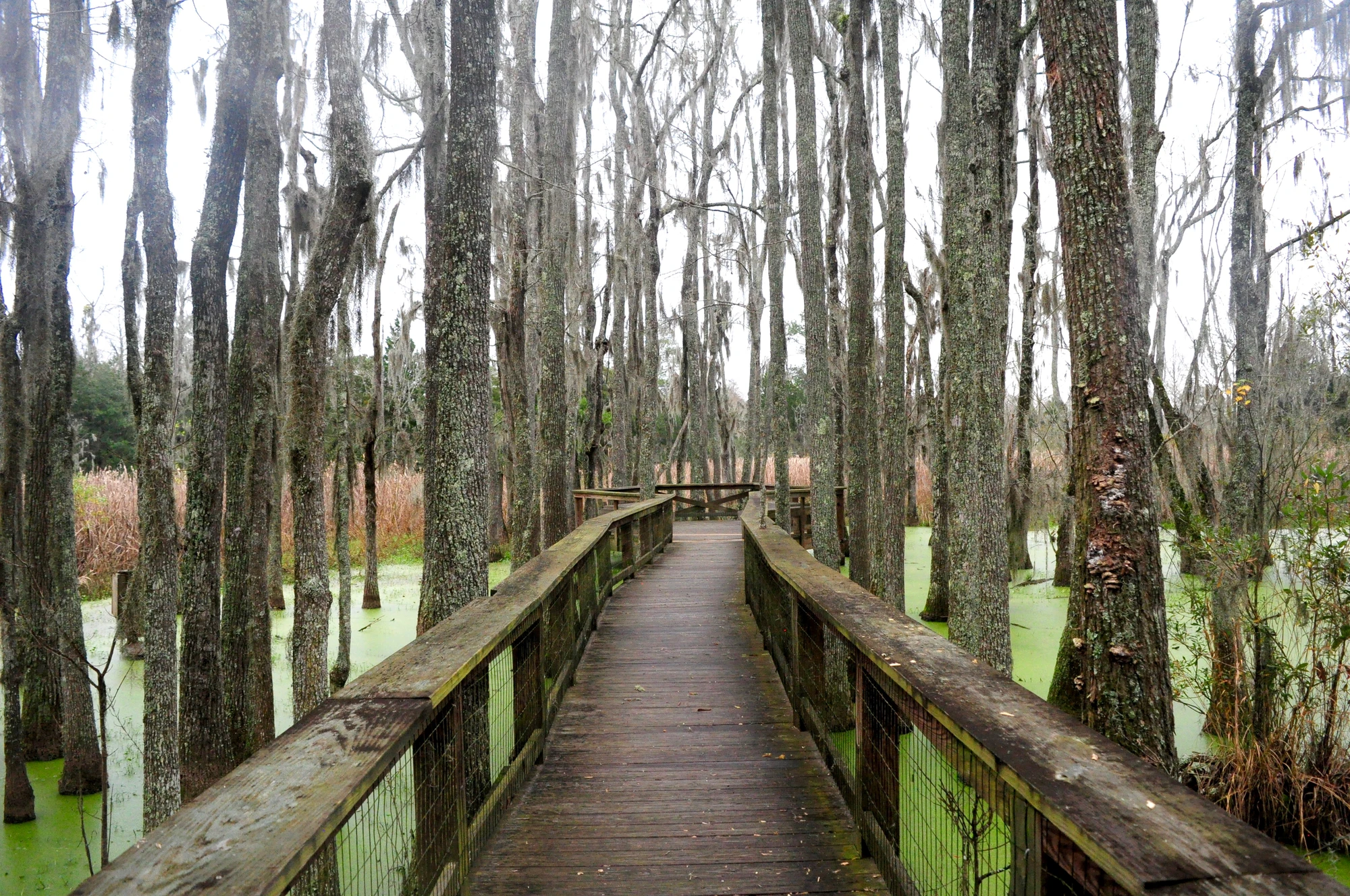
It begins with the hush. On a humid Charleston morning the sky lowers like a breath held over the Lowcountry, and the Audubon Swamp Garden draws you in with the quiet insistence of water and moss. The trail slips from the plantation lawn into an elevated boardwalk—planks darkened by decades of rain—where towering bald cypress brace their knees into black water and Spanish moss hangs like a slow curtain. The air smells of wet earth and green things working quietly: algae, decaying leaves, a hint of salt from the distant estuary. For half an hour, you walk through a world that moves at the pace of the swamp.

The Audubon Swamp Garden is part of Magnolia Plantation & Gardens, the riverside estate just outside Charleston that traces its landscaped beginnings to the 18th and 19th centuries. The plantation itself sits on land that has been cultivated and shaped for centuries—by plantation owners, by enslaved people who engineered rice fields and tidal irrigation systems, and later by gardeners who deliberately planted allees and floral displays. The swamp garden, a curated natural space, was created to conserve and celebrate the region's wetland ecology and the birdlife that drew attention to the estate long before conservation became a word in vogue. Its name honors the tradition of ornithological interest in the Lowcountry; birds are the garden's main story, and they read that story aloud in calls and flash.

Geologically, this is a blackwater system: tannin-stained water fed by decaying leaves and slow-moving tributaries of the Ashley River. The soil is peat-rich and flat; the only elevation is the height of roots and the raised boardwalk. Cypress and tupelo dominate, their buttressed trunks and knees creating a cathedral of wood and shadow. In summer, the canopy closes into a humid vault; in cooler months, sky and reflected sky break the surface into glittering panels.

Culturally the swamp sits inside the broader tapestry of Charleston's Lowcountry. Nearby towns pulse with Gullah-Geechee heritage—foodways and crafts that link West African traditions to rice cultivation and coastal living. When you leave the boardwalk, consider a short detour through the plantation's gardens and the onsite historical exhibits that contextualize the land: how it was shaped, who worked it, and how the gardens evolved into a public destination.

Why go? For city-weary travelers, the swamp offers an easy immersion into a living ecosystem without a guidebook's effort. The experience is tactile: wet air on your skin, the slick of moss underfoot, the staccato pop of an egret taking off. It's also generous in reward—close views of wading birds, turtles basking on logs, and the occasional gator sliding like a punctuation mark through still water. For photographers and birders, the light and concentration of wildlife are rare in an accessible setting; for families, the loop offers a natural classroom.

Practicalities matter here because the swamp is comfortable until it isn't. The main boardwalk loop is roughly one mile long; visitors typically spend 45–90 minutes exploring, longer if you linger with binoculars or notes. Terrain is flat and mostly boardwalk—good for casual walkers, families, and many wheelchairs—but expect some muddy side trails after rain. There's no meaningful elevation gain. The place is best visited in the cooler hours of morning or late afternoon when birds are active and mosquitoes are less aggressive.

Packing light pays off. Sturdy, water-resistant shoes with good tread are ideal—expect damp boards and occasional mud. Bring insect repellent, a brimmed hat, and a lightweight rain shell during summer storms. A compact pair of binoculars and a camera with a modest telephoto will magnify the experience without weighing you down. Hydrate; there are benches but limited shelter in heavy weather, so check plantation hours and entry requirements before you go.

Respect matters. The swamp is habitat first: keep to the boardwalk, don't feed wildlife, and keep dogs out of sensitive areas. If you see a gator, appreciate from a distance—these animals are part of the balance that gives the garden its drama.

Seasonally, the swamp wears different faces. Spring brings nesting activity and a chorus of migratory warblers; summer thickens the canopy into an insect-rich, emerald room; fall offers light and color as the swamp moves toward dormancy; winter strips leaves to expose branches and long sightlines that favor large waders. Each visit rewards attention to small shifts: a different heron species, the pivot of a turtle, the water-level notes that rewrite the boardwalk's mood.

In short: the Audubon Swamp Garden is not a summit to conquer or a backcountry isolation—it is a measured, sensory encounter with one of the South's signature landscapes. It invites slow travel, a willingness to stand and watch, and a modest kit. For travelers who want to feel the Lowcountry rather than simply see it, the boardwalk here is both a door and a lesson. Walk it quietly and you'll hear the place introduce itself.

Duration45–90 minutes
Plan your visit

Trail Wisdom

Go early or late

Bird activity peaks around dawn and dusk and temperatures (and mosquitoes) are milder—plan for a morning or late-afternoon visit.

Bring insect protection

Apply EPA-registered repellent and consider permethrin-treated clothing in spring and summer when mosquitoes and ticks are active.

Stay on the boardwalk

Boardwalks protect fragile wetland soils and keep you safe from submerged hazards and wildlife; avoid stepping into the swamp.

Pack binoculars and a small telephoto

A 200–300mm-equivalent lens and compact binoculars make wildlife viewing and photography far more rewarding without carrying heavy gear.

Local Knowledge

Hidden Gems

  • Quiet side benches along the western boardwalk where heron activity concentrates
  • Nearby rice field remnants visible on the plantation grounds that reveal Lowcountry agricultural engineering

Wildlife

Great Blue Heron, American Alligator

Conservation Note

The swamp garden functions as a protected wetland habitat—staying on boardwalks, avoiding disturbance, and supporting local conservation efforts helps preserve fragile Lowcountry ecosystems.

Magnolia Plantation & Gardens dates back to the 17th–18th centuries and reflects centuries of landscape changes—from rice cultivation to ornamental gardens—shaped by both enslaved labor and later public stewardship.

Seasonal Guide

spring

Best for:songbird migration, nesting herons, fresh green growth
Challenges:variable weather, muddy trails after rains

Spring is prime for migratory birds and vibrant new foliage; expect active wildlife and occasional wet trails.

summer

Best for:lush canopy, turtle and amphibian activity, dense birdlife
Challenges:heat and humidity, mosquitoes and afternoon thunderstorms

Summer offers maximum greenery and abundant wildlife calls; go early to beat heat and storms.

fall

Best for:milder temperatures, water-level viewing, calmer insect activity
Challenges:reduced migrant numbers, shorter daylight hours

Fall provides comfortable conditions and good light for photography as the swamp transitions toward dormancy.

winter

Best for:clear sightlines, large wader spotting, crisper light for photos
Challenges:cooler weather, less foliage cover

Winter strips leaves and opens long views—good for spotting herons and egrets against bare branches.

Photographer's Notes

Use a polarizing filter to reduce surface glare and deepen greens; shoot in early morning for softer light and better bird activity; bring a 200–300mm-equivalent lens for wildlife and a wide 24–35mm for boardwalk scenes; stabilize with a monopod for low-light shots under canopy.

What to Bring

Light rain shell

Essential

Summer storms arrive quickly—waterproof outerwear keeps you comfortable during sudden downpours.

Insect repellent

Essential

Mosquitoes and ticks are prevalent in warmer months; repellent prevents bites that can derail a visit.

Sturdy waterproof walking shoes

Essential

Damp boards and occasional mud make grippy, quick-drying footwear a practical choice.

○

Compact binoculars

Binoculars greatly increase birding and wildlife sightings without burdening your pack.

Common Questions

How long is the Audubon Swamp Garden boardwalk?

The primary loop is roughly one mile and typically takes 45–90 minutes depending on how often you stop to observe wildlife.

Are dogs allowed in the swamp garden?

Pets and dogs are generally not permitted on sensitive garden boardwalks; check Magnolia Plantation’s official policies before visiting.

Is the boardwalk wheelchair accessible?

Much of the main boardwalk is flat and accessible, though some side trails may be uneven—contact the plantation for detailed accessibility guidance.

Can you see alligators here?

Yes; American alligators inhabit Lowcountry wetlands and may be visible from the boardwalk—observe from a safe distance and never feed wildlife.

Do I need tickets to enter?

Magnolia Plantation & Gardens typically requires admission for garden and swamp access—verify current hours and ticketing on the official website before arrival.

When is the best time for birdwatching?

Early morning and late afternoon are best for bird activity; spring migration and cooler months also bring a diversity of species.

What to Pack

Water bottle for hydration, insect repellent to prevent bites, waterproof walking shoes for damp boardwalks, binoculars for bird and wildlife viewing

Did You Know

Magnolia Plantation & Gardens traces its origins to the 17th and 18th centuries and is often cited as one of the oldest public gardens in the United States.

Quick Travel Tips

Buy tickets in advance during peak season; visit early to avoid heat and crowds; bring small cash for onsite purchases; check tide and weather forecasts—heavy rains change accessibility.

Local Flavor

After the boardwalk, head into Charleston for Lowcountry flavors—shrimp and grits, she-crab soup, and Gullah-inspired dishes showcase the region’s culinary ties to rice, seafood, and coastal culture.

Logistics Snapshot

Location: Magnolia Plantation & Gardens near Charleston; Duration: 45–90 minutes; Terrain: flat boardwalks and short trails; Accessibility: mostly accessible; Tickets: required—check official site; Best time: morning or late afternoon.

Sustainability Note

Stick to boardwalks to protect peat soils and plant communities, avoid feeding wildlife, and support local conservation programs that monitor wetland health and invasive species.

Topics