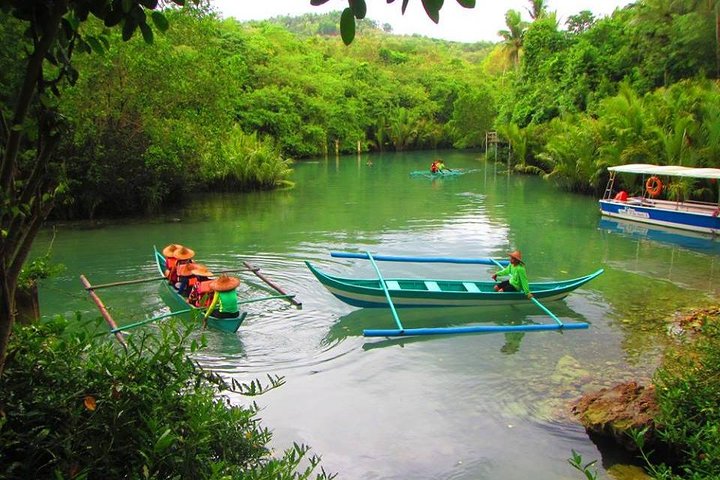
You push away from the bamboo dock and the river answers with a slow, confident current that seems to know the shape of the valley as well as any old guide. Frangipani shade leans over the water; the boat’s low hull parts reflections of nipa roofs and coconut palms, and somewhere ahead a band of local musicians rehearses the next chorus. This is Loboc—the town and the river that thread Bohol’s interior together—and it is, first and foremost, easy to fall into.
Loboc’s cadence is deliberate. The river has coaxed a life along its banks for centuries: rice paddies and small farms, wooden chapels with colonial bones, and families who treat the lunch cruise as an extension of home hospitality. The classic Loboc River cruise—an hour of floating lunch beneath a green roof—has become emblematic of Bohol tourism, but the best way to approach Loboc is to let its serenity be a hinge between sightseeing and activity. Pair the slow, reflective hour on the water with sharper pulses: a zipping bike across a gorge, a quick visit to the tarsier sanctuary, and the broad sweep of countryside that includes the Chocolate Hills and the man-made forest.
Geology, history and culture have conspired to make this place singular. The Loboc River cuts through limestone and alluvial plains carved by sea-level shifts and tropical rain. The nearby Chocolate Hills—hundreds of grass-covered mounds—are the product of thousands of years of karst processes that leave rounded, symmetrical humps where the island used to be a reef. Spanish-era missions dot the route; centuries of trade and colonization left stone churches and a rhythm of fiestas that still pulse through weekends.
The Loboc River cruise is where culture meets landscape most directly. Local families often run the floating restaurants, and you’ll usually get a live band—ukuleles, guitar, and an earnest vocalist—who’ll weave pop standards with local folk songs as native dishes appear on bamboo platters. It’s a comfortable, convivial experience rather than a high-adrenaline attraction; the boat glides at 5–7 km/h for about 60–90 minutes, past limestone banks and small cascades. For many travelers it is the perfect slow counterpoint to the rest of Bohol’s faster sights.
If you want contrast—to tilt the trip from languid to lively—book a Bike Zip Adventure. This isn’t a long endurance ride; it’s the kind of brief, bright jolt that gives you a new perspective. Imagine a bicycle bolted to a suspended cable, a short climb to the launch platform, and then a few breath-stealing seconds as you pedal across a valley with the wind working to rewrite your hair. It’s a compact dose of thrill that complements the river’s softness.
Practicalities matter here because the area is popular and the logistics determine whether Loboc feels restorative or rushed. Many visitors reach Loboc on a full Bohol Countryside Day Tour from Cebu or Mactan; that package typically runs 6–9 hours including inter-island fastcraft time, road transfers, and stops at the Chocolate Hills, the man-made mahogany forest, the tarsier sanctuary, and the Loboc lunch cruise. If you’re island-based in Bohol, you can make Loboc a half-day outing with a morning cruise and an afternoon zip-line or village walk.
Timing is one of the simplest levers for a better visit. Cruises are calmer and less crowded early in the day—arrive for a 11:00 or earlier slot to avoid large tour groups. If you’re combining activities, start with the Bike Zip in the morning when winds are low and move to a mid-day river lunch, which feels like a well-earned reward. Hydration and sun protection are important: open boats and tropical sun add up quickly.
What to expect on the ground: the riverbank is tropical and occasionally buggy, so light long sleeves and insect repellent are smart. Footwear should be practical—closed-toe shoes for the Bike Zip and comfortable sandals for riverside strolling. Many operators include transfers and lunch on the cruise; confirm whether the package is private or shared (private tours are common in the Countryside Day Tour product) and whether tarsier sanctuary fees are included.
When you move beyond logistics, Loboc reveals nuances. The riverside musicians are often local students; tipping is a meaningful contribution to community income. The tarsier is tiny and fragile—flash photography and loud noise are banned at most sanctuaries. And while the river’s calm gives the impression of invulnerability, conservation is active here: local groups and operators enforce waste management on cruises and encourage low-impact tourism.
For photographers, Loboc offers two moods in one stop: the river’s soft reflections and the high-contrast drama of the zipline viewpoint. Bring a polarizing filter for the water shots and a wide-angle lens for the staccato geometry of the Chocolate Hills. For sound and story, carry a small notebook or phone recorder—many of the best moments are quiet conversations with local boatmen that reveal the island’s human rhythms.
Loboc is not about conquering terrain. It’s about appreciating a central Philippine river as a corridor of life and leisure—an essential stop for anyone piecing together Bohol’s countryside. Whether you float under a canopy with music swelling from the bow, pedal a cable-bike across a gorge, or follow the roadside to a tarsier preserve, Loboc rewards curiosity and a willingness to move from slow to sharp and back again. It’s modest, thoughtful adventure: easy to reach, generous in detail, and unmistakably Bohol.