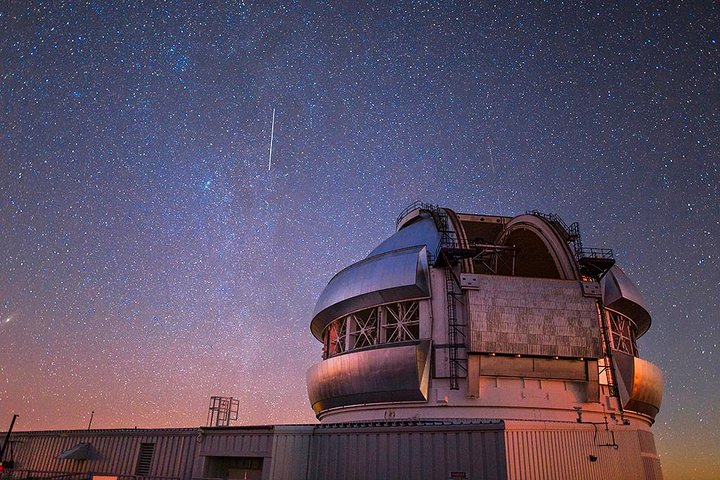
You arrive when the island is still bright—palm-lined roads and ocean trade winds behind you—and climb into a different world. The road to Mauna Kea peels away from the tropics and, within an hour, the palms thin to kiawe and scrub. The air grows thin and sharp; the sun feels higher and cleaner. At the Visitor Information Station, perched at roughly 9,200 feet, technicians and volunteers point to the ridge that holds the summit like a ship’s prow. From there the access road threads up to 13,803 feet, where concrete observatories and antennae puncture the sky and the horizon opens into a bowl of ocean and islands.
This is Mauna Kea: a place of science and ceremony, of Arctic chill at the top of a tropical island. It’s also one of the most effective natural observatories on Earth—dry, stable air and minimal light pollution have made its summit home to world-class telescopes: Keck, Subaru, IRTF and others. When dusk thickens into night the summit detaches the stars from the rest of the world. The Milky Way slashes overhead in a way that looks almost designed to remind you how small the earth is, and how particular this place must be treated.
Geologically, Mauna Kea is an island within an island. Its summit is built of volcanic rock that records repeated eruptions and glaciation during past ice ages; from the summit on a clear day you can see the broad dome of Mauna Loa opposite and the rim of the island—an enormous, ancient landscape folded into one long view. Culturally, Mauna Kea is sacred: Native Hawaiian traditions link the mountain to the gods and to creation narratives. That history matters here—visitors are asked to be respectful, and debate over land use and telescope development has shaped how access is managed.
Most travelers experience Mauna Kea on guided tours that leave from Kona or Hilo and combine sunset and stargazing with commentary, field telescopes, and safe transport. The Visitor Information Station (often called the Onizuka Center) is the staging ground for acclimatization and orientation; staff explain altitude risks, weather changes, and cultural context. For DIY travelers, the road to the summit is legal to drive but not friendly. The ascent is steep and often rough—many rental agreements forbid summit access and require high-clearance 4WD vehicles. In short: choose your vehicle carefully or pick a reputable tour operator.
Practical specifics that matter: the summit is 13,803 feet (4,207 meters). The Visitor Information Station sits near 9,200 feet—plan for an altitude change of roughly 4,600 feet from the VIS to the summit. The last stretch is exposed and cold; temperatures at the top can drop below freezing even in summer, and winter storms occasionally deposit snow. Tours typically run 6–10 hours from pickup to drop-off, with the summit portion shorter but intense: sunrise/sunset drives are common because the light is arresting and the atmosphere is most stable for viewing.
How to prepare: acclimatize at lower elevations for a day or two if possible—Hilo and Waimea are good staging points. Hydrate the day before and avoid heavy alcohol. Wear a warm shell and insulating mid-layer; wind and radiant cooling at night can be brutal. Footwear should be sturdy for short summit explorations. Bring sunscreen and sunglasses—the UV at altitude is stronger than you think. If you’re booking a tour, read the fine print about vehicle type and medical warnings; if you plan to self-drive, verify with your rental company and bring emergency supplies.
Beyond the telescopes and photography, Mauna Kea has lesser-known charms. Lake Waiau, a fragile high-elevation alpine pond near the summit, is a quiet and culturally sensitive place to visit if permitted, and the Visitor Information Station hosts community stargazing and education nights that bring the cosmos down to eye level with portable telescopes. Respect for wahi kapu (sacred sites) and the fragile alpine ecology should be part of every visit.
Safety and etiquette are part of the experience: the mountain insists on humility. The summit’s air can sap energy quickly—if you feel dizzy, nauseous, or short of breath, descend slowly and seek help. Stay on marked roads and trails to avoid fragile soils and lichens that take decades to reestablish.
For photographers and scientists alike, the payoff is uncompromising. Sunset paints the observatories in orange and the first stars wink on long before the lights below do. For first-timers, a guided sunset-to-stars tour is the easiest blueprint: you get orientation at altitude, a drive to the summit with experienced drivers, and time at fixed telescopes. For repeat visitors with the right vehicle and experience, the mountain offers quieter mornings and the chance to watch the planet-tilted sky shift with the islands.
Mauna Kea won’t be polished. It’s cold where you expect warmth, enormous where you expect a hill, and intimate where you expect emptiness. That mismatch is its virtue—here the cosmos feels both immediate and serious, and the earth beneath your boots remembers that people have always known this place mattered. Treat it with curiosity and care, and it will return a night you’ll remember for a lifetime.