You arrive at Misurina after a road that curves up through larch and spruce, the din of the valley thinning as the air gets thinner. The lake opens like a polished lens—glassy, shallow, and the mountains appear doubled, inverted and crystalline, as if the Dolomites themselves paused to check their reflection. A handful of coppices crowd the shoreline, a rifugio puffs out steam across the water, and the sky tastes of alpine cold even midsummer. This is Lake Misurina: modest in scale, enormous in presence.
Set at the foot of legendary peaks—the Tre Cime di Lavaredo visible on clear days and the long ridges that guard Cortina d’Ampezzo—Misurina has always been a place of simple contrasts. The human footprint here is small: a lakeshore path you can loop in thirty to sixty minutes, a handful of restaurants serving mountain food, and a chairlift that sashays visitors up to Col de Varda for a different kind of theatre. Yet the scene is threaded with history, science, and stories—doctors once recommended the bruised-air of Misurina for respiratory health, and the lake’s elevation (approximately 1,754 meters) gives it that thin, clear quality that photographers and pulmonary specialists both prize.
Geology is the place’s backstory. The Dolomites are a carbonate wonder built of ancient reefs transformed by time. Here the stone is beguiling: pale, sometimes honey-colored, sometimes abruptly vertical. Weather and glaciers sculpted knife-edge spires and plateaus, and lake basins like Misurina’s collected melt and rainfall into mirrors that catch the mountains in perfect symmetry. Culturally, you’re in the borderlands where Italian and Ladin traditions meet—menus feature polenta, casunziei (filled pasta typical of the Dolomites), speck and rich alpine cheeses, a gastronomic shorthand for centuries of mountain living.
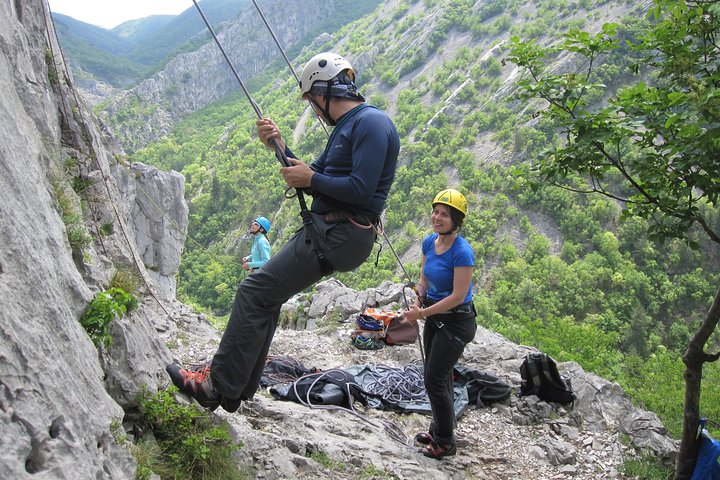
Misurina is not about conquest; it’s about relationship. The promenade is friendly to families and casual walkers, but the surrounding terrain also invites a tougher agenda. In winter, the Dolomites Ice Climbing Experience brings climbers to frozen falls nearby; in summer you can rent a small boat to glide on the lake or ride the panoramic chairlift to Col de Varda for views that push your sense of scale. Most visitors arrive as part of day trips—Seamless itineraries like Dolomite Day Tour From Venice area, From Venice: The Best of the Dolomites Mountains Day Trip, or Dolomites in a Day: Explore Italy’s Best Mountains from Venice turn Misurina into a jewel in a larger crown-ring of Auronzo, Cortina and the Three Peaks.
Why go beyond the Instagram shot? Misurina rewards two kinds of attention: slow observation and purposeful moving. A slow loop around the lake reveals water beetles, mirror-like vanes broken by trout, and driftwood lattices that make shapes against the mountains. Hike a little farther and you can access higher ridgelines or the chairlift to Col de Varda where the ridgeline pulls your gaze north toward Tre Cime. In winter, ice climbers find playgrounds of vertical blue, and the region’s outfitters will match your level and choose appropriate crags.
Practical edge: getting here is straightforward but worth planning. From Venice the drive is roughly 2.5–3 hours; many travelers book guided day trips to avoid navigation and to gain local context—see the small-group options that include Cortina d’Ampezzo and Lake Auronzo for a fuller picture. In summer, small boat rentals provide a quiet way to skew perspectives and get reflections without the shoreline crowds; in shoulder seasons the chairlift schedule can change, so check operating times before you go.
Footwear and packing needn’t be complicated. The lakeside path is mostly flat gravel and packed soil; a breathable shell and a midweight fleece will cover the diurnal shifts. If you plan to climb or head into high ridgelines, add crampons or technical gear via a local guide. Hydration matters—alpine air is dry—and bring a lightweight water filter or enough bottled water for the outing. Finally, consider timing: mirror lakes are best photographed in the early morning or late afternoon when winds are low and the light hits the peaks at an oblique, flattering angle.
Respect matters here. The Dolomites are UNESCO-listed; trails and habitats are fragile. Stick to marked paths, pack out what you pack in, and favor local businesses when you eat or rent gear. That way, the rifugi, boat rentals and guides that maintain these traditions continue to do so for the next group who bends over the water and sees the mountains glance back.
Whether you arrive as part of a day trip from Venice or carve out a night in Auronzo di Cadore, Lake Misurina is a place where scale compresses—short walks can feel monumentally satisfying, and a single photo can hold a mountain’s worth of geology, culture and weather. It’s accessible without being trivial: a destination where a shallow lake teaches you how to look, and the mountains remind you why you left the city in the first place.