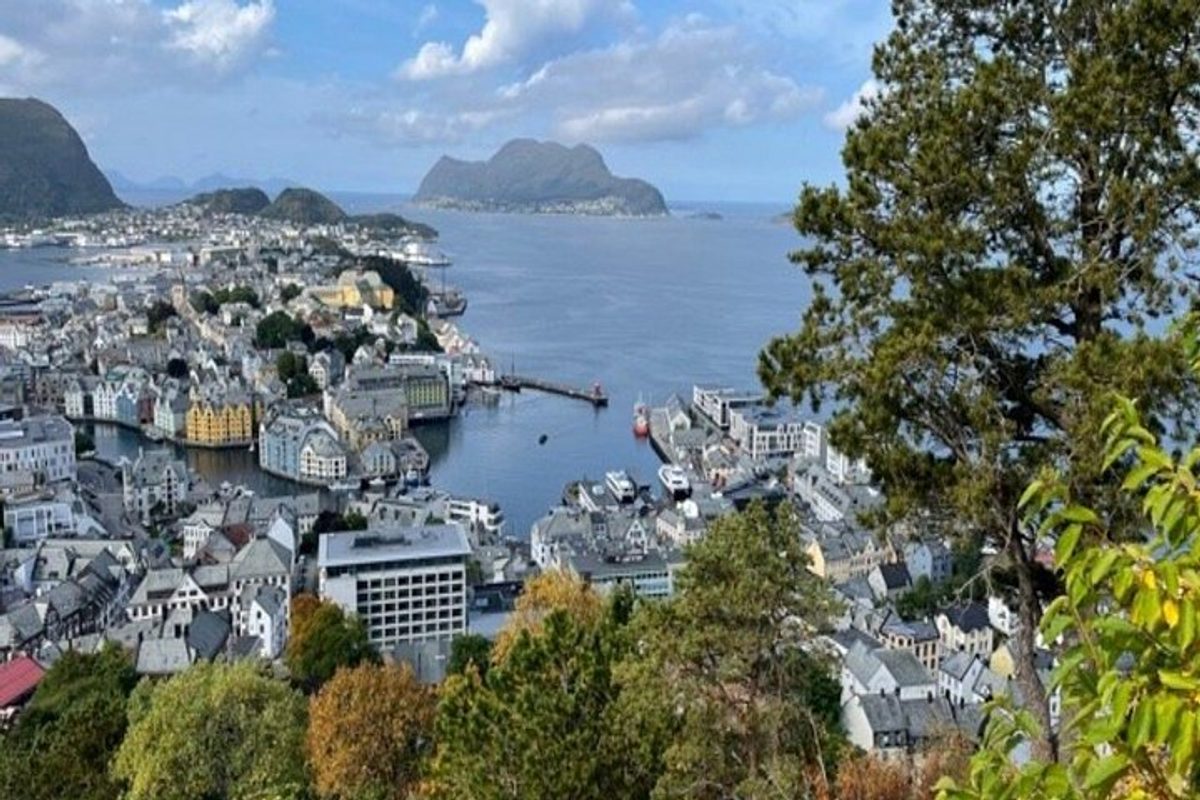
By the time the ferry slips into Brosundet, Ålesund is already assembling its light: silvered water, chimneys, and the crisp edges of red tile roofs. The city sits folded around a harbor like a map you can walk across in an hour, but the real gravity is upward. Aksla is the small mountain that does the pulling—an easy, honest climb that rewards you with a panoramic fingerboard of fjords, islands, and the jagged white teeth of the Sunnmøre Alps. Join the Ålesund Go Round Tour and those first five minutes of arrival turn into a 90-minute ritual: town, stairway, viewpoint, and a coffee with a catalog of horizons laid out at your feet.
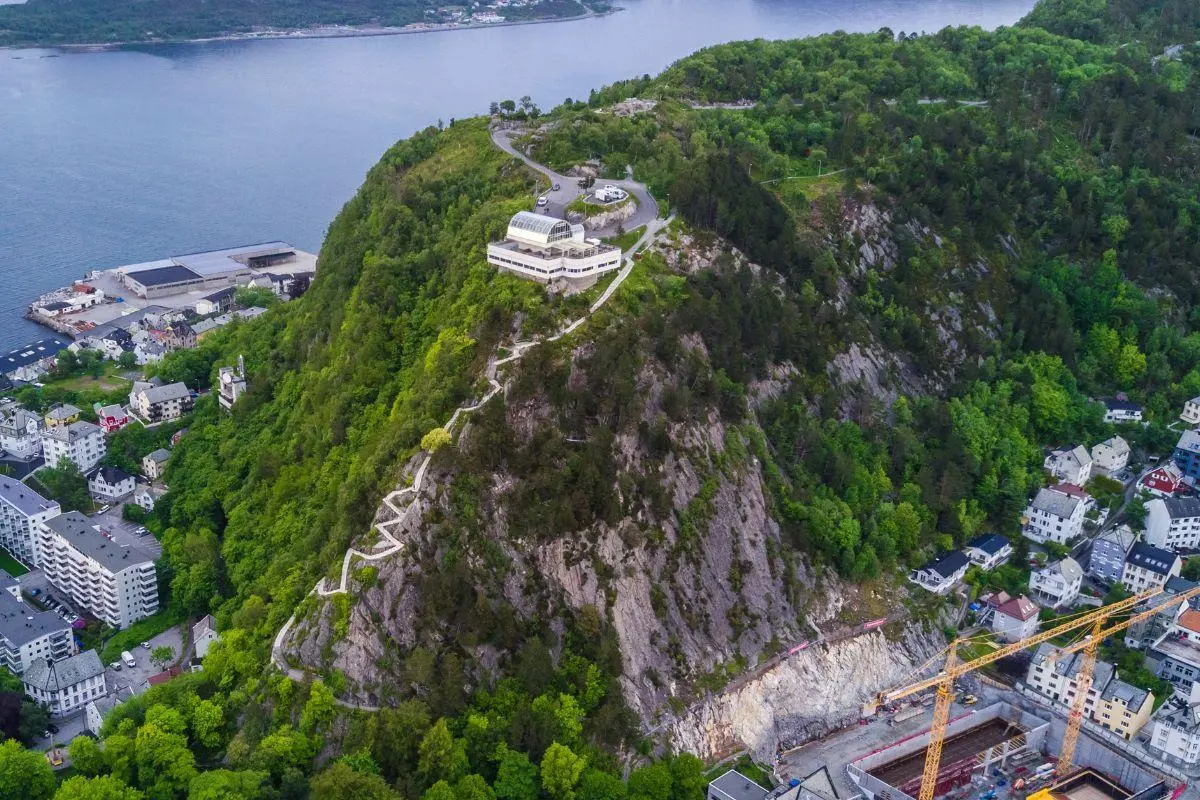
The climb itself is deceptively simple. From the pier the tour winds through blocks of Jugendstil (Art Nouveau) facades—the generous curves and floral wrought-iron that came to define Ålesund after the catastrophic fire of 1904 rebuilt the town in a single architectural moment. Then, depending on your chosen approach, you either ascend a switchback road toward the Hessa viewpoint or take the famous 418 steps that thread up through parkland to Fjellstua at Aksla. The steps are steady, a metronome of exertion that gives you time to tune into the place—sea air, gull calls, and the scent of conifer on the wind—before the whole scene opens.
Geologically, Aksla is a modest outcropping that reads like a throat between the open sea and the rugged interior. It overlooks a fractured coastline: a scatter of islands, narrow straits, and the shelf of the Sunnmøre Alps slicing inland. Those peaks—older and craggier than the city’s tiled rooftops—are the real drama, but Aksla is the framing device. From the top, islands become punctuation marks; ferries and fishing boats are the small moving pieces in a larger, steady marine ecosystem that has sustained Ålesund for centuries.
Culture here is maritime and immediate. Ålesund grew on cod, cod-derived commerce, and shipbuilding; even today fish oil and seafood remain part of the city’s pulse. Walking its wharves you’ll see net menders and modern fish-processing facilities, but you’ll also find galleries and museums that talk about the town’s rebirth after the fire. Guides on the Go Round Tour lean into that story, using the viewpoints—Hessa and Aksla—as vantage points for both sight and context. The audio guide option, available in multiple languages, explains what you’re seeing with crisp local detail: the narrow inlet of Brosundet that once sheltered merchant ships, the construction techniques used after 1904, and the names of islands you can spot on clear days.
Practicalities matter here in the way they do for any short urban adventure. The tour runs about 1.5 hours with multiple photo stops and a stop at Fjellstua café if you want a hot drink and a cinnamon bun while you take it all in. For cruise passengers, there’s a back-to-ship guarantee—register your ship details ahead of time if you’re on a schedule. For independent travelers, the walk up 418 steps is doable for most people in reasonable fitness; there is also a vehicular route and a short drive to the top for those who prefer to save their legs for more time at the viewpoint.
Timing is everything. Early morning and late evening—the hour after sunrise and the half-hour before sunset—are magnetic on Aksla; the water takes on a temperate sheen, and the long light sculpts the Sunnmøre Alps into layered relief. In high summer you’ll find daylight stretches for most of the evening; in shoulder seasons, the view can be intimate and windswept, with cloud fingers brushing the peaks.
What you’ll want to know before you go: wear solid shoes (the steps can be slick when wet), bring a waterproof layer even on sunny days, and carry a small daypack with water and a snack. Phone service is good in town and at the viewpoints; still, a downloaded map or the tour’s audio guide keeps you grounded if you’re trying to keep a tight schedule.
On a wider trip, Aksla is the logical first act. From here you can plan longer hikes into the Sunnmøre Alps, boat trips through the archipelago, or a cultural afternoon tracing Ålesund’s Art Nouveau streets, stopping for a late-lunch bowl of fiskesuppe (fish soup) or a plate of smoked salmon. For photographers, Aksla is generous: foreground piers and weathered jetties, midground islands, and a background of serrated peaks. The place composes itself naturally; you mostly need to decide which light you want.
The Aksla Viewpoint and Ålesund Go Round is not a mountain expedition; it’s a compact, layered encounter with landscape and town. It’s designed to be accessible without being trivial—one of those short adventures that gives you a real feel for a place and then hands you routes outward. You come away with a map in your mind: where the city sits, how the islands break up the sea, what the Alps look like when weather scours the fjord. It’s both an orientation and a reward, the kind of small ascent that rewires your sense of place and leaves you wanting more.