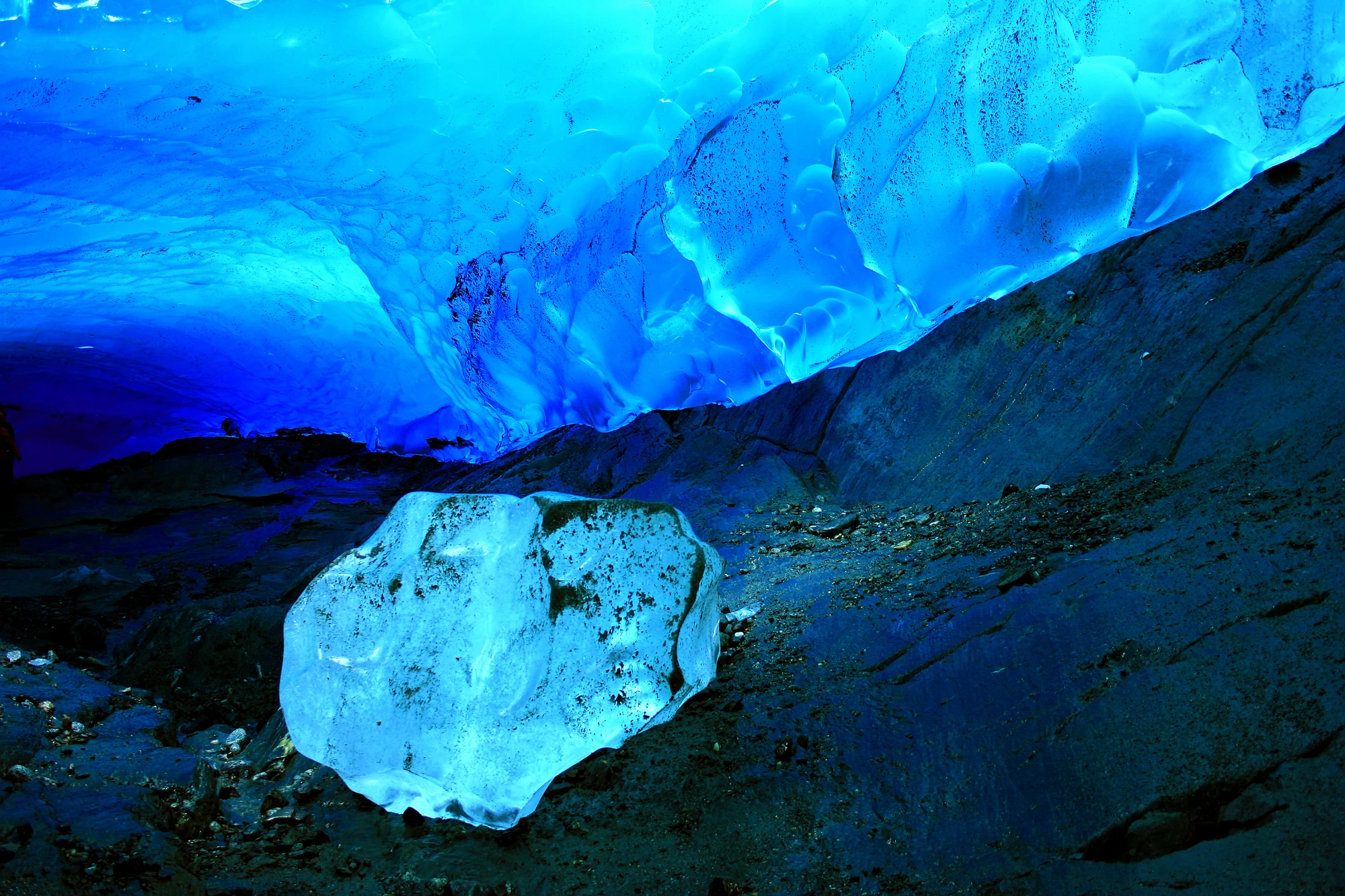
The canoe slips away from the beach with a soft, chewing sound—ice greeting wood and nylon—while Juneau’s mountains hold their breath. Water the color of wet pewter parts around the bow, and tiny bergy bits tick like glass against the hull. Ahead, the face of Mendenhall Glacier rises like a weathered wall, layered in blue and white, its surface scabbed with moraines and crevasses. Your guide calls out a direction; you lean in, paddle in time, and the lake answers with a slick, steady ripple that seems to be pulling you into a private corner of the Tongass National Forest.
This five-hour tour is built around a simple, precise promise: get you up close to a tide of ice without strapping on crampons or joining a technical mountaineering team. It’s a day that combines a calm paddle across Mendenhall Lake, the slow, satisfying work of edging between sculpted icebergs, and a short interpretive hike across the rocky forefield deposited by the glacier as it retreats. Total moving time on the water is modest—expect roughly 2–3 miles of paddling roundtrip—and the land portion is an accessible 0.5–1 mile walk on uneven, rocky ground with minimal elevation gain (typically under 200 feet). The whole window is five hours, which includes safety briefings, boat transfers, and plenty of stop-and-stare time.
Geologically, the Mendenhall Glacier is a young, loud thing—young in the time of ice, old in human memory. Fed by the Juneau Icefield, its toe has retreated markedly over the last century and a half, carving Mendenhall Lake and leaving a braided landscape of till and outwash. If you listen close on the shore, the glacier speaks in small, sharp pops and distant rumbles as ice calves and rebalances. The sound is not threatening so much as candid: the glacier is continually reshaping itself and the land around it.
The land here is also ancestral territory of the Tlingit people; cultural context threads through modern Juneau, in place names, oral histories, and in the living relationship the community has with salmon runs, bears, and the forest. Guides on the tour commonly weave in these human histories, pointing out traditional use areas and explaining how climate shifts have altered both landscape and livelihoods.
Why go? Because the experience is both immediate and teachable. From a safe distance you can watch harbor seals sun themselves on ice floes, bald eagles wheel overhead, and waterfalls cascade—sometimes in sheets, sometimes thin as thread—down the flanks of mountains. For a lot of travelers, the payoff is proximity: standing on a beach with the glacier a few hundred yards away is a tactile, impossible-to-fake moment. The tour’s small-group format keeps it intimate; guides are both naturalists and safety managers, translating jargon into crisp, useful details while keeping you warm and dry.
Practicalities matter here. Water is cold year-round—expect surface temperatures near freezing in places—so the operator outfits paddlers with dry suits or bomb-proof waterproof layers and life jackets. Dress in layers: a base wicking layer, an insulating mid-layer, and a waterproof outer shell. Expect wind on the lake and pebbly terrain on the moraine; a pair of sturdy, waterproof hiking shoes with ankle support is worth carrying. Cameras thrive in this environment as long as you guard them against spray and cold: bring a dry bag and spare batteries, because cold drains cells fast.
Timing the trip matters, too. In midsummer the long daylight stretches the experience and makes logistics straightforward; shoulder seasons offer fewer crowds but more unpredictable weather. Mornings can be glassy and calm; afternoons occasionally bring wind that makes paddling a bit more demanding.
Booking is straightforward—spots are limited, and tours run on a first-come, reserve-ahead basis. The price reflects the small groups and guide ratio; it includes safety equipment and interpretive guiding. Accessibility is reasonable: the hike is short and interpretive rather than technical, but participants should be steady on their feet and comfortable with basic paddling instruction.
On a deeper level, the Mendenhall Glacier Ice Adventure reads like a micro-lesson about human-scale climate change. The glacier’s retreat is visible, measurable, and immediate. That fact shapes the tone of the outing: there’s wonder, yes, but also an undercurrent of urgency. Guides often close with practical conservation advice—pack out what you bring, keep a respectful distance from wildlife, and consider supporting local conservation initiatives that protect the Tongass and its water.
If you go, do so intentionally. Book mornings for calmer water, bring layers and a dry bag, lean into the interpretive stops, and ask your guide about the glacier’s recent history. The reward is not just the photo—the glacial blue that reads perfect on a screen—but the fuller sensation of being in a dynamic place where geology, weather, and culture intersect. You leave with cold hands, a cleaner head, and a clearer sense of how fragile and magnificent cold places can be.