The morning starts with a van turning off the highway and into a narrow ribbon of road where palms and rubber trees press close. Steam rises from the jungle floor; a rooster crows somewhere beyond sight. At the camp in Songprak, coffee appears in paper cups and the guides—easygoing, practiced—unpack helmets and life jackets with the efficiency of people who spend their lives reading rivers. You get the feeling this place is measured in currents and trails rather than calendar days: the river will tell you when to be brave.
Phang Nga Province sits at the hinge between Thailand’s Andaman coastline and interior limestone country. The geology here is dramatic: karst towers hollowed by rain and sea, subterranean channels that send fresh water pulsing down to the plains. The whitewater run on this tour is short—about 5 kilometers—but compact and lively, a concentrated stretch of riffles and playful drops that reward precise steering more than brute force. It’s the kind of river that dares you: it will pull at the stern, invite you to edge forward, and then spit you out with a laugh.
Culturally, the route threads through local life. A side-stop at the Monkey Cave Temple offers a quick cultural interlude: monks chant, macaques take an interest in tourists’ snack packs, and a hilltop shrine looks out over rice paddies and distant sea. Lunch back at the camp is honest Thai fare—sour, salty, and cooling at the same time—served under a canopy of banana leaves. The guides are from nearby villages; between explaining steer strokes they will share local stories about seasonal floods, the best mangoes, and where to find a quiet beach on the way back to Phuket.
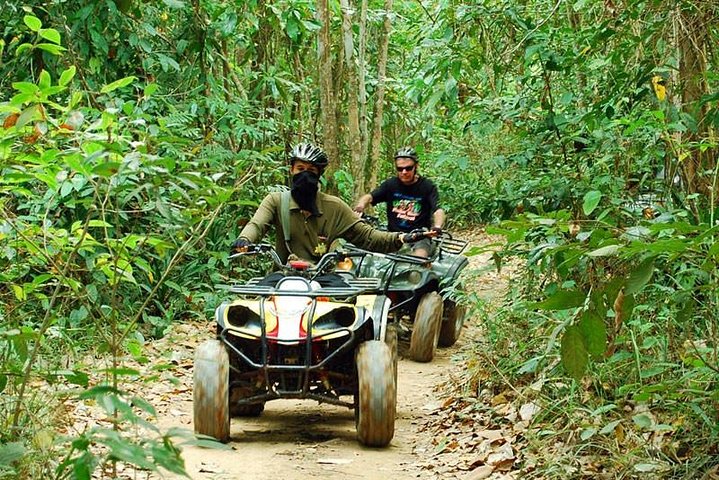
The tour also layers in a motorized jaunt: ATV rides across the lowland rainforest of Songprak. It’s optional, but when the trail opens and the machines kick up leaves and dust, the jungle feels like a living obstacle course. You’ll splash through shallow streams, bank around trees, and see the forest at a pace that contrasts with the raft—but both moves are about choice: the raft responds to the river’s moods; the ATV responds to your hands on the throttle.
Practicalities are straightforward. The whole day is an eight-hour loop—typically a 1.3–2 hour transfer from Phuket, a briefing, the ATV segment (if chosen), the 5 km raft run, lunch, and return to hotel. No advanced paddling skills are required: guides give a succinct, hands-on safety briefing and coaches sit in every raft. The whitewater is suitable for beginners and families comfortable in moving water; it’s lively enough to satisfy experienced paddlers looking for a fun half-day push.
When to go matters. The river is at its most energetic in and just after the wet season; dry-season trips are calmer and sunnier. The pick-up from Phuket is the hinge for timing—aim for a departure window that avoids mid-day heat in the hot season and the worst of the afternoon showers during monsoon months. Bring a small dry bag for your phone and a positive attitude: both will be needed.
Safety is baked into the itinerary. Helmets and PFDs are standard, and the guides lead with clear signals. Yet the wild element is real—the currents, the occasional submerged log, a slick rock edging the riverbank. Respect the briefing. If you’re nervous about the raft’s flips or the ATV’s roughness, communicate it to your guide; they can adapt placements and routes.
Beyond adrenaline, the trip is an efficient way to stitch a broader southern-Thai experience into a single day. It’s an accessible adventure for travelers based in Phuket who want to step into a greener, less touristed pocket of the region without committing to multi-day logistics. Expect to return to your hotel with mud on your boots, a sunburn ring on your neck, and a handful of stories—the sort that make other people ask when they can join you next time.
If you go: prioritize breathable layers that dry fast, waterproof protection for electronics, and a flexible schedule that allows you to enjoy the camp at a slower pace. The river will demand a bit of respect, but the rewards are immediate: the smell of wet leaves, the slap of water on the hull, and a sense of having moved through a landscape that is, for a few hours, palpably alive.
Why travelers should consider it: it’s an inverted sampler of southern Thailand—river running, rainforest throttle, local food, and gentle cultural stops—packed into one well-run, approachable day. For families, mixed groups, and solo travelers looking for something beyond the beach, it’s uncomplicated, memorable, and surprisingly complete.