You step off the bus with a taste of jungle in the air—earthy, green, sharp with the salt of a nearby sea—and a guide calls your name with a grin that promises both careful instruction and a good story. The rivers here in Phang Nga don't behave like picture-book streams; they have personality. The five kilometers of whitewater ahead will test your timing, your teamwork, and your willingness to laugh when a wave slaps your face. Later, the rainforest will convert itself into a track: root-rutted, slick, and lined with palms that whisper as your ATV pushes through. By the time you slide into the post-adventure lunch, your clothes are damp, your cheeks are flushed, and you know you've earned the rice and grilled fish waiting for you.
The dual-format day—five kilometers of river rafting followed by a two-hour ATV ride—plays to the contradictory pleasures of southern Thailand: water that dares you forward and land that demands attention. Phang Nga province sits like a hinge between the Andaman Sea and the mainland; its lowland rivers cut through limestone outcrops and mangrove roots, and the same geologic forces that raise the dramatic karsts of Phang Nga Bay also shaped the sinuous channels you paddle. The rainforest you're about to tear through on an ATV is resilient and noisy, a layered world of birds, lianas, and the occasional macaque eyeing travelers from a safe distance.
There’s history braided into the landscape. Phang Nga Bay’s karsts shot to global fame as the backdrop for 1974’s Man with the Golden Gun—James Bond’s “Island” remains a magnet for curious travelers—while the province’s communities have long lived between the tides and the jungle, harvesting rubber, fish, and a distinct southern Thai cuisine that favors coconut, turmeric and tamarind. Modern-day adventure operators work with those traditions: guides tend to be local, familiar with river behavior and seasonal shifts, and lunches often include fresh, regional ingredients.
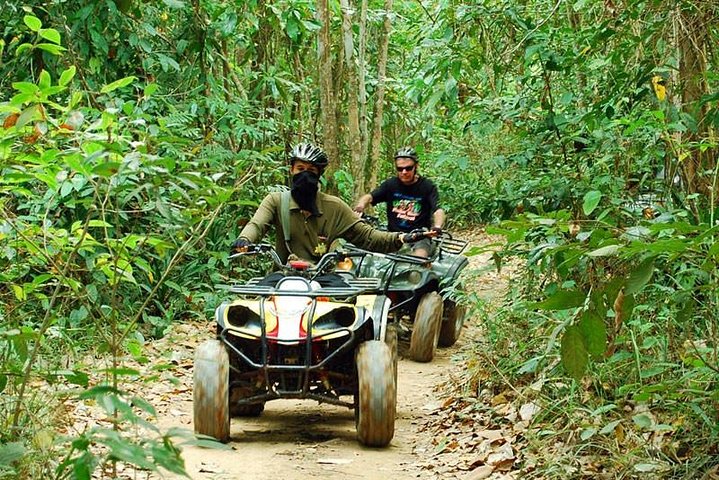
Practical details matter in a day like this. The rafting portion covers approximately five kilometers of river—class generally gentle to moderate with a few punchy rapids that require paddling in sync rather than heroics. You’ll get a safety briefing, life jacket, and helmet; guides command the raft and call maneuvers with crisp authority. After a riverside lunch—usually a well-earned spread of rice, grilled protein, and cooling fruit—you swap a wet suit for helmet and goggles and climb onto an ATV. The track is a mix of hard-packed dirt, mud patches and exposed roots that will demand throttle control, basic handling skills, and attention to lines.
Why do this combo? For one, it makes efficient use of travel time—pickup, drop-off and lunch are included, and the tour is structured as a full-day loop of about eight hours. For another, it’s a balanced workout: rafting builds core and upper-body endurance and teamwork; the ATVs sharpen reflexes and give you a physical, visceral way to move through the rainforest. You leave sunburned in places you forgot to sunscreen and pleasantly tired in muscles that earned their rest.
Safety and timing are straightforward: book in the dry season (November–April) for reliable river levels and clearer trails; monsoon months will complicate logistics and make the river unpredictable. Bring a swimsuit and a dry set of clothes, wear closed-toe water shoes or sturdy sandals, and stow your camera in a waterproof case or leave it on shore—an enthusiastic splash can end a lens. Guides expect basic fitness: you’ll be paddling intermittently and balancing on an ATV for hours, but no technical climbing skills are required. If you can bike for an hour and swim a short distance, you’ll be fine.
Conservation is part of the package if you choose conscientious operators: respect mangrove fringes, keep plastic out of the river, and ask how your tour fee supports local communities. The best outfits will have local guides, provide proper safety gear, and avoid routes that damage sensitive shoreline vegetation. Ask before you book about group sizes and whether operators limit repeat passes on fragile trails—responsible companies treat the river and forest as partners, not playgrounds.
By the time you head back to the pickup point, there’s a particular kind of calm that follows deliberate exhaustion. The river’s mischief is behind you; the rainforest has loosened its grip of adrenaline. A cold drink tastes better than a promise; conversation turns to who fell in, which rapid felt the biggest, and whether to try the ride again tomorrow. Phang Nga leaves its fingerprints on you—the wet, the wild, the feed of fish and rice—and if you look closely, you'll see how adventure tourism here can be both a throttle and a lifeline for local communities.
This isn’t a trip for people who want zero effort or total predictability. But for travelers who want to feel the environment move around them—current tugging at a tired paddle, mud slinging off a wheel, birds complaining from the canopy—this day is distilled, efficient, and honest. It’s the kind of tour you remember not because it was glamorous but because it required presence. You arrive soaked, dusty, and realigned with the simple pleasure of moving through the natural world.