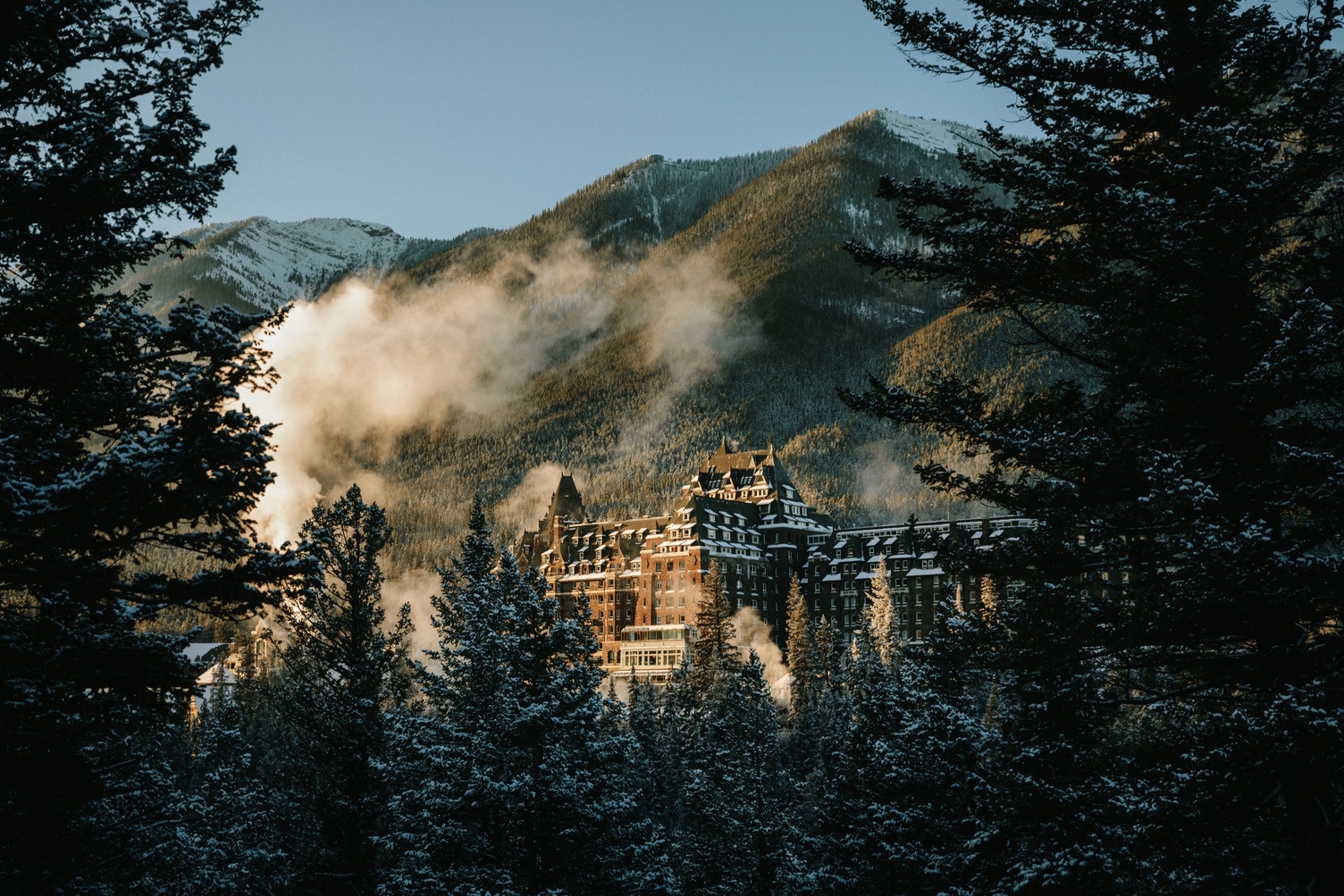
You step off the shuttle and the mountain is already asking something of you. Mt Norquay’s limestone cliffs rise above the Bow Valley like an old, gray challenge: fissured, sun-cracked, and threaded with the glint of steel cables. The town of Banff sits small and neat below, a string of rooftops pinned to a bright ribbon of river. You clip into a harness, listen as an ACMG-certified guide runs through the system one more time, and then the rock takes over—handholds and rungs anchored into the face, a safety cable running along like a reassuring spine. Nature dares you; the route politely accepts.
Banff’s Via Ferrata is one of those rare mountain experiences that is at once technical and democratic. It borrows from alpine climbing—the commitment, the exposure, the testing heart rate—but it does so with engineered aids: ladders drilled into the rock, fixed foot pegs, and a lifeline cable that keeps every clip-ined climber connected. There are a couple of ways to accept the mountain’s invitation. The Half-Day Guided Via Ferrata trims the experience to a focused climb and approach ideal for people comfortable with a few hours of exertion. The Skyline Route takes the full skyline literally: a 4.5–5 hour tour that includes an airy high traverse and a 55-meter suspension bridge that swings your view from one alpine bowl to the next.
Geology and history make the route more than an adrenaline line. The cliffs at Norquay are Late Paleozoic limestone—sheets and benches of carbonate rock that have been uplifted, tilted, and cleaved by the same tectonic forces that heaved the entire Canadian Rockies into existence. The shapes in the stone tell a story of shallow tropical seas, long gone, fossilized into ridgelines. Mount Norquay itself carries the name of John Norquay, a 19th-century Canadian politician; the area later became a hub for early recreational skiing, then summer adventures, and now this engineered climb that bridges those past uses.
Culturally, Banff is a small mountain town with outsized personality: outdoor shops rubbing shoulders with art galleries that showcase Indigenous and Rocky Mountain artists, and a lively culinary scene that ranges from post-hike craft beer to bison tartare. The town sits within Banff National Park, Canada’s first national park (founded in 1885), and it is still managed with conservation and visitor education at its core—so expect rules, park passes, and lots of signage about wildlife and trail etiquette.
On the route itself, the sensory details are immediate. The iron rungs are cool under your hands; the cable hums slightly in the wind. The limestone smells faintly mineral, the air thin and fragrant with pine. As you clip from anchor to anchor the valley opens in stages. Bow River threads silver below; peaks fan out and settle into distance like a row of watchful sentries. The 55-meter suspension bridge on the Skyline route is an architectural punctuation mark—swaying, exposed, and framed by cliffs that seem to pull the sky down into a canyon.
This is not a place to wing it. Practicalities matter: the guides supply certified harnesses, helmets, and via-ferrata lanyards. You do not need prior climbing experience—operators insist on that point—but you must be fit enough to climb ladders, balance on narrow steps, and hike in mountain terrain for several hours. Afternoon thunderstorms are a seasonal reality in the Rockies; operators often plan routes to avoid the greatest risk by starting early and finishing before the heat builds.
For the traveler planning this, there are sensible ways to increase your confidence and your enjoyment. Start early—morning light is kinder and late-day weather less predictable. Wear shoes with grippy soles and a snug ankle for lateral stability on iron pegs. Bring a daypack with water (1–2 liters), a wind shell, and a high-energy snack. A pair of lightweight climbing gloves reduces rope burn on long cables and helps when you scramble over bare rock. Above all, listen to your guide: the clipping sequence, the shoefit checks, the pacing—they make the difference between an epic day and an anxious one.
Beyond the climb itself, a stay in Banff unlocks natural extensions. If you’ve got more time, drive the Icefields Parkway toward Lake Louise and Jasper, or book a private 2-day tour that rolls Banff, Yoho, and Jasper into a single, scenic loop—an easy way to string together high mountain lakes, ancient glaciers, and sweeping viewpoints if you’d rather keep the driving minimal.
Who is this for? The Via Ferrata suits adventurous travelers who want serious exposure without the technical apprenticeship of traditional alpine climbing. It suits couples, active families (check age and fitness requirements with operators), and hikers who want to translate their trail fitness into vertical confidence. Bring respect for the mountain, plan around weather, and accept the small discomforts—sweaty palms, a pounding heart—as part of a day that rewards you with views and a very particular kind of mountain calm.
Banff’s Via Ferrata is a distilled Rocky Mountain experience: geological time under your hands, alpine ventilation in your lungs, a town below that seems to pulse with the same mountain rhythm. It can be loud—the wind, the clip of metal on metal, the hum of distant traffic—but mostly it is clarifying. You come down with dust in your shoes, a new story to tell, and the kind of mountain memory that makes you plan a return.