The Pacific greets you with a cool breath as the marina wakes—halyards ticking like impatient metronomes, the Coronado Bridge stretching its blue arc toward a day that promises both calm and surprise. You step aboard, the deck firm beneath your shoes and the bay slipping past in a mosaic of reflections: city skyline to starboard, Navy gray hulks to port, pelicans winging low like they’ve already mapped the morning’s currents. San Diego Bay unspools behind you as the boat noses out, leaving the lee of land for the open light. The ocean blinks back, deceptively smooth, as if urging you to come closer.
This half-day marine wildlife sail sits in that sweet spot between indulgence and initiative. At roughly four hours, it’s long enough to leave the harbor’s hum behind but short enough to fit a long weekend. Coronado Island slides by—its dunes and Spanish-tiled rooftops ushering you toward the Pacific’s wider theater. You’re out here to meet whoever chooses to show: brown pelicans riding the updrafts, California sea lions draped over channel markers like sunbathers who refused to go back to work, and, in season, migratory gray whales pulsing south toward Baja’s nurseries or north toward Arctic feeding grounds. The sea decides the guest list. Your job is to be present.
Beyond the bridge, the water’s character changes. The swell gains a low, steady cadence, and you settle into it—knees soft, gaze on the horizon. The crew trims sails, and the boat leans into the breeze, a quiet engine of canvas and line. San Diego’s maritime story surrounds you: a natural harbor that once sheltered canoes and galleons alike; a naval city whose identity is still written in steel; and a coastline shaped by tectonics and time—the Point Loma Peninsula guarding the bay with sandstone cliffs and offshore kelp beds that cradle entire neighborhoods of life. The kelp forests sway below, heavy with their own weather, and the water becomes a darker blue.
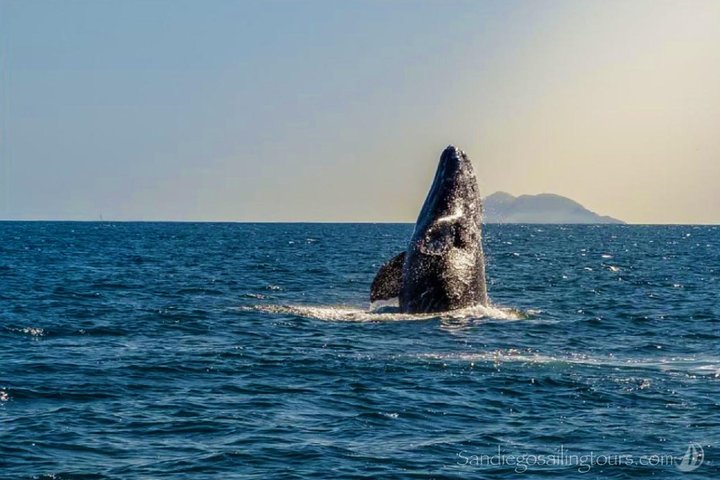
If you’re here in winter, the currents carry a narrative older than history. Gray whales—barnacled and steadfast—migrate more than 10,000 miles round-trip, one of the longest journeys in the animal kingdom. In summer, blue whales sometimes swing by, titans of appetite following plankton blooms born of upwelling and sunlight. Year-round, common dolphins stitch the ocean with white seams and laughter, often racing the bow as if daring the boat to keep up. The sea writes the pacing; you learn to read the punctuation—a sudden spout at two o’clock, a fluke lifting like a signature, a sea lion popping up to check your credentials.
The culture along these waters is equal parts working waterfront and beach-town ease. Coronado’s postcard-perfect sands are a quick ferry away; Liberty Station’s former naval training grounds now serve wood-fired pizza and artisan gelato; Point Loma’s lighthouse stands guard over a promontory that has seen every kind of sailor come and go since Cabrillo charted the coastline in 1542. Yet the best moments are simpler: the boat hushing into neutral as something surfaces just off the beam; a gull heckling your lunch break; the slow pivot of the bridge and skyline as you tack back toward the bay.
Lunch onboard keeps things easy—the kind of on-the-water meal that tastes better because the deck is moving and the wind is in your hair. You eat with one hand and keep the other on your camera or your rail. It’s not a formal occasion, which is exactly the point. This isn’t about tablecloths; it’s about the sea making you earn your sandwich and rewarding you with a close pass of a cormorant skimming the waves.
As the day stretches, the ocean shows its moods. Some days are glass; others lift into a lively chop that toes the line between playful and challenging. The crew knows the line and keeps you on the right side of it. You learn the etiquette of the channel: give space to working boats, steer wide of marker buoys slick with barking sea lions, and maintain respectful distance from whales and dolphins. The policy is simple—observe, don’t intrude. The ocean sets the boundaries, and you listen.
San Diego’s geology and ecology conspire to make this a rich classroom for watching life unfold. The underwater Point Loma shelf and nearby submarine canyons concentrate nutrients, feeding kelp forests that in turn feed everything else. Birds traffic the sky in busy lanes, and the fish below are their commuters. In the south bay, the San Diego Bay National Wildlife Refuge shelters migratory birds and fragile marsh; offshore, marine protected areas encourage a slow kind of recovery. Conservation here isn’t an abstraction—it’s visible in the vigor of a pod of dolphins or the calm way a whale surfaces when left unpressured.
By the time you angle back toward the bridge, sunlit and skeletal against the sky, the day has a shape. The wind has written your route on the water; the wildlife has provided a cast; your camera roll tells a story of patience and timing. You rinse salt from your lips with the last of your water, stash a windbreaker that’s gone from essential to unnecessary, and watch the skyline draw closer, steady and sure. The bay welcomes you home with the same quiet it offered at launch. You step off a little saltier, a little steadier, and already checking tide charts and wind forecasts for your next go.
Practicalities keep this adventure grounded. Wear non-slip shoes and layered clothing—mornings can be cool even in August. Bring a compact pair of binoculars and a soft cloth for camera lenses; salt spray is part of the deal. If you’re prone to motion sickness, prepare ahead—ginger chews, seabands, or doctor-approved medication works best when taken before casting off. And schedule the morning departure if you favor calmer seas. San Diego rewards early birds—on land and water—especially when the ocean decides to show off.


