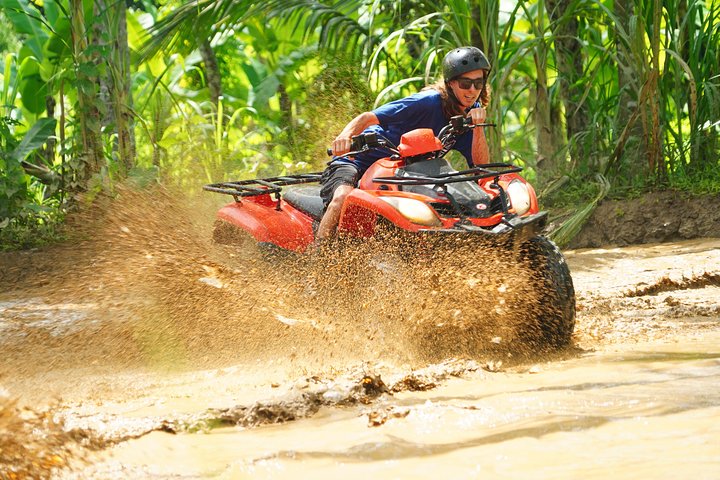
The engine buzzes, then roars—an impatient companion getting ready to eat the soft Balinese morning. You twist the throttle and the quad answers, sending a spray of red earth into the air as the trail threads between terraces. Mist still clings to the jungle canopy; sunlight pries itself through bamboo stems and turns the rice paddies to sheets of green glass. For two hours you’ll trade smooth asphalt for a choreography of ruts, mud, river stones and tight singletrack—an intimate, kinetic way to know the countryside around Ubud.
This is an ATV ride that wears its landscape loud and proud. The route snakes past rice terraces, through tunnels of bamboo, across shallow rivers that dare you to throttle through, and into villages where kerosene lamps are still lit at dawn in some family compounds. The machines are powerful automatic 250cc quads—enough grunt for a novice to feel competent and an experienced rider to have a blast. Guides set a pace that’s enthusiastic but careful; the tour advertises itself as suitable for beginners and pros alike, which is precisely why it’s become one of the most bookable outdoor experiences in central Bali.
Bali’s countryside is more than pretty scenery; it’s a living cultural landscape. The rice terraces you race by are part of the island’s Subak irrigation tradition, a communal water-management system that underpins agriculture and social life. The terraces were shaped over centuries, each contour a cooperative decision about water, fertility and ritual. Passing through this system on an ATV is a study in contrasts: modern adrenaline and centuries-old agrarian practice sharing the same slope.
Geology and topography make the route feel alive. Volcanic soils produce the deep reds you see on the trail; they grip tires one moment and fling mud the next. Rivers that cut these fields are fed by upland springs and seasonal rains, so the trail changes character with the weather—slick and technical after a downpour, dusty and fast when the sun rules.
Culturally, Ubud is a crossroads: a center for artisan craft, Hindu ritual, and nature-minded tourism. Your guides are more than drivers; they’re local interpreters who can point out coconut yields, the details of a temple gate, or the particular way a rice terrace is braided for flood control. That makes the ride equal parts scenic throttle session and compact primer on how people make a living with the land.
Practicalities matter here. The tour is about two hours long, and most operators provide helmets, goggles, and safety instruction before you start. There’s a short training loop so you can get comfortable with braking and cornering on soft surfaces. Dress for mud and sun: long sleeves protect against scrapes and sun; sturdy closed-toe shoes keep pedals and pebbles from stealing toes. Bring a small waterproof bag for your phone or camera; a quick river crossing can turn a dry pack into a wet one.
Timing is half the secret. Morning departures mean cooler temperatures, softer light for photos, and fewer other visitors on narrow lanes. Avoid the immediate post-rain window if you don’t relish deep mud—though seasoned riders often seek it out for the extra challenge. If you want cultural context, tack on a walk through a nearby village after the ride or time your trip to overlap with a market morning in Ubud.
Safety isn’t showy, but it’s present: helmets on, a guide at the head of the pack, and usually a sweep person bringing up the back. For riders who want more technical challenge there are longer, tougher routes; for families or newer riders the pace can be relaxed. Expect to leave with a grin, a little mud in unexpected seams, and photos you didn’t think you’d get—of terraces, of water-splashed faces, and of a landscape that seems to have been designed for movement.
Why book this specifically? It’s efficient: two hours delivers a dense slice of Bali’s countryside without requiring a full-day commitment. It’s social: most groups are small, and the shared spills and triumphs make for quick camaraderie. And it’s accessible: the quads are automatic and the guides patient, so you get the sensation of real off-road travel without the months of training.
If you’re planning to go, hydrate well before you arrive, bring a charged phone in a dry bag, and wear pants and closed shoes. Respect the people who live along the trail—slow down through villages, ask before photographing close family compounds, and tip your guide if they made the ride smoother and more informative. And leave the plastic: the landscape needs fewer footprints, not more.
Two hours in a cloud of red dust and green panorama is a tidy adventure: not climb-to-the-summit epic, but a machine-powered field study that gets your heart rate up while keeping the afterglow of place intact. It’s exactly the kind of travel that feels both indulgent and grounding—speed tempered by rice terraces and ritual.
For travelers who want an immediate, sensory way into Bali’s rural life, this ATV ride is hard to beat: loud, muddy, instructive and, at the end, oddly reverent as you hand the keys back and remember that the world here moves on foot and by engine, together.