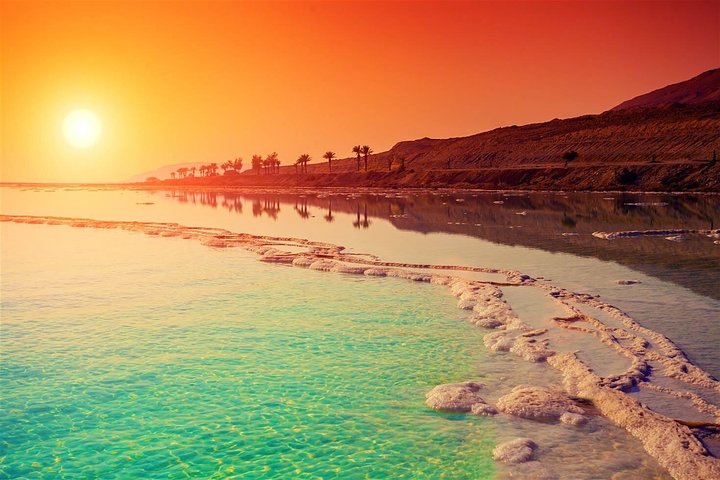
The first light in Wadi Rum arrives like a tally: it counts the ridgelines in gold and throws long shadows across wind-sculpted sandstone. A jeep eases away from a makeshift camp where Bedouin tea still steams, and the desert seems to watch you go—quiet, patient, and somehow encouraging. By dusk of the next day you’ll float in the Dead Sea, its salt crusting your fingers like tiny moons, and somewhere between those two extremes you will walk through a city carved from rose-colored rock that has been listening to travelers for two millennia.
This is a 48-hour condensation of Jordan’s most potent landscapes. It’s not a leisurely week of slow discoveries but a curated sprint that stitches the country’s geology, history, and hospitality into an accessible loop: Amman to Petra to Wadi Rum to the Dead Sea and back. For travelers with limited time who still want the emotional punch of the region—narrow canyons, open desert, and impossible buoyancy—this private tour holds tight to the essentials while handing you stories at every stop.
Petra remains the headline. The Siq narrows and the rock tightens until, without fanfare, Al Khazneh (the Treasury) erupts into view. The experience is sensory: the cool stone underfoot, a draft of dusty citrus and sandalwood from other visitors, the echo that makes the façade feel alive. Petra is Nabataean engineering writ large—cisterns, carved water channels, and a city hewn into cliffs that testify to a people who mastered scarce resources. It’s a UNESCO World Heritage Site for a reason; the architecture and the context—an ancient trade crossroads—still impress in a way that guidebook blurbs understate.
Geology does much of the storytelling here. Petra’s rose stones are layers of sandstone and siltstone, weathered into bands of color and fragile ornamentation. Wadi Rum is older in its own way: a sweep of granite and sandstone mesas that seem to float on a sea of sand. A jeep ride in Wadi Rum is kinetic geology—dune-hopping, canyon skirting, and short hikes to alcoves where bedrock is polished as if by an invisible tide. The desert is not barren; it has a personality. Wind carves the rocks, the sun reddens them at midday, and at night the sky is an honest, overwhelming dome.
Culturally, this tour leans into hospitality. Campfire dinners in Wadi Rum are a chance to hear Bedouin stories about hospitality codes and survival in this landscape; you’ll likely taste mansaf (Jordan’s national dish) or a version of rice and lamb slow-cooked under coals. At the Dead Sea, the experience shifts from history to bodily sensation: therapeutic muds and saline buoyancy that demand you relax into them.
Practically speaking, this is a trip designed to be efficient without feeling rushed. The 48-hour structure means early starts and a mix of walking, short drives, and guided jeep time. A private guide and included transportation smooth the math: you’re not negotiating buses or timetables, which makes seeing Petra’s main monuments, sampling Wadi Rum’s dunes, and dipping at the Dead Sea all achievable in two days. Price starts around USD 299, but expect some variance based on season and accommodation choices.
Who is this for? Hikers who want culture and spectacle more than summit logs; photographers who chase light and texture; travelers on a tight schedule who don’t want to sacrifice quality for pace. The tour is accessible without technical skill—most walking is on established paths, short climbs, and desert trails—and it’s private, which gives room for pacing and personal questions.
Good planning tips: aim for spring or fall to avoid extreme heat, bring layers for desert nights and cool canyon mornings, and plan for early starts in Petra to beat the crowds. Respect local customs—modest dress and an open attitude will go far—and consider the Jordan Pass if you’re building a longer itinerary; it bundles entry to Petra with visa exemptions for many nationalities.
The tour’s magnetism comes from contrast: the carved intimacy of Petra’s canyons versus the vastness of Wadi Rum, the tactile oddness of the Dead Sea versus the tactile history of Nabataean stone. The landscapes are generous, and the people who guide you through them tend to be, too. If your travel window is tight, this two-day loop is less about scratching the surface and more about being perfectly placed inside a handful of unforgettable places. It asks only that you bring curiosity, decent walking shoes, and a readiness to let the desert slow you down long enough to notice the details.