Two Tombs, Two Dynasties: Walking the Underground Palaces of Qin and Han in Xi'an

Two Tombs, Two Dynasties: Walking the Underground Palaces of Qin and Han in Xi'an

Two burial complexes, one day: explore how Qin power and Han culture built their afterlives

Continue Reading

You arrive in Lintong as the sun skims the horizon and the city behind you still hums with morning traffic. The road threads past wheat fields and low hills of compacted loess; the earth here keeps its own archive, layers stacked like pages. At the Terracotta Warriors Museum, a low wind seems to move through the pits themselves, nudging the silent ranks as though the clay soldiers are shifting in sleep. That hush is the first thing that hits you: an implausible quiet within a place so dense with history.

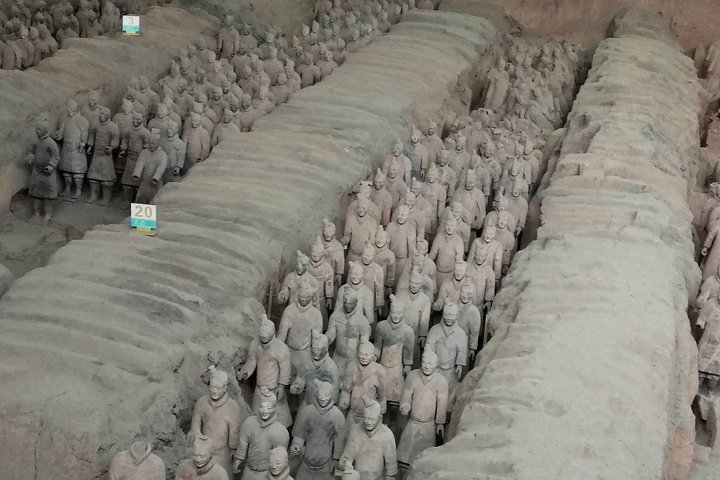
The Terracotta Army is the headline—an entire buried army created to guard Qin Shi Huang, the first emperor of a united China. Unearthed in 1974 by local farmers digging a well, the pits revealed thousands of life-size figures: archers mid-draw, cavalrymen frozen in steady gaze, generals with carved expressions. It is an engineered theater of power, a funerary city intended to continue the emperor's rule in the afterlife. You walk along the elevated viewing paths and get close enough to read the tool marks on a warrior's sleeve. Up close, the scale and individuality of the figures are less myth than craft: every face is slightly different; every braid and badge is intentionally detailed.

Across the valley sits Hanyangling, the Western Han joint tomb of Emperor Jing of Han and his empress. It is quieter, lower to the ground, more domestic in its afterlife ambitions. Where Qin's underground palace is a show of dominance, Han Yangling reveals an empire turning inward—pots, models of daily life, and delicate painted lacquer. The contrast between the two sites is instructive: Qin's hyper-constructivist power versus Han's more subtle cultural expansion. Touring both in a single day is to move from monumental spectacle to intimate archaeology, and to watch centuries of political evolution unfold beneath your feet.

This is not just a museum visit; it is a geography lesson and a cultural conversation. Xi'an sits near the cradle of the Yellow River basin, on the fertile Guanzhong Plain, where loess has both preserved and challenged human settlement for millennia. That pale dust is the medium that held these tombs, and in many ways it is what made their preservation possible. Nearby towns still host traditional crafts and flavors that grew alongside those early empires: rich mutton stews, flatbread sandwiches called roujiamo, and a street food culture centered in Xi'an's Muslim Quarter.

A practical day here is straightforward but requires forethought. The full private tour runs about eight hours—transport, entry, and guided time at both sites. Expect several kilometers of walking, much of it on flat, well-maintained paths inside museums, but there are stairs and raised viewing platforms. Peak months see crowds, so early departures are key for better light and fewer people. A knowledgeable local guide is more than convenience: they translate not just language but context, connecting pottery fragments to funerary rites and imperial edict to regional shifts.

For photographers, the light in Pit 1—the largest pit—can be diffuse and forgiving in the morning, good for capturing rows and negative space. At Hanyangling, the museum’s reconstructed burial furniture and painted models reward slower, closer compositions. Be mindful of restricted areas and signage; preservation is paramount.

Practical tips: book a private tour that includes transport from Xi'an and confirm ticket reservations in advance; many travelers combine the Terracotta Warriors with Hanyangling on the same day because they are in the same Lintong district. Bring a reusable water bottle, wear comfortable walking shoes with good traction, and carry a light, packable jacket as museum interiors can be cooler than outside. Cash remains handy for small vendors, even though major sites accept cards. Finally, show restraint at the edges of the pits: the artifacts were excavated from fragile soils and need a respectful distance.

The day ends well in Xi'an. After the sun fades, the city’s Muslim Quarter glows and smells of cumin and slow-braised mutton. Here you can ground the high drama of the tombs with something more immediate—lamb soup, a sticky-sweet sesame cake, and the chatter of locals. The move from an underground palace to a steaming bowl of noodles feels like a recovery ritual: from memorial to meal, from the distant dead to the living present.

Why go? Because this is archaeology made cinematic without being theatrical. It’s an opportunity to see how two imperial visions approached death, power, and posterity, and to witness how relatively recent excavations still rewrite history. The tour works for curious travelers who like history, families who want an educational day trip, and photographers after evocative subjects. It’s both an intellectual and sensory experience: the smell of loess, the muffled footfalls on raised walkways, the sight of a warrior’s hand still gripping a corroded weapon.

In short, take the time to move through both sites deliberately. Let the quiet of the pits sink in, compare the funerary objects at Hanyangling, and finish in Xi'an to taste how living culture overlays the dead. That layered experience—earth, empire, and everyday life—is what makes a day with the underground palaces feel like traveling through time rather than just reading about it.

Duration8 hours
Group Size1–15 Guests
LanguagesEnglish
Plan your visit

Trail Wisdom

Start early

Depart Xi'an at or before 8:00 am to beat crowds and get softer morning light in the pits.

Bring local cash

Small vendors and off-site toilets may only take cash; keep small bills for food stalls.

Respect conservation zones

Do not cross barriers or touch exhibits; the soil and finishes are fragile and protected.

Comfortable shoes

Expect several kilometers of walking with some uneven surfaces and raised platforms.

Local Knowledge

Hidden Gems

  • Huaqing Palace and Hot Springs — nearby historic site with imperial gardens and hot springs
  • Shaanxi History Museum — excellent complementary context for artifacts and regional history

Wildlife

Eurasian Magpie, White Wagtail

Conservation Note

Both sites are actively conserved; follow site rules, avoid flash photography where prohibited, and stay on designated paths to reduce erosion and preserve painted surfaces.

The Terracotta Army was discovered in 1974 by local farmers; the figures were buried with Qin Shi Huang (259–210 BC) to accompany him in the afterlife, while Hanyangling is the Western Han mausoleum for Emperor Jing (Liu Qi).

Seasonal Guide

spring

Best for:Cooler temperatures, Blossoms in the surrounding countryside
Challenges:Occasional rain, Dust after dry spells

Spring brings mild weather and fewer crowds than summer; pack a light rain shell and layers.

summer

Best for:Longer daylight hours, Combining tours with evening markets
Challenges:High heat and humidity, Peak tourist crowds

Summer is busy and hot—early starts and plenty of water are essential, and book tickets in advance.

fall

Best for:Crisp skies and comfortable temps, Great photo light
Challenges:National Day holiday crowds in early October

Autumn is the best balance of weather and visibility—avoid national holidays or reserve early.

winter

Best for:Quiet galleries, Clear, crisp air that sharpens details
Challenges:Cold temperatures, some outdoor chill

Winters are cold but uncrowded; bring warm layers since indoor spaces can still feel cool.

Photographer's Notes

Use a mid-range zoom (24–105mm) for versatility: wide for pit compositions, short telephoto for details. Shoot early for soft light and fewer reflections on protective glass. Bring a circular polarizer to reduce glare on display cases and to deepen sky color when shooting exteriors. Respect signage—no flash near pigments and fragile lacquered pieces.

What to Bring

Comfortable walking shoes

Essential

Support for several kilometers on flat but sometimes uneven paths and platforms.

Reusable water bottle

Essential

Staying hydrated is crucial in warm months; refill where available.

Light packable jacket

Essential

Museum interiors and winter mornings can be cool—layers are useful.

○

Portable phone charger

Long days of navigation and photography drain batteries quickly.

Common Questions

How far is the Terracotta Army from Xi'an city center?

The site is about 35–45 kilometers northeast of downtown Xi'an; expect roughly a 45–60 minute drive depending on traffic.

Are the Terracotta Warriors and Hanyangling accessible in one day?

Yes—this private tour is designed as an 8-hour day that includes both sites with guided time and transport.

Do I need to buy tickets in advance?

During peak season or holidays, buy tickets in advance; private tours often include pre-booked admissions.

Is the site wheelchair accessible?

Main viewing platforms and museum areas have accessible paths, but some older areas and outdoor paths may be uneven—check with the tour operator for specific accommodations.

Are English-speaking guides available?

Yes, private tours typically include an English-speaking guide—confirm language competency when booking.

Can I touch or photograph the artifacts?

Photography for personal use is generally allowed, but flash and physical contact with artifacts are prohibited to protect fragile surfaces.

What to Pack

Comfortable walking shoes, reusable water bottle, light jacket, power bank — for distance, hydration, variable indoor temperatures, and charged devices

Did You Know

The Terracotta Army was uncovered in 1974 when farmers digging a well struck fragments of painted clay that led to the discovery of thousands of life-size figures.

Quick Travel Tips

Book tickets and a private guide in advance; start early to avoid crowds; carry small cash for local stalls; pack layers for changing temperatures.

Local Flavor

After the tour, head to Xi'an's Muslim Quarter for roujiamo (meat sandwich), yangrou paomo (lamb soup with torn flatbread), and snacks; for a drink, check out small craft beer bars near the city wall—local flavors and social life are an excellent complement to a day of antiquities.

Logistics Snapshot

Closest airport: Xi'an Xianyang International Airport (XIY). Driving distance to Terracotta: ~45 km / 45–60 min. Cell service: Good in city and museum grounds. Permits: No special permits, but buy entrance tickets in advance in high season.

Sustainability Note

These burial sites are sensitive archaeological preserves—stay on marked paths, do not touch artifacts, and pack out trash; choose licensed guides who follow conservation guidelines.

Topics

Included

  • Private transportation
  • Hotel pickup and drop-off
  • Lunch
  • English-speaking guide
  • Two bottles of mineral water
  • Entrance ticket fees

Good to Know

  • Suitable for all physical fitness levels