Up Through the Canopy: Riding the St. Lucia Aerial Tram into the Island’s Green Heart

Up Through the Canopy: Riding the St. Lucia Aerial Tram into the Island’s Green Heart

A quiet cablecar to rainforest ridgelines, with ziplines and trails that put you in touch with St. Lucia’s wild heart.

Continue Reading

There’s a moment when the island slips beneath you and its noise thins to a distant hum: the harbor’s tin roofs, the honk of a market truck, the chatter of a morning ferry. The St. Lucia Aerial Tram pulls you out of the bustle of Castries and into a different rhythm—one measured in leaf-shadows, birdcalls, and the slow turn of a cablecar gliding over the ancient forest. From the tram’s window the rainforest seems deliberate, almost watchful; vines curve like fingers, emergent trees stand sentinel, and gullies fold into secret green rooms.

The tram lands near the crest of the Castries Waterworks Reserve, a protected forest parcel declared in 1916 and folded into the Queen’s Commonwealth Canopy in 2016. Here the island’s geology and climate have conspired to make a compact, lush cathedral of life: nutrient-rich volcanic soils nourish towering gommier and chatannier trees whose buttressed roots lace the earth. Epiphytes cling like punctuation, and giant ferns unfurl below, softening the forest floor. It’s a place to slow down, but also a launchpad for higher-octane ways to taste St. Lucia’s wild side.

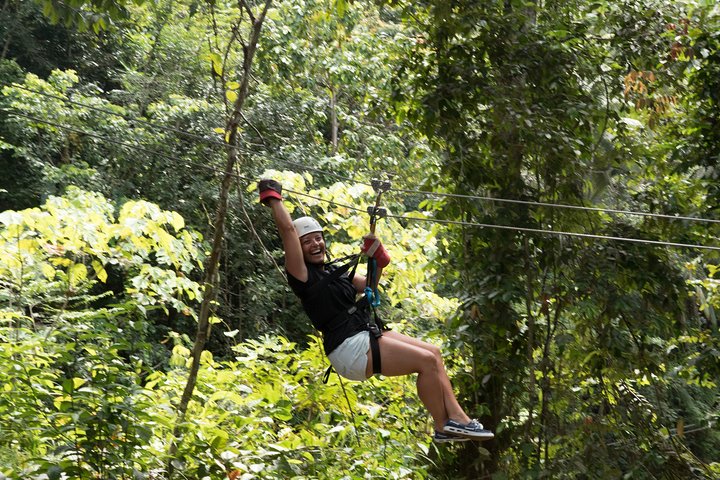
The aerial tram is often paired with canopy zip lines, short nature trails, or longer guided hikes through the Castries Waterworks Reserve. That makes the site uniquely suited to travelers who want contrast in one morning: a panoramic, quiet ride up; the visceral thrill of flying between treetops; and the subtle work of listening for calls from the Jacquot—St. Lucia’s native parrot (Amazona versicolor)—or the flash of a St. Lucia Oriole. Each element complements the others: the tram gives perspective, the zip lines give speed, and the trails let you get close enough to learn the forest’s language.

History blends into the landscape here. The waterworks were originally developed to supply Castries and the surrounding districts, but over a century the reserve matured into something more important—an ecological refuge for endemic flora and fauna and a living classroom for nature interpretation. Local guides point out trees used for traditional crafts and medicine and describe how the forest has shaped nearby rural communities. The experience is as much cultural as natural; winding access roads cut through small farming settlements where banana and cocoa growers work parcels much the same way their parents did.

Practicalities are straightforward: the tram itself is gentle and accessible for most travelers, while the adjoining zipline courses (some offer up to eight lines and 16 platforms, including a 65-ft high line and one stretching roughly 566 ft) are run by trained staff who brief you on safety and equipment. Guided hikes vary from short interpretive walks to longer treks like the Jacquot Trail that travel across shallow ravines and creek beds and through an understory rich with ferns and orchids. Birdwatchers will want to plan early morning departures for the best light and the loudest avian activity; adrenaline seekers might schedule the zipline as a second act, when the forest feels warmer and scents rise from the damp soil.

If you’re plotting this into a day on St. Lucia, think logistics: the site is roughly a 20–40 minute drive from Castries (depending on traffic), and many tours cater directly to cruise passengers, returning to terminals in time for departures. For independent travelers, allocate 2–4 hours if you’re doing tram plus a walk, and 3–5 hours for tram plus zipline and longer trails.

What you’ll need: good trail shoes, a lightweight rain jacket, and a refillable water bottle. The island’s weather can flip from bright sun to a sudden shower; reefsafe sunscreen and insect repellent are non-negotiable. Bring a small telephoto or a zoom lens for bird portraits—the tram and cleared viewpoints make for excellent windows into the canopy, but the parrots will still hold their distance.

Beyond the gear, bring patience. The best encounter isn’t the fastest; it’s the one where you stand quietly on a ridge and a Jacquot answers from hidden branches, where a guide points out the delicate relationship between fern and tree, and where you realize that speed and stillness aren’t opposites here, they’re complementary ways to learn the rainforest.

For planning: book early in high season (December–April), and consider a combo package—many operators bundle the tram, zipline, and hiking for a single visit, saving time and offering a fuller picture of the reserve. Respect local staff and wildlife: don’t feed birds or stray from marked trails. Small gestures—keeping volume low, removing trash, tipping guides who share local knowledge—go a long way in a small island economy.

The St. Lucia Aerial Tram is deceptively simple. It’s a cablecar and a viewpoint, yes, but it’s also a gateway—an invitation to consider how a tropical island holds water, supports birds, sustains families, and offers both adrenaline and reflection. Stand at the tram’s highest point and you can see the island’s many scales at once: the sweep of the coastline, the patchwork of farms, and the dense green where life gathers quietly, determinedly, above and below the cables.
Duration2–5 hours depending on combo
Plan your visit

Trail Wisdom

Start at dawn for birdlife

Bird activity is highest in the early morning—book a first tram or guided birding walk to catch Jacquot parrots and orioles at their most vocal.

Wear grippy shoes

Trails can be muddy after brief tropical showers; lightweight hiking shoes with good tread are more useful than sandals.

Bring a refillable bottle

Tap water may not be available at trailheads—carry 1–2 liters depending on activity and heat.

Mind the weather window

Zipline operations can close in heavy rain or high winds—check local forecasts and confirm with your operator.

Local Knowledge

Hidden Gems

  • La Sorcière Mountain viewpoints that face the Caribbean for late-afternoon light
  • Roadside stalls below the reserve serving coconut water and local pastries—perfect after a hike

Wildlife

Jacquot parrot (Amazona versicolor), St. Lucia Oriole

Conservation Note

Stick to marked trails, avoid feeding wildlife, and book with operators who employ local guides—these practices help sustain the reserve’s ecology and community benefits.

The Castries Waterworks Reserve was formally declared in 1916 and later recognized as part of the Queen’s Commonwealth Canopy in 2016, highlighting its conservation importance.

Seasonal Guide

spring

Best for:birdwatching, trails with fewer crowds, wildflower viewing
Challenges:heat spikes, early rains possible

March–May is warm and often dry—ideal for birding and walking the trails when the forest smells of fresh growth.

summer

Best for:lower prices, lush rainforest scenery, zipline adventures
Challenges:higher humidity, afternoon showers, mosquitoes

June–August brings lush vegetation and fewer tourists, but expect humidity and periodic rain; pack insect repellent.

fall

Best for:quiet trails, local harvest scenes, combo tours
Challenges:increased hurricane risk, frequent heavy rains

September–November can still offer great outings but carries the highest risk for tropical storms—keep travel insurance current.

winter

Best for:dry, stable weather, cruise-ship day trips, clear viewpoints
Challenges:higher visitor numbers, peak prices

December–February is the dry high season—bright skies and easy access, but lines and prices go up.

Photographer's Notes

Use a telephoto lens (200–400mm) for parrot and oriole portraits; stabilize your camera against tram windows for low-light canopy shots; shoot in burst mode for birds in flight; and bracket exposures when shooting views from ridgelines to preserve sky detail.

What to Bring

Lightweight hiking shoes

Essential

Grip and ankle support for muddy trails and uneven platforms.

Refillable water bottle (1–2L)

Essential

Stay hydrated in humid tropical conditions; refill where available.

○

Binoculars (8x–10x)

Bring for birdwatching—the canopy offers great sightings but often from a distance.

Light rain shell

Essential

Afternoon showers are common; a packable jacket keeps you comfortable during trails or between activities.

Common Questions

Is the aerial tram wheelchair accessible?

The tram platform and vehicles are generally accessible, but contact the operator in advance to confirm accommodations and transfer assistance.

Are there age or weight limits for the zipline?

Yes—zipline operators typically enforce minimum age (often around 6–8 for junior lines) and maximum weight limits for safety; check specific operator policies at booking.

How long does a typical visit take?

Expect 2–4 hours for a tram ride plus short walk, and 3–5 hours if you add a full zipline course or extended guided hike.

Can I bring my camera or drone?

Cameras are encouraged—keep them secure on ziplines. Drones are usually prohibited in protected reserves; verify local rules before flying.

What wildlife might I see?

Look for the Jacquot parrot (Amazona versicolor), St. Lucia Oriole, hummingbirds, and small forest mammals; sightings depend on time of day and season.

Do I need to book in advance?

High season and cruise-ship days can be busy—book your tram or combo package in advance to secure preferred times and transfers.

What to Pack

Light hiking shoes for traction; refillable water bottle to stay hydrated; binoculars for birdwatching; lightweight rain shell for sudden tropical showers.

Did You Know

St. Lucia’s Castries Waterworks Reserve was established in 1916 and was included in the Queen’s Commonwealth Canopy in 2016 to recognize its conservation value.

Quick Travel Tips

Book tram or combo packages ahead of cruise-ship days; arrive early for birding and cooler temperatures; bring cash for small roadside vendors; wear quick-dry clothing for humidity and possible showers.

Local Flavor

Pair your morning in the trees with lunch in Castries: try green figs and saltfish (the national dish), sample fresh coconut water from a beach stall, or pick up handmade crafts at the municipal market to support local artisans.

Logistics Snapshot

Duration: 2–5 hours; Location: Castries Waterworks Reserve; Best time: early morning for birds, midday for zipline; Accessibility: tram is generally accessible—confirm in advance; Book: reserve high-season slots early.

Sustainability Note

Choose operators who hire local guides, follow marked trails, and enforce wildlife protection rules; use reef-safe sunscreen and pack out any trash to reduce your footprint.

Topics