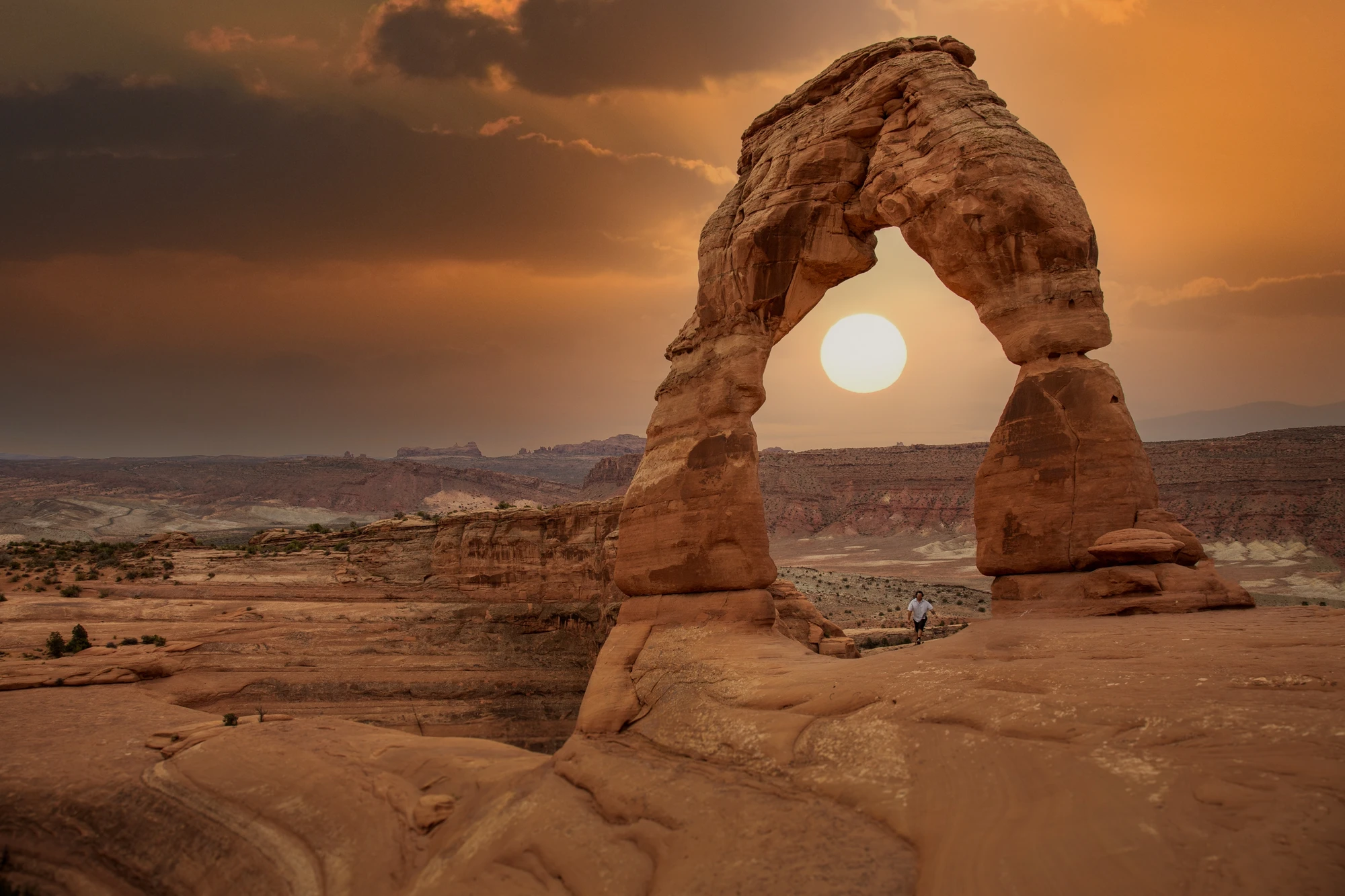
The red rock waits for no one. By sunrise, the Fisher Towers are already awake—spires of caramel mudstone catching the first clean light, throwing long shadows toward the Colorado River. The trail noses into a maze of fins and buttresses as if invited by the desert itself. Slickrock shelves tip you toward views of the snow-dusted La Sals, while a cool breeze slips through alcoves shaped by time and storms. The towers don’t just stand—they posture, daring you to step closer and see how far the stone will let you go.
A four-hour guided hike here is less about conquering distance and more about reading a landscape written in slow motion. The Fisher Towers Trail undulates along benches carved into the Cutler Formation, a 260-million-year-old archive of ancient river fans slumped and cemented into hoodoos and walls. The route clocks in around 4–5 miles round-trip with roughly 1,000 feet of cumulative gain—enough to get the lungs working without scaring off reasonably fit hikers. Expect a few short scrambles and one fixed ladder—nothing technical, just moments where the trail asks you to commit. On hot days, the sun presses down, insistent and honest; in cool weather, the shade pools under ledges and the stone seems to breathe.
Guides earn their keep with timing, pacing, and the kind of granular knowledge that turns shapes into stories. They’ll point out The Titan, often called the largest free-standing mudstone tower in the United States, and explain how softer siltstone shoulders the weight of harder Moenkopi and Chinle caprock. They might pause where the route threads a narrow rib to share why cryptobiotic soil—those dark, crusty islands of life—must not be crushed under a stray boot. If you’re the sort who wants to get the most out of a desert day, consider tapping one of Moab’s local experts; the right guide will tune the hike to your group, slip through the busier spots, and find quiet shelves to take in the view.
Culture and climbing thread through this place too. Climbers have long revered Fisher Towers’ improbable formations. The corkscrew summit of Ancient Art looks like a potter abandoned it mid-whirl; on calm mornings you might spot a climber silhouetted against the sky, inching along the airy neck that gives the route its mystique. It’s a reminder that this is living stone—weathered, fragile, and constantly edited by wind and rain. The towers have a film résumé as well; their otherworldly profiles have cameoed in commercials and adventure films that needed a backdrop with presence.
Geology here reads like a layered conversation. Flash floods carve fresh runnels after summer monsoons. Freeze-thaw cycles pry apart edges in winter. The trail winds through all of it, offering vantages that pivot from the nearby Titan to far reaches of Castle Valley, where the Colorado River snakes across the high desert. From one overlook, the La Sal Mountains hover like a cool thought on the horizon—snowfields sending their scant moisture into the canyons below. Even the air feels stratified: warm on the sun-blasted slabs, cool as you duck beneath an overhang. The towers don’t merely stand as curiosities; they preside, patient and attentive, while everything else moves.
A practical edge is part of the Fisher Towers experience. This is a desert hike with teeth. You’ll need real water—at least 2 liters per person in spring and fall, more in summer—and grippy footwear that laughs at sand-on-slickrock. The trail is obvious, well-signed by Bureau of Land Management standards, but side paths tempt careless feet onto delicate soils. Wind can whip across the benches; hat and sunscreen aren’t optional. There’s minimal shade, so early starts are smart, and evening hikes glow with color but require a confident turnaround time. Families do well here—kids five and up with some trail experience can handle it with guidance, especially on the ladder and exposed turns. For many travelers, the sweet spot is a shoulder-season morning, the towers shading you long enough for the sun to find its best angle.
What surprises most visitors is how the route keeps reinventing itself. One minute you’re skirting a mudstone wall that looks like a melted cathedral; the next, you’re crossing a dry wash that rumbles to life when storms pass over the La Sals. Ravens ride thermals, taunting you with their acrobatics, and desert bighorn sheep sometimes appear in the quiet hours, stepping light on impossible slopes. The stone seems to nudge you onward, then hold you quiet when the vista suddenly opens and Castleton Tower, the Rectory, and the Priest and Nuns lock into a perfect panorama.
Moab hums just down the road with bike shops, bakeries, and breweries, but Fisher Towers holds a different tempo. It’s less a headline act than a deep cut—beloved by those who return to run a hand along the same sandstone seam and notice how the desert edits its own script. If your itinerary is stacked with national parks, this is a chance to step off the main stage and let a subtler, more intimate story unfold. With the help of seasoned guides in Moab, you can move at the pace of the place, learn how the land works, and leave better equipped to treat it well.
In the end, Fisher Towers is a conversation. The towers stand and watch; the river pushes forward; the wind redraws the edges. You show up with curiosity and a few good miles in your legs. The desert answers, steady and direct, with views that stay with you long after the dust is out of your boots. If you’re plotting a trip built on real terrain and clear rewards, add this to the list—and consider a guided outing to sharpen your read of the rock. There’s value in having someone along who knows when the light turns gold on The Titan and where the quiet pullouts are on Scenic Byway 128. For travelers who crave both beauty and specificity, that’s the sweet spot—a hike that’s equal parts wonder and know-how, delivered by Moab desert experts who let the towers do the talking.