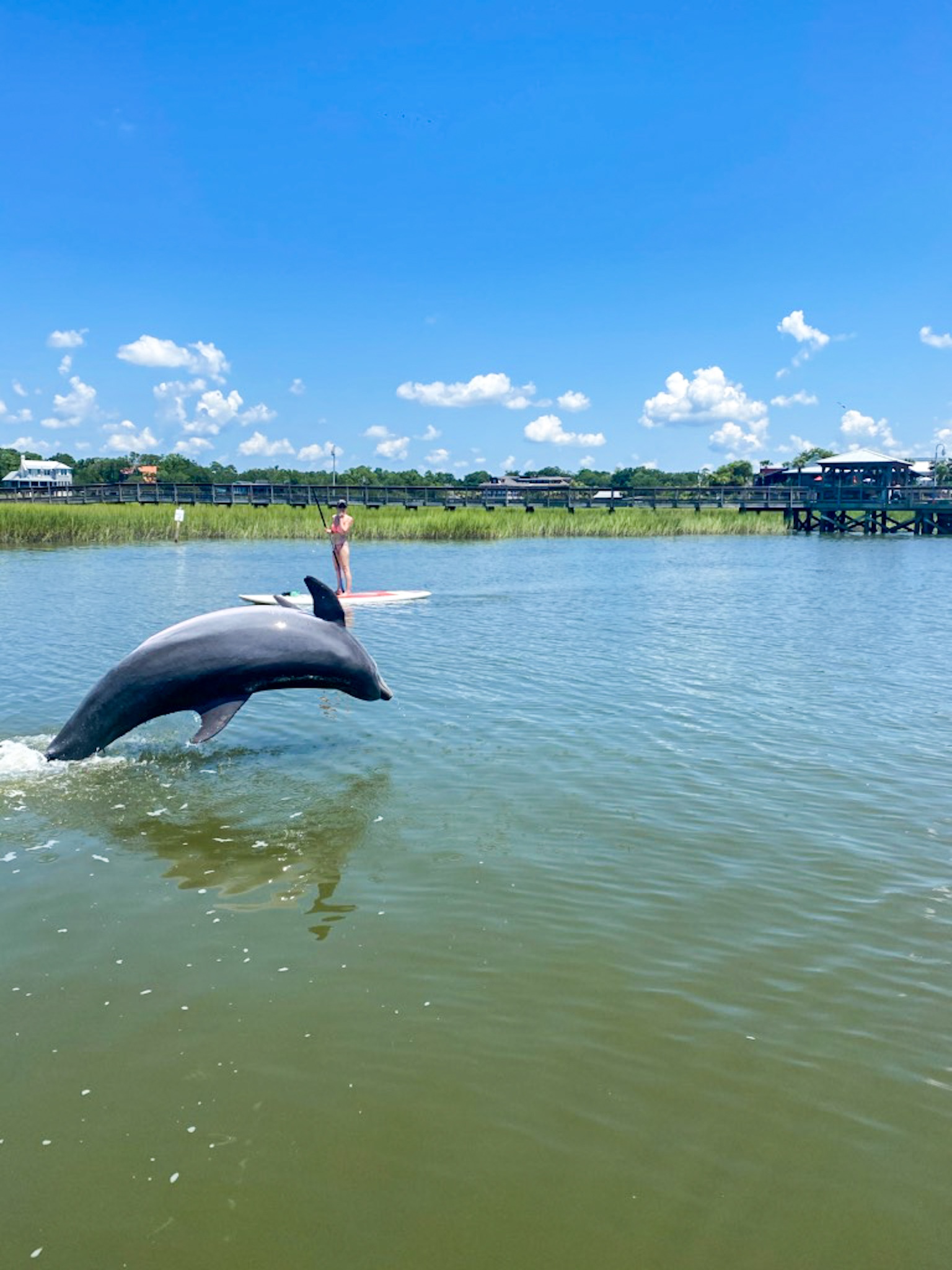
You push off into a hush that feels alive. The tide breathes in, the creek’s tea-colored water slick as glass under a sky already warming to South Carolina light. Shrimp boats rest at their slips along Shem Creek, masts sketching lines across the morning, while pelicans idle on pilings like seasoned dockhands. The marsh—an endless quilt of Spartina—rustles as if whispering the plan for the day: move with the water, not against it. The captain eases the throttle, and the boat glides toward the backwaters, where the Lowcountry’s true voice speaks in ripples and wings.
This is the Backwater Eco Tour (https://app.advcollective.com/local-experts/charleston-backwater-eco-tour-2), a two-hour float through Mount Pleasant’s quiet network of tidal creeks and salt marsh. It’s simple and immersive: no roar of surf, no long approach to a trailhead—just brackish water folding into delicate channels, a breeze lifting the scent of pluff mud, and the chance of a silver-gray fin carving through the surface without announcement. Bottlenose dolphins patrol these passages with casual confidence, pushing forward on the incoming tide, sometimes corralling fish against oyster beds. Ospreys hover and strike. Herons don’t walk; they consider each step, deliberate as clockwork.
Shem Creek is a working waterfront and a living classroom. For generations, this creek sent shrimp boats out to sea and brought them home, their decks piled high with pink catch and stories of weather and luck. That grit shaped the local culture you taste in the hushpuppies, in the gumbo, in the way folks talk about tides like old friends. Slide past the boardwalk and your guide threads you into the creeks where Spartina alterniflora owns the horizon. This grass is more than scenery—it’s the engine of the estuary, pumping oxygen into muck, feeding fiddler crabs and shrimp, and knitting the shoreline together against storms. In the Lowcountry, the marsh is both pantry and shield, and you’ll feel its quiet authority from the first turn.
Geology here is choreography. Barrier islands shift; sandbars migrate; oysters grow reefs that bend current and build habitat. A good eco tour doesn’t just tell you this—it shows you where to look. Your guide points out the coppery tops of oyster mounds at low water and the narrow cuts where mullet flash and scatter. The creek invites you to slow down, to look long enough for patterns to emerge: the steady drift of a jellyfish, the way marsh wrens vanish into grass that looks too thin to hold them.
Culture rides along. The Gullah Geechee story is woven through this coast, a history of resilience and deep knowledge of land and tide. Rice once grew in managed marshes just beyond Charleston; today, the old dikes and canals are traces in the landscape, subtle signatures you can still read when the light is low. On a good day, you might round a bend and see a shrimp trawler headed out, rigging swinging like a cathedral’s doors. She’ll disappear beyond the jetties, but her shadow stays—a reminder that this is a working place as much as a pretty one.
Expect calm water and an easy pace. This public charter welcomes families, photographers, and anyone curious about the coast. It runs best on a gentle breeze, under forgiving sun, early or late when wildlife is active and glare is minimal. You’ll learn the small stuff that sticks: how to tell a pelican’s age by its head color; why you never walk on oyster beds even at low tide; how Spartina cycles through seasons, going golden in fall, then gray in winter before the spring green returns. Keep your camera ready, but don’t grip it tight—this is a tour that rewards looking, not chasing.
Practicalities are straightforward. Tours depart from the Shem Creek Public Day Dock in Mount Pleasant, minutes from Charleston and convenient to breakfast joints, seafood shacks, and waterfront boardwalks. It’s a two-hour loop with a steady cadence—enough time to slip deep into the marsh and back before the day heats up. This is a public tour, so you’ll share the boat with a small group, which feels right in a place that teaches patience and perspective. There’s a minimum of five guests required to run, and at booking you’ll place a deposit with your balance due the week prior. If the weather turns, your crew will make the call; safety leads the day on the water.
You could hike all morning and never see this much life gather in one view: dolphins rolling at bow height, pelicans dropping from the parachute of a controlled fall, an osprey lifting off with a fish held fore-and-aft like a torpedo. Even the marsh itself seems to breathe, mussels clicking as the tide urges new water into old channels. The current nudges you onward, insistent but kind. You share the ride. And when the boat idles near an oyster reef and your guide talks through the system—how these living rocks filter water, how they armor the shoreline, how they feed everything—it’s hard not to feel recruited. Stewardship starts here, with one tour that convinces you the marsh is not scenery but the main event.
If you’re visiting the Charleston area, make this your reset. Slot it before lunch when the air is light and the sun patient, or time it for late afternoon when the light lays down gold and the birds start their evening circuits. Bring a hat, sunscreen, polarized sunglasses, and a willingness to learn. The water will do the rest. To check schedules or reserve your spot on the Backwater Eco Tour, visit the local experts page (https://app.advcollective.com/local-experts/charleston-backwater-eco-tour-2).