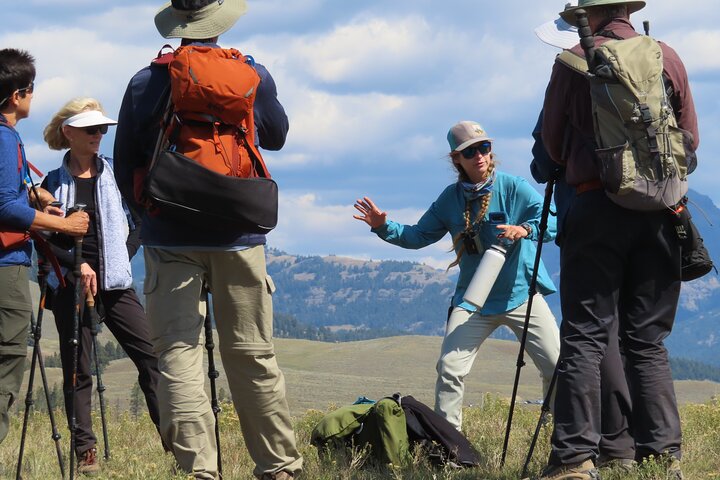
Dawn loosens its grip on the Absarokas one shade at a time. The first thing you hear is the snow—dry and squeaking as boots test the shoulder of the road. Your guide clicks a spotting scope into place. Steam lifts from a bison’s dark mane like a slow exhale, drifting across the Lamar River. The valley—wide and pale, a canvas of wind-brushed snow—holds its breath. Then, a chorus rolls down the drainage: wolves, close enough to feel in your ribs. This is winter on Yellowstone’s northern range, where the cold sharpens edges and wildlife steps forward into the open.
A winter wildlife tour here doesn’t demand heroics. It rewards patience, practice, and a willingness to let the landscape set the tempo. From Gardiner to Cooke City, the single park road open to wheeled traffic all winter threads through bison corridors, elk yards, and the territories of famed wolf packs. With bears tucked into dens, the food chain simplifies, and the drama comes out into the light. Wolves cruise the flats with that unhurried, economical gait; red foxes mouse with comedic precision; coyotes test the edges of big herds like they’re negotiating a treaty. On a good day, river otters slip through black water rimmed in ice and pop up chattering like they own the place.
Travelers often imagine winter in Yellowstone as forbidding. In reality, it’s a steady handshake. The road is plowed and patrolled. Pullouts are frequent. An expert guide brings the heavy tools—high-quality scopes, binoculars, warm blankets, and a deep mental map of who’s where. The route covers the northern range, typically Gardiner to Cooke City and back, but the itinerary bends to the animals. If fresh intel suggests a pack will be visible at first light, that’s where you’ll point the hood. It’s not a bus tour; it’s a careful, comfortable stakeout of one of the richest predator-prey theaters in North America. If you’re weighing options, this is the core experience behind many curated Yellowstone winter wildlife tours—and the reason so many photographers return in January and February.
The northern range is Yellowstone without filter: open sage, cottonwood bottoms, and meadows broken by the Lamar River. A few miles west, Mammoth Hot Springs climbs the hillside in slicked travertine, a reminder that the park breathes from deep underground even as the air needles your cheeks. History is in the roadbed, too. The Roosevelt Arch still greets visitors at Gardiner, its 1903 basalt blocks framing the promise of “For the Benefit and Enjoyment of the People.” And modern conservation’s hinge-point—the 1995–96 reintroduction of wolves—plays out daily here. The valley invites you to watch the ecology writing itself in real time: elk shifting, wolves testing, ravens commuting to the day’s news.
Winter’s personality is mercurial, but fair. The cold will ask you to plan; in return, it clears the crowds. You might step out to a sky pricked with stars, then ride a Jeep Grand Cherokee (with snow tires) through blue-hour fog while hot coffee warms your hands. Sun breaks, and the snowfield flares white. Midday wind licks across drifts, pushing ghostly veils that herd you to sheltered pullouts—companions to the fox and the pronghorn. The day’s rhythm becomes a cycle of glassing, moving, glassing again. Your guide translates distant dots into story: that coyote’s rough coat means a hard month; that bison’s glazed horns caught last week’s sticky snow. The valley isn’t passive. It nudges, dares, and occasionally, gifts something unforgettable—a wolf pair trotting side by side, tails level and sure.
Practicalities matter here. Distances can be deceptive; wildlife might be a mile away across wind-scoured flats. That’s where scopes make a day. Good guides carry extras and know how to set them at a height your back will thank you for. They also read weather, which counts for as much as animal intel. Temperatures swing fast; a sunny 15°F can nosedive as shadows pool in the bottoms. Layers are your friend: a warm jacket over a mid-layer, insulated pants, real winter boots, and hand/toe warmers do more to extend your day than bravado ever will. Bring a thermos and a good attitude. The animals will write the script.
Expect a solid 6–8 hours out, with 1–3 day options if you want to lean in. Pick-ups are convenient—Livingston, Paradise Valley, Gardiner, and Mammoth Hot Springs—so you can base where it makes sense for your trip. Park entry runs an additional $20 per person on this outing, and if you’re staying at the historic Murray Hotel in Livingston, you’ll find discounted rates with this operator. If photography is on your wishlist, you’ll appreciate an itinerary paced for light and angles. For planning ahead or coordinating logistics with a trusted local expert, browse these expert-led wildlife tours and tap the knowledge that keeps you in the right place at the right time.
Geology and culture add their own counterpoint. Look closely at Mammoth’s creamy terraces and you’ll see winter’s artistry—rimed edges, delicate ice feathers, the warm breath of the mountain hardening into stone. In Cooke City, a snowbound frontier vibe clings to wooden facades; in Gardiner, locals trade notes over pizza and pints while the Yellowstone River shakes off ice floes outside. Between pullouts, you share the road with people who know how to move slow: biologists, rangers, and the quiet, dedicated cohort of wolf watchers who have learned that patience beats panic every time.
You leave the valley at day’s end a different kind of tired—the good kind—your head full of tracks and distance and the patient confidence of animals built for this season. The snow will come again tonight. Tomorrow, the story restarts. If a winter safari ever tempted you, this is the place to say yes. Start with a day. Let the valley do the rest. And when you’re ready to plan, explore a curated Yellowstone winter wildlife tour that balances comfort, safety, and extraordinary access to the park’s wild heart.