Death Valley National Park wilderness guide
National Park · CA, NV
Hiking Guide

Death Valley National Park

Spanning the border of California and Nevada, Death Valley National Park is known for its extreme climate, remarkable desert landscapes, and significant geologic features.

National Park3,373,0634+ Trails

Designation

National Park

Total Wilderness Area

3,373,063

Elevation / Terrain

Diverse Wilderness

Field Editorial Guide

About Death Valley National Park

Spanning the border of California and Nevada, Death Valley National Park is known for its extreme climate, remarkable desert landscapes, and significant geologic features.

Wilderness Landscape & Natural Heritage

Death Valley National Park encompasses over three million acres of deserts and mountains. Known for its stark, otherworldly beauty, the park features iconic landmarks such as Badwater Basin, the lowest point in North America. The park is characterized by its vast salt flats, sand dunes, badlands, valleys, and canyons. Despite its harsh conditions, Death Valley supports a surprising diversity of plant and animal life adapted to the intense heat and dry conditions. The park's rich geological history is evidenced by its rock formations and varied landscapes that draw geology enthusiasts worldwide. Established as a national monument in 1933 and later a national park, it remains a mecca for outdoor activities ranging from hiking and stargazing to off-road driving. Its vastness offers solitude and an opportunity to witness one of the darkest night skies in the country, making it a favorite for both nature lovers and adventurers.

Unearthing the Secrets of Death Valley National Park

In the heart of the American West, straddling the border of California and Nevada, lies the enigmatic Death Valley National Park. This awe-inspiring expanse covers over three million acres, offering adventurers and nature enthusiasts a journey through some of the most extreme and otherworldly landscapes on Earth. Known for its staggering heat and dramatic desert vistas, Death Valley is a testament to nature’s raw and unyielding beauty. Begin your exploration at Furnace Creek Visitor Center, your first stop for updated park information and maps; it’s the perfect launchpad for your journey through the park's geologic wonders. One of the must-see attractions is Badwater Basin, the lowest point in North America at 282 feet below sea level. As you tread the expansive salt flats, feel the past footsteps of pioneer adventurers and marvel at the vastness that stretches toward a horizon painted with layers of desolate beauty. As sizzling temperatures subside from late fall to early spring, the park opens up to a myriad of activities beyond just sightseeing. Hiking enthusiasts can tackle the Golden Canyon Trail, a moderate four-mile adventure through breathtaking rock formations and narrow canyons that echo with the whispers of ancient times. For a more leisurely stroll, the Badwater Salt Flat Trail offers an easier path through the iconic basin. Camping under one of the darkest night skies in the country is an absolute for any avid stargazer. With reservations recommended in the cooler seasons, Furnace Creek Campground offers developed sites with close proximity to key park features. For a more rustic experience, the primitive charms of Stovepipe Wells Campground allow for a night under a stunning celestial canopy. Photography opportunities abound, particularly at Zabriskie Point where sunrise and sunset cast a breathtaking light upon golden-colored badlands, turning the landscape into a canvas of vivid hues and captivating shadows. Be equipped with plenty of water, sunscreen, and a wide-brimmed hat, as the valley can surprise you with its ferocity even in milder seasons. Death Valley’s extreme summer conditions discourage ventures during the hottest months when temperatures soar well past the century mark. The adventurous spirit can expand their exploration with a scenic drive, unveiling the park's splendor from the comfort of your vehicle. Daring natural elements dare you to explore further into landscapes such as the polished marble walls of Mosaic Canyon or the sweeping vistas from Dante's View. Despite its foreboding name, Death Valley teems with life, showcasing unique flora and fauna that have remarkably adapted to the unforgiving environment. But it remains a fragile ecosystem, one that faces continual threats from climate change and the pressures of human visitation. As you wander through this arid paradise, remember to tread lightly and respect the delicate balance that sustains its beauty. Whether you chase the adventure or seek solace in its solitude, Death Valley National Park offers an unforgettable journey into the desert that tests the limits of endurance, awe, and understanding.
Field Guide · National Park

Notable Landscape Features

Iconic geological landmarks, alpine vantage points, and distinctive ecosystems in Death Valley National Park.

Feature 1

Badwater Basin

The lowest point in North America, at 282 feet below sea level, featuring an expansive salt flat.

Feature 2

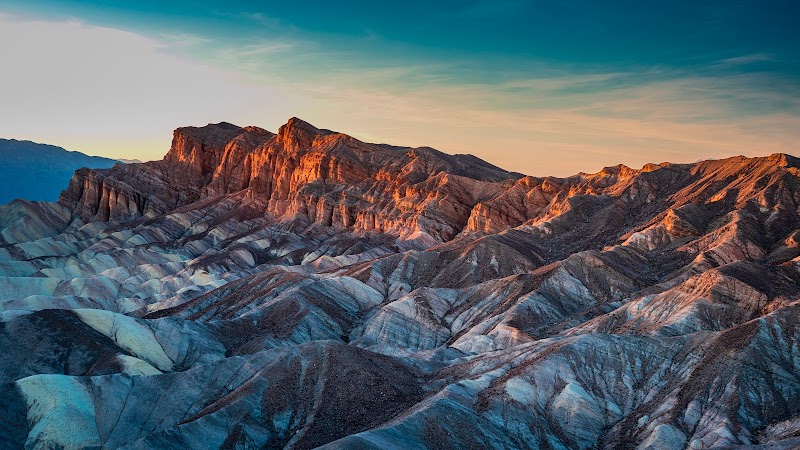
Zabriskie Point

A favorite sunrise spot offering panoramic views of the park's eroded hills and valleys.

Feature 3

Dante's View

A viewpoint atop the Black Mountains, providing breathtaking views of Death Valley from above.

Key Wilderness Highlights

Badwater Basin—experience the surreal salt flats and explore the lowest elevation point in North America.Mesquite Flat Sand Dunes—a great spot for sunrise or sunset photography with accessible dunes.Scotty's Castle—a historic site offering insight into 1920s architecture and history (note: currently closed for restoration).Zabriskie Point—provides stunning views of sunrise over the golden-colored badlands.
Iconic Trails & Natural Landmarks

Top Trails & Sights in Death Valley National Park

Discover summit paths, alpine loops, and natural wonders within this protected wilderness.

Moderate4 miles

Golden Canyon Trail

Popular trail through dramatic rock formations and narrow canyons.

Easy1 mile

Badwater Salt Flat Trail

Walk on the salt flats at Badwater Basin, and experience the lowest point in North America.

Moderate4 miles

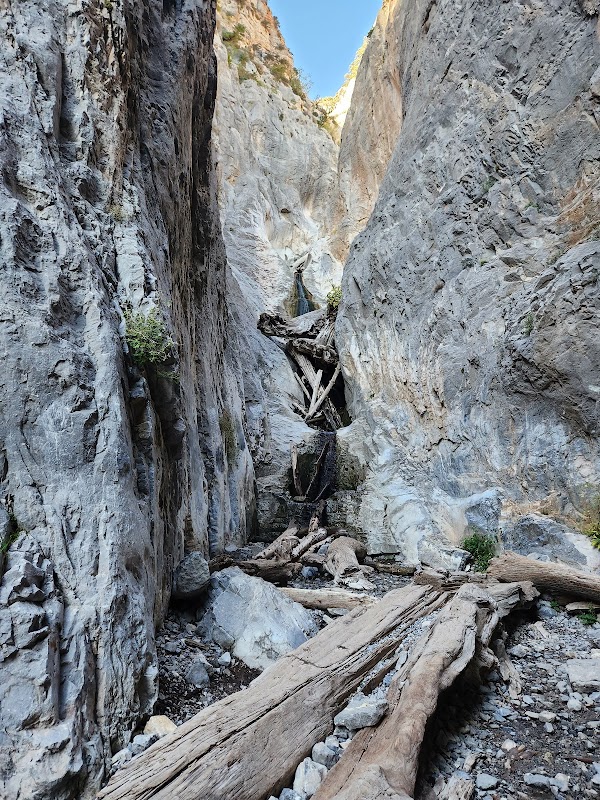
Mosaic Canyon

A slot canyon hike offering views of beautifully polished marble walls.

Easy1 mile

Dante's View Trail

Short trail providing stunning panoramic views of Death Valley from 5,475 feet up.

Wilderness Recreation

Outdoor Adventures in Death Valley National Park

Explore curated guides for top outdoor sports, trail networks, and wilderness activities.

Activity Spotlight

Hiking in Death Valley National Park

View Full Park Guide

Death Valley National Park offers exceptional terrain and routes for hiking, featuring established access paths, scenic vistas, and protected wilderness territory.

Other Activities in Death Valley National Park:CampingWildlife ViewingScenic DrivesPhotography
Explore Guide →

Hiking

**Journey Through the Arid Majesty of Death Valley: A Hiker’s Ultimate Passage** In the heart of North America's harshest desert lies Death Valley National Park, a captivating blend of barren landscapes and timeless beauty. This is no ordinary wilderness; it’s an epic saga waiting for adventurers who dare to step into its vast expanse. With striking landscapes that stretch as far as the eye can see, Death Valley is more than just a desert; it’s an odyssey of endurance and spirit, where every grain of sand tells a story of windswept travels through millennia. The hike begins at dawn, the sun just a whisper on the horizon, casting long shadows that dance across the salt-flats and intertwine with the jagged silhouettes of the Panamint Range. Hiking here is an experience like no other, each step on the bone-dry earth crackling underfoot—a reminder that life thrives even in the most unforgiving climates. For those embarking on the cherished trek from Golden Canyon to the awe-inspiring Red Cathedral, preparation is key. The roughly four-mile journey invites hikers to ascend through corridors of towering walls, where gravity seems to have etched its runes into golden stone. It’s a path both welcoming and challenging, its sandy terrain occasionally punctuated by rocky scrambles that call for a sure footing and a sharp mind. In contrast, the Badwater Basin hike, the very floor of North America at 282 feet below sea level, offers a mesmerizing flatland traverse. Here, the salt-crusted landscape reflects light in prismatic splendor, a stark white blanket under the midday sun urging adventurers to protect themselves with sun gear and ample hydration. Walking on this alien scape feels akin to treading on a distant planet—a reminder that Earth itself holds wonders beyond our imagination. High above the valley floor, the trail to Telescope Peak delivers an alpine escapade amidst a desert setting. Rising over 11,000 feet, it is the perfect vantage point for panoramas that stretch across both California and Nevada, a sweeping vista that echoes the relentless spirit of the park. The climb is demanding, marked by an elevation gain that tests the lungs and legs but rewards the soul with its mountain air and bracing winds. It is imperative to start early, packed with layers to tackle the temperature swings, and don snow gear when the higher elevations dust the peaks with winter’s touch. For the explorers keen on experiencing the lesser-trodden paths, Mosaic Canyon is a treasure waiting to be uncovered. Its narrow hallways, sculpted with polished marble walls, are reminiscent of nature’s finest art gallery, where time is the only artist. It is here that the wild personality of Death Valley truly shines, with each twist and turn a call to experience the raw, unyielding beauty firsthand. This is a realm where the environment demands respect and offers lessons in survival at every corner. The sun, a relentless companion, dictates the rhythm of your journey—rise and set with its glow to capture the park at its most poignant. Strategic planning is invaluable; carry plenty of water, wear the right footwear, and always inform someone of your route. Only then can one truly appreciate Death Valley for its dual nature: fiercely demanding yet profoundly rewarding. No journey here is complete without taking a moment to stand still, breathe deeply, and listen. In its silence, Death Valley speaks volumes, its whisper carried on the warm desert wind—a siren call to those with adventure carved into their very souls. Let this guide serve as the starting point for your own passage through this timeless land, where magic and reality intertwine under an endless sky.

View Hiking Guide
Explore Guide →

Camping

### Discover the Stark Beauty of Death Valley National Park: A Camping Adventure Awaits Prepare to embark on a journey through one of the most otherworldly landscapes on Earth—Death Valley National Park. Straddling the borders of California and Nevada, this sprawling desert offers a camping experience like no other, promising stark beauty and rugged adventure at every turn. Home to a diverse array of geological wonders, Death Valley seems to linger between the shadows of towering mountains and the vast emptiness of desert flats, ready to unfurl its ancient secrets to those who dare to explore. Step away from the ordinary and venture into an environment where every gust of wind seems to whisper tales of the past. The desert is much more than its arid reputation; it's a mesmerizing dance of contrasts. By day, the sun blazes across a cobalt sky, casting stark shadows and drawing the eye to the surreal salt flats of Badwater Basin—the lowest point in North America. At night, the sky transforms into a glittering canvas of stars, untainted by urban light, making this an opportune moment for stargazers. Camping in Death Valley is both a test of endurance and an invitation to connect with nature. Several well-maintained campgrounds dot the area, from the centrally located Furnace Creek to the more secluded Wildrose Campground. Each site offers an opportunity to immerse yourself in the desert's unique rhythm, with practical amenities such as potable water and picnic tables providing a semblance of comfort amidst the wild. Timing your visit is crucial. The extremes of summer heat, often soaring above 120°F, suggest a winter or spring visit for a more temperate climate. Winter’s mild temperatures make for pleasant hiking conditions, while spring awakens the park in a riot of wildflower blooms—a fleeting yet breathtaking spectacle set against the barren desert backdrop. While the campgrounds provide a base, the real adventure begins once you lace up your boots. Trails range from easy walks to strenuous hikes, each presenting an opportunity to witness the park’s varied terrain. Golden Canyon trails, accessible yet awe-inspiring, guide you through narrow passages and rust-hued rock formations, whispering echoes of erosion and ancient waters. For those seeking a challenge, the trek to Telescope Peak offers stunning panoramic views, unrolling the enormity of this desert landscape beneath you. Prepare to encounter more than just landscapes. The adventurer’s spirit may meet the inquisitive gaze of a kit fox or the shadowy flight of a peregrine falcon. Life in Death Valley is an exercise in resilience, each creature adapted to survive this seemingly inhospitable land, echoing the spirit of those who camp here in pursuit of adventure. Before heading into this expansive haven, remember that this land demands respect and preparation. Adequate hydration is essential; carry and consume more water than you anticipate. The sun’s intensity requires protection—a wide-brimmed hat, sunscreen, and lightweight clothing are your allies. Comprehensive maps and guides will keep you on course, as cellular service can be unpredictable. In Death Valley, technology steps aside, ceding dominance to the raw power of nature. Whether sitting quietly by your campfire beneath a blanket of stars or journeying through terrains that seem plucked from a sci-fi set, this desert demands your attention and rewards it with profound beauty and solitude. Each moment here is a reminder that in surrendering to nature’s embrace, we find a depth of experience unmatched by the ordinary. So gear up, step forward, and let Death Valley unveil its truths as you camp beneath its vast, silent skies.

View Camping Guide
Explore Guide →

Wildlife Viewing

# Where the Sands Speak: Explore the Wilderness of Death Valley National Park Embark on an adventure through the diverse landscapes of Death Valley National Park, where nature itself crafts some of the most impressive scenes on the planet. This vast expanse, stretching across California and Nevada, is not merely a desert; it’s a vibrant ecosystem that shapes a story of resilience. Hikers, climbers, and nature lovers are invited to immerse themselves in stunning vistas and the whispers of the desert winds, writing their own chapters in this living narrative. Begin your exploration in the evocative silence of the salt flats. The floor of Death Valley is a canvas of salt-crusted earth, glistening under the pervasive sun. As you walk, each step is a conversation with the salt pans beneath—a subtle crunch that draws you deeper into the enigma of the valley. Don't forget your sun protection; this is one of the hottest places on earth, where hydration becomes your best ally. With temperatures soaring, the early morning hours offer the most approachable climate for a trek. For rock climbing enthusiasts, the park offers a striking range of areas with unique geological formations. These rocks challenge the climber with their rugged, sunburnt faces, whispering age-old secrets of their creation. Stand among these giants and feel the gritty textures that allure climbers from across the globe. Remember that proper gear is essential; sturdy climbing shoes and a harness are non-negotiables, and always check conditions before ascending. Though the landscape may seem stark, it vibrates with life if you know where to search. Journey up to the cooler elevations, where the mountains offer a reprieve from the desert heat. Here, the terrain shifts, inviting you into a lush escape where creosote bushes greet you with their resilience. These higher altitudes host pockets of forests that serve as sanctuaries for robust wildlife. As you hike, listen to the soft rustle of leaves mingling with the occasional call of a kit fox or the flit of a wrentit—the shyer inhabitants of this rugged wilderness. Venture into the mesmerizing depths of Mosaic Canyon, where narrow passageways of smooth marble and challenging narrows invite exploration. As light dances over the polished walls, your footfalls become a melody echoing through time's erosion. This natural art gallery beckons adventurers to study its intricate sculptures. Careful footing is advised here, as some sections can be slick from the polish of countless hands and feet over the centuries. No visit is complete without witnessing the life that thrives under the desert stars. At night, Death Valley's pitch-black skies unveil an astonishing star-scape. Settle in for an evening of stargazing that transports you to a cosmic journey, the Milky Way unfolding above like a breathtaking astral river. Perhaps pack a travel-friendly telescope or simply lay back with a guidebook on celestial bodies to enrich this nocturnal experience. For those attuned to the earth's secrets, the park is an open book of natural history, awaiting your footprints to write a new page. Whether it's the broom dance of a dust devil or the slumber of ancient geology beneath your boots, Death Valley National Park offers an adventure—a narrative of survival, beauty, and discovery. Equip yourself adequately and approach each step with mindful curiosity, ready to encounter the untold stories this vibrant landscape holds.

View Wildlife Viewing Guide
Explore Guide →

Scenic Drives

# Journey Through the Stark Beauty of Death Valley: Scenic Drives Adventure Guide Driving through Death Valley National Park is an experience that marries raw natural splendor with the unyielding power of one of Earth’s most extreme environments. The park, straddling California and Nevada, serves as a dramatic stage where solitude and sweeping vistas narrate a tale of endurance and awe. Here, the land is rough and rugged, a testament not to life's ease, but its resilience. Your journey begins on the legendary Furnace Creek Road, where anticipation is palpable, as if the very wind is eager to whisper the secrets of this ancient land. On this drive, the initial scene unfolds with the Mesquite Flat Sand Dunes standing like giant ripples caught in time. The dunes shimmer under the scorching sun, casting shadows as intricate as any artist’s strokes. Their undulating form is both an invitation and a challenge, alluring you with promises of photographic perfection captured against cerulean skies. Here, every grain of sand seems to be telling its own story, pushing forward with the wind, yearning to be part of something greater. As you continue, Dante’s View offers an unparalleled vantage point. Here, perched over Badwater Basin—the lowest point in North America—you are given a panoramic view that stretches endlessly, juxtaposing the sprawling salt flats below with the towering Panamint Range. It's a sight that speaks to the soul, presenting the stark contrast of heights and depths in a single sweep of the eye. The road to this viewpoint climbs steadily, requiring careful attention to altitude, as the temperature and atmosphere subtly shift with every ascent. From Dante’s View, pivot your path towards Artist’s Drive, known for its kaleidoscope of vibrant colors splashed across the rock face. This one-way loop twists and turns through vivid geological formations that seem to have leaped directly from an artist's palette. The purple, pink, and green hues are not painted by human hands but the result of mineral deposits altering the landscape over millennia. As you drive, you become part of this living canvas, the chromatic display framing your field of vision, enhancing the journey with each bend in the road. Next, the Badwater Road beckons, its ribbon of asphalt leading to the mesmerizing Devil's Golf Course. Here, the earth is a rugged expanse of halite salt crystal formations, jagged and fierce under the harsh sun, each rough texture daring you to explore further. At times, the air is filled with the sound of salt crystals popping, as if the Earth were singing a gritty tune of its own creation. This drive challenges not only your senses but your narrative of what a "park" can be—harsh yet beautiful, forbidding yet inviting. As you meander through this ancient desert, heed practical wisdom: pack extra water and ensure your vehicle is in top condition to withstand the park's extreme temperatures. Sunscreen and protective clothing are not just accessories but necessities. While Death Valley’s roads are paved, their remote lure demands respect; your adventure is grounded in preparation and awareness. Finally, take a detour to the ghost town of Rhyolite, where the skeletal remains of abandoned structures stand as silent witnesses to the boom and bust of desert dreams. This fleeting human presence amid eternal landscapes reminds you of nature’s dominance and the parks’ endless cycles of time. As your odyssey through Death Valley draws to a close, the vehicle quiets, and the wind carries the haunting murmurs of an epic land. Driving through this enigmatic national park is more than a journey—it's a conversation with the Earth—a call to adventure wrapped in the practicalities of exploration, waiting for those who dare to answer.

View Scenic Drives Guide
Explore Guide →

Photography

# Unveiling the Stark Beauty: A Photographer's Adventure in Death Valley National Park Embark on a visual odyssey through Death Valley National Park, where the Earth unfurls her raw and ancient elegance. As one of the most otherworldly landscapes in North America, this park spans over 3.4 million acres, stretching across California and Nevada. It offers intrepid photographers a striking blend of unforgiving environments and breathtaking vistas. Imagine standing amidst a boundless expanse of salt flats that stretch to the horizon, their crystalline surface shimmering under the relentless sun. Around you, the mountains rise abruptly, their striated layers telling tales of a tumultuous geologic past. One cannot help but be drawn to Badwater Basin, the lowest point in North America at 282 feet below sea level. Here, the salt formations create a natural lattice underfoot, daring photographers to capture the stark contrast between the white crystalline crust and the azure sky above. Venture at dawn or dusk, when the light is softer, casting long shadows and adding depth to your compositions. Remember to keep your camera low to emphasize the vastness of this spectacular landscape. As the day progresses, head towards Zabriskie Point, an iconic vista renowned for its kaleidoscope of colors. The formations here are remnants of an ancient lake bed, and they shift hues dramatically with the sun’s journey across the sky. Arrive early to witness the first light as it kisses the peaks, setting them aglow in shades of gold and rust. A sturdy tripod will serve you well here as you play with exposure times to capture the interplay of light and shadow. A trip to Death Valley would be incomplete without experiencing the Mesquite Flat Sand Dunes. These dunes, ever shifting and remolding with the whims of the desert winds, present an endless array of patterns to photograph. The subtle curves and ripples of the dunes are a study in texture and form. Arrive before dawn to revel in the solitude as well as the ephemeral beauty of the early light cradling the pristine sand. For those willing to tackle a hike, the trek through Desolation Canyon offers rugged beauty and photographic rewards. As you navigate the canyon's walls, they loom high above, their hues shifting from beige to a rich mauve, offering endless compositions for your lens. Proper footwear is essential here, as the rocky terrain demands a sure footing. Ensure your backpack holds plenty of water to stay hydrated in this arid climate. While the photography opportunities are endless, the practical realities of photographing in Death Valley must be acknowledged. The park is notorious for its extreme temperatures, especially in summer when daytime highs can soar above 120°F (49°C). For your comfort and safety, plan your visit during the cooler months between October and April. Pack essentials such as sunscreen, a wide-brim hat, and sunglasses to shield against the unyielding sun. Finally, as you journey deeper into Death Valley, respect the natural silence and solitude that define this remarkable place. Let your camera tell the stories, but remember to savor the moments beyond the lens. Here, in this vast expanse where time slows, the planet's primal forces reveal themselves, inviting those with a keen eye and adventurous spirit to capture its essence in their frame.

View Photography Guide
The Ranger Station

Visitor Logistics & Essential Planning

Everything you need to know about entrance passes, seasons, visitor centers, road transit, and wildlife safety in Death Valley National Park.

Passes & Fees

Entrance Requirements & Interagency Passes

Entry fee required; valid America the Beautiful passes accepted.

Wilderness Checklist

Carry paper topographic map & compass in remote zones.
Store all food and scented items in approved bear canisters.
Check wildfire / smoke advisories before backcountry departure.
Pack out everything you pack in (Leave No Trace).
Wilderness Stays

Camping & Overnight Stays in Death Valley National Park

Frontcountry developed campgrounds, backcountry wilderness permit guidelines, and starry-night camping advice.

Furnace Creek Campground

Located near the visitor center with easy access to many of the park's features.

Stovepipe Wells Campground

Offers basic amenities and is close to some of the notable dune formations.

Adventure Basecamps

Gateway Towns Near Death Valley National Park

Stay, dine, and gear up in these mountain towns and scenic desert basecamps surrounding the park.

Furnace Creek, California, CA, NV
Gateway Basecamp

Furnace Creek, California, CA, NV

Furnace Creek in Death Valley offers a thrilling desert adventure with its iconic landscapes, ideal for outdoor enthusiasts. From hiking and wildlife viewing to unrivaled stargazing, it’s an explorer's oasis.

Fall to SpringExplore Town
Shoshone, Idaho, CA, NV
Gateway Basecamp

Shoshone, Idaho, CA, NV

Shoshone, Idaho offers easy access to desert canyons, mountain trails, and volcanic landscapes, making it a quiet basecamp for hiking, biking, paddling, and winter snow sports near the Sawtooth National Forest.

Late Spring to Early FallExplore Town
Pahrump, Nevada, CA, NV
Gateway Basecamp

Pahrump, Nevada, CA, NV

Pahrump is a desert adventure hub with nearby trails for hiking and biking, and incredible stargazing opportunities. Enjoy ATV rides and explore Death Valley's breathtaking landscapes.

Fall and SpringExplore Town