The Adventure Collective Journal · Regional guide

Bozeman & Yellowstone's North Gate

Start with a Gallatin Valley trail day, then follow the northern approach to steaming terraces and wide wildlife country. Give Cody its own eastern chapter.

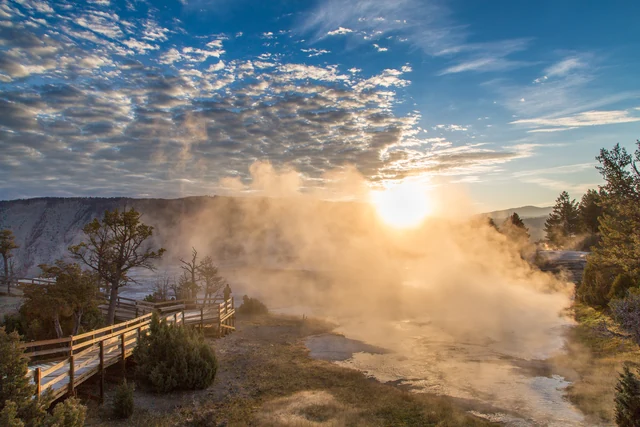
A visitor on a boardwalk beside steaming Mammoth Hot Springs terraces at sunrise.
Sunrise at Mammoth Hot Springs’ Upper Terrace in Yellowstone National Park, photographed in 2014. · Photo: Sunrise, Upper Terrace, Mammoth Hot Springs — NPS/Neal Herbert, Public domain · Resized with Lanczos and encoded as lossy WebP; aspect ratio and full frame retained. No crop, generative edit or content removal.

A little less driving. A little more time outside.

A good Bozeman trip leaves enough room for two kinds of attention. One belongs to the trail under your feet: the climb above Bridger Creek, the shape of the surrounding mountains, the pleasure of returning to town without an exhausted evening ahead. The other belongs to Yellowstone, where a roadside stop can become the most absorbing hour of the day. Treat both as destinations and the trip finds its rhythm.

The practical route begins in Bozeman, turns east toward Livingston, then follows US 89 south through Paradise Valley to Gardiner and Yellowstone’s North Entrance. Mammoth Hot Springs gives that approach a natural focus. Farther east, Lamar Valley rewards a patient morning with binoculars. Three days allow a satisfying introduction if you resist adding every famous Yellowstone sight to the same plan.

Choose where to linger

Choose the right side of the park

Bozeman anchors the trip. Gardiner shortens the northern park days. Choose Cody for a separate eastern stay rather than a rushed third-day transfer.

01

Bozeman

Choose Bozeman when you want a mountain-town day that can flex around weather and energy. Drinking Horse Mountain supplies a defined hiking objective; Peets Hill offers a gentler introduction to the valley’s open views. Museum of the Rockies gives the schedule an indoor anchor rather than a day lost to rain or smoke. This is also the place to settle gear, groceries and the next day’s road plan before moving toward the park.

Give Bozeman a full day instead of treating it as a late arrival followed by an immediate departure. A short trail, a museum visit and an unhurried meal make a useful first chapter, especially for a group with different ambitions. Choose lodging for the part of town you actually want to use, and confirm parking and access needs directly.

02

Gardiner

Gardiner is the useful overnight move for the northern park days. Staying by the North Entrance lets you spend more of the following morning watching the landscape and less of it retracing the approach from Bozeman. Book it as a working base: ask about breakfast timing, packed food, accessible rooms and the property’s actual operating season. A town address does not guarantee every service is available year-round.

03

Cody

Cody calls for a different trip shape. Its approach is toward Yellowstone’s East Entrance on US 14/16/20, with Sylvan Pass controlling onward access. Give it separate nights and start with the Buffalo Bill Center of the West: the Draper Natural History Museum and Plains Indian Museum offer different lenses on the country beyond town. Decide what you want to understand before deciding how much road to cover.

For a Cody-based stay, pair the museum day with an East Entrance outing only when the entire intended road route is open. Do not promise a winter crossing to Gardiner through Yellowstone, or assume a northeastern detour through Cooke City remains a through-road. Cody is worthwhile without being squeezed into the Bozeman itinerary.

Ways into the landscape

Days worth leaving space for

01

Climb above Bridger Creek

Drinking Horse Mountain is a compact hike with a real uphill character. Gallatin Valley Land Trust describes a 2.1-mile natural-surface loop, tight turns and steep grades; bicycles are prohibited. Pick it for a walking or trail-running morning when the surface is sound, and leave room to stop rather than chase a finish time. Mud and ice change the character of a short outing quickly.

The neighboring Bozeman Fish Technology Center is an active research facility. Follow its signs and access restrictions; the US Fish and Wildlife Service says tours are not currently being offered. Avoid building a family itinerary around an assumed hatchery tour. If a climb does not suit the group, make Peets Hill’s all-abilities overlook route the day’s main outdoor stop instead.

02

Read the terraces at Mammoth

At Mammoth, give the details as much attention as the panorama. Mineral-bearing water builds travertine, and the active surfaces shift over time. A terrace that looks different from a photograph has not failed to perform. Pause at several viewpoints and notice where water is moving, where the rock has dried, and how the formations sit above the developed area.

Choose a manageable section rather than assuming the entire boardwalk network is level. When Upper Terrace Drive is open to vehicles, NPS identifies accessible viewing from designated parking near its beginning and at Orange Spring Mound. The narrow drive excludes motor homes, buses and trailers. In winter it becomes a ski route, so summer vehicle-based access advice cannot simply be carried over.

03

Make Lamar a watching day

Lamar Valley works best with a modest goal: find a legal place to stop, settle in and look carefully. NPS identifies it as a wildlife-watching area for species including bison, pronghorn, bears and wolves. That is habitat information, not a sighting guarantee. Bring binoculars, warm layers and enough food to avoid making the next meal the reason to hurry.

A distant animal is still a worthwhile encounter. Keep viewing from established pullouts, leave the travel lane clear and let other visitors pass. Use the car as shelter when conditions turn, and be ready to leave a stop if safe distances cannot be maintained. A guided wildlife outing can be useful for learning how to read the country; verify the operator’s authorization and what equipment is included before booking.

04

Use a museum day well

Museum of the Rockies makes a deliberate Bozeman day possible when the trail plan needs changing. Look up the current exhibitions and decide which deserve your time rather than treating the whole building as a checklist. Planetarium programs have their own ticket considerations; confirm the day’s arrangements. On the eastern side, Cody’s Center of the West deserves the same attention. Its visitor information describes wheelchair access, elevators, wide exhibit walkways and accessible restrooms.

A suggested journey

Three days from Bozeman to the northern range

A fair-weather, road-accessible plan with the first night in Bozeman and the next two in Gardiner. Arrive before day one; keep departure travel outside the final park day.

  1. Day 1

    Day 1: give Bozeman the whole day

    Start with Drinking Horse if the surface and group’s fitness suit it; choose Peets Hill when a shorter, more adaptable outing fits better. Leave the afternoon for Museum of the Rockies and a relaxed return to town. Keeping the first day local gives you a chance to adjust to weather and resolve missing gear before the park portion.

    Before dinner, check Yellowstone road conditions and the forecast for the next two days. Prepare food and water for the transfer, confirm the Gardiner stay and download the maps you will need. If conditions argue against the park move, make that decision while you still have a comfortable town base.

    Bozeman, Montana
  2. Day 2

    Day 2: Paradise Valley to Mammoth

    Travel from Bozeman toward Livingston and south on US 89 to Gardiner. Treat the move as part of the day rather than something to finish before the real itinerary begins. Enter through the North Entrance and concentrate on Mammoth: a visitor-center stop when open, a selected boardwalk section, then Upper Terrace viewpoints if the road and vehicle allow.

    Eat before everyone is tired, keep the afternoon open and return to Gardiner. Review the next morning’s conditions instead of committing to Lamar regardless of the forecast. Visitors seeking step-free access should ask specifically which parking areas and boardwalk segments are usable that day.

    Gardiner, Montana
  3. Day 3

    Day 3: a northern-range morning

    With the northern road open and conditions suitable, head through Mammoth and Tower Junction toward Lamar Valley. Stop selectively and give a promising viewpoint time. This is a wildlife-watching outing from legal roadside places; an early start is not an invitation to hike into bear habitat before daylight. If animals, weather or traffic change the plan, shorten the route.

    Return the way you came and keep the evening in Gardiner. The extra night protects the day from an airport deadline and lets the trip end without a rushed drive after a long morning. If you have only two nights, replace this park day with the return to Bozeman rather than pretending both plans fit comfortably.

    Gardiner, Montana; return to Bozeman on a separate travel day

Plan for the elevation

Four ways the year changes the route

Spring: let the ground set the pace

Spring calls for a low-elevation, adaptable trip. A dry-looking town can sit below snowy trails, while runoff and mud complicate walking. Choose shorter Bozeman outings and ask about current surfaces. Yellowstone’s interior roads reopen in stages; an open North Entrance does not mean every connection is available. Keep the first park day centered on reachable Mammoth stops and let conditions determine any extension.

Summer: spend the extra daylight locally

Summer gives this itinerary its broadest menu, but adding distance uses up the advantage. Build around one principal outing each day and leave gaps for traffic, changing weather and rest. A Lamar morning need not be followed by a cross-park sprint to Old Faithful. If smoke or poor visibility undermines the outdoor day, return to town-based plans rather than assuming a farther trail will solve the problem.

Autumn: keep an exit plan

Autumn is a strong season for a smaller northern route, with warm clothing and flexible expectations. Shorter days make an overfull itinerary less forgiving. Elk around Mammoth require special care during the rut. Check both the planned park roads and the route home each morning; a scenic pass that worked yesterday may no longer be an option. Keep the museum alternative available and avoid making a last-day flight depend on a park crossing.

Winter: choose skiing or the northern road

A winter Bozeman stay can focus on Bridger Bowl when the ski area is operating. Match terrain to ability and follow posted closures and the resort’s responsibility code. A Yellowstone visit is a separate winter-road decision: the northern corridor is generally the regular-vehicle exception, while most interior travel requires the seasonal oversnow system. Carry a winter plan for delays and turning back. Do not turn a casual sightseeing day into an unprepared backcountry snow outing.

Make the trip work

Plan the details that matter.

Reserve the nights; verify the activities

Yellowstone does not currently require an entry reservation, but entrance admission and overnight bookings are separate matters. Reserve accommodation before fixing the route. Backcountry camping requires its own permit; fishing and boating have separate requirements. This three-day plan uses day outings and town overnights, so it should not be read as authorization to camp wherever the day ends.

Plan accessibility by the actual segment

An all-abilities trail or an accessible viewpoint is a useful starting point, not a promise about snow removal or every connecting path. Ask about surface, gradient, distance from parking, toilets and any temporary barriers. Peets Hill provides a Bozeman option; Upper Terrace Drive has specific accessible viewpoints in its vehicle season. Build breaks into the schedule and retain an indoor alternative that suits the traveler’s needs.

Before you settle on a plan

A few useful questions.

Should Cody be the third night of this route?

Keep Cody for a separate East Entrance stay. Combining the two gateways needs additional travel days and confirmed seasonal road access.

Can I drive through Yellowstone from Cody in winter?

Do not plan that regular-vehicle crossing. Sylvan Pass is seasonal, and the road east of Cooke City has a winter interruption. Verify any outside-park alternative with the relevant state road service.

Before you go

Check the day’s conditions.

Check Yellowstone’s live road map, current conditions and the relevant state road services before travel. Seasonal dates are projections; winter access to Cooke City does not create a through-route eastward.

Keep the essentials simple.

  • Carry bear spray where it is reachable and learn its use before heading out. In Yellowstone stay at least 100 yards from bears, wolves and cougars, and 25 yards from other wildlife; increase the distance whenever an animal reacts to you. Never feed wildlife.
  • Remain on designated trails and boardwalks in thermal areas. Hot springs are not soaking pools. Secure food and scented items, pack out litter and respect every closure, including temporary wildlife restrictions.
  • Plan fuel, food, water, layers and offline navigation before leaving your base. Avoid assigning reliable drive times to routes affected by weather, wildlife and construction. Check live road information shortly before departure.
Sources & editorial scope

Research checked 2026-10-17. Planning sources checked October 17, 2026. Road schedules are projections, not live clearance; verify conditions and operating details again before travel.