The Adventure Collective Journal · Regional guide

Lake Superior’s North Shore: Leave Room for the Lake

A Duluth-based journey into waterfall country, with Bayfield reserved for a separate south-shore chapter.

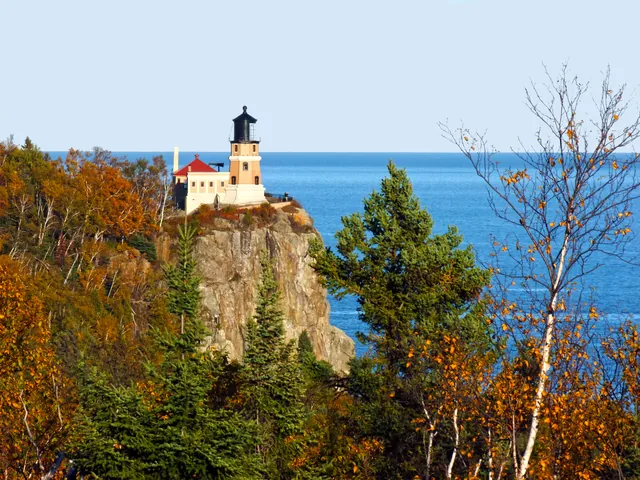
A lighthouse stands on a rocky cliff amid autumn trees with blue Lake Superior beyond.
Split Rock Lighthouse above Lake Superior on Minnesota’s North Shore, photographed in September 2010. · Photo: kkmarais / Wikimedia Commons, CC BY 2.0 · CC BY 2.0 — image and resized versions · Copyright (c) 1998 Hewlett-Packard Company (ICC profile notice, not photo copyright) · Full-frame proportional Lanczos resizing and WebP compression; no crop, retouching or generative change. Embedded ICC profiles converted with Pillow ImageCms to sRGB before resizing where present, output sRGB ICC embedded; original EXIF stripped, credit/license/provenance retained in XMP and manifest.

A little less driving. A little more time outside.

At Duluth, the lake takes over the horizon before the road takes you anywhere. A waterfront walk makes a good first act: let the distances settle, watch the water change color, and resist the urge to turn every headland into a deadline. The North Shore rewards attention more than a long list of stops.

Gooseberry Falls and Split Rock give a first visit its shape: moving water, dark rock, and a lighthouse built into the imagination of the shore. Three days are enough to linger in that southern stretch while sleeping in one place. Across the region, Bayfield offers another way into Superior, through Wisconsin’s peninsula and the Apostle Islands. Give that landscape its own stay.

Choose where to linger

Two shores, two different stays

Choose Duluth for the Minnesota route below. Choose Bayfield for a separate Wisconsin visit with room for weather-dependent plans.

01

Duluth

Make Duluth your anchor rather than your launch countdown. The Lakewalk brings the shoreline into the city, with paved sections connecting Canal Park and neighborhoods farther east. A waterfront base gives the trip a useful rhythm: a short walk before breakfast, a deliberate outing, then an evening back by the same lake.

Choose lodging for the access you actually need. Ask about the route from the entrance to open waterfront paths, accessible parking and any hills or construction between them. The city’s coastal improvement project lists detours; a room described as near the Lakewalk does not guarantee a step-free, uninterrupted outing.

02

Bayfield

Bayfield belongs to a different chapter: Wisconsin’s south shore and the Apostle Islands. The national lakeshore occupies the northern Bayfield Peninsula and islands offshore, within the ancestral homeland of the Ojibwe people. Stay here separately if forest paths above sandstone caves or an appropriately guided water outing are the purpose of your trip.

Leave a spare day around any boat-dependent plan. Use the National Park Service’s information to choose authorized operators, then confirm the departure point, boarding arrangements and cancellation terms directly. Bayfield is not a North Shore stop to squeeze between Gooseberry and dinner in Duluth.

Ways into the landscape

Let water set the pace

01

Find your bearings on the Lakewalk

Begin with a modest out-and-back on an open waterfront segment. The paved trail is a way to spend time with the lake without making a wilderness objective of it. Pick a comfortable turnaround before setting out, yield space to other trail users, and let benches and long views do some of the work. Follow the city’s posted detours rather than assuming the shoreline route runs through.

02

Read the river at Gooseberry Falls

At Gooseberry, choose a route before following the sound. The shorter Waterfalls Walk uses an ADA trail alternative to the stairs for Middle and Upper Falls; the longer Falls View Loop adds terrain that is not ADA accessible. Start with the overlook experience and add distance only if footing and energy allow. A waterfall is not improved by stepping past a barrier or onto wet rock.

03

Give Split Rock more than a photograph

Reserve a whole outing for the lighthouse and its setting. Read the exhibits, look outward from the historic grounds, and consider how a building changes when its backdrop is an expanse of water. The neighboring state park and the historic site are distinct visitor experiences; check the requirements for the one you intend to enter. The shoreline descent is optional, not the measure of a successful visit.

04

Walk above the caves on a separate Bayfield stay

For a land-based Apostle Islands outing, the Lakeshore Trail starts at Meyers Beach and travels through forest above the sandstone shoreline. It is a rugged hike with slopes and stream crossings, not a paved substitute for a boat tour. Choose an out-and-back that fits the group and turn around before fatigue sets in. Stay on established routes and keep clear of cliff edges; the view from above is its own experience.

A suggested journey

Three days, one Duluth base

Keep all three nights in Duluth. This snow-free outline favors one main outing each day; change the order for weather, closures and historic-site opening hours.

  1. Day 1

    Day 1: arrive at the water

    Settle into Duluth and keep the first outing local. Choose an open Lakewalk segment near Canal Park, take an unhurried out-and-back, and leave time to sit rather than trying to finish the whole waterfront. Check the coastal project notice before deciding how far east to go. Use the evening to choose the better weather day for Gooseberry and confirm when Split Rock is open.

    Duluth, Minnesota
  2. Day 2

    Day 2: one waterfall park, properly explored

    Travel north on Highway 61 to Gooseberry Falls and begin at the visitor-center area. Choose the short waterfall route or the longer loop according to access needs and ground conditions. Bring lunch and give the afternoon to a slower second look, visitor information or a permitted lakeshore visit rather than adding another distant park. Return to Duluth for the night.

    Duluth, Minnesota
  3. Day 3

    Day 3: the lighthouse and the long view

    Make Split Rock the day’s main destination, with its opening schedule confirmed beforehand. Explore the historic core and take breaks between indoor interpretation and outdoor views. Skip stair-dependent areas if they do not suit your group; the shoreline route is gravel and has a substantial climb back. Return to the same Duluth base. If conditions cancel the outing, keep the day local rather than pushing farther along the coast.

    Duluth, Minnesota

Plan for the elevation

Four ways to meet Superior

Spring: follow the thaw

Gooseberry’s spring runoff can give the falls a much stronger voice than summer. Plan around safe overlooks and the day’s footing rather than an imagined peak-flow date. A bright afternoon does not settle the question of snow, mud or slippery rock. Keep the itinerary short enough to turn back without feeling that the day has failed.

Summer: carry the extra layer

Long outdoor days invite lingering, but the North Shore can still feel cool beside the water. Pack layers for Split Rock and do not assume the waterfalls will be at spring strength. For a separate Bayfield visit, make any paddling decision around marine conditions, proper equipment and the group’s skills; summer does not make Superior an ordinary recreational lake.

Fall: simplify the route

Let a fall visit be about the forest framing the water, rather than racing between distant viewpoints. Keep a weather alternative and verify the lighthouse’s date-specific schedule before committing to the outing. On the Duluth waterfront, check the construction update as well as the forecast: the city’s retrieved project page lists closures near Leif Erikson Park, so a familiar route may need a new turnaround.

Winter: smaller outings, clearer limits

At Gooseberry, consult the winter map, use traction appropriate to icy paths and stay off river ice. Walking routes differ from groomed ski and snowmobile trails. For Bayfield, treat lake-ice cave access as an exceptional, officially managed opportunity, never a seasonal promise. The NPS homepage listed the ice caves closed when checked; verify a current official opening before even considering that trip.

Make the trip work

Plan the details that matter.

Match the route to the person

Gooseberry’s shorter waterfall option has an ADA routing choice, but the longer loop does not. At Split Rock, concrete paths serve the visitor center and historic core; the observation deck and lighthouse tower require stairs. The gravel route toward the lake is steep on the return. Ask staff about current surfaces and your specific needs before arrival. Duluth’s waterfront detours can change the accessible route substantially.

Give a Bayfield water trip its own preparation

New paddlers should investigate an authorized guided outing rather than arrive with a recreational kayak and a cave photograph. NPS warns of rebounding waves near the caves and calls for sea-kayak equipment, immersion protection, rescue skills, companions and a float plan. An operator’s cancellation is a reason to use a land alternative, not to launch independently.

Separate the permissions

A parking exception, a state park vehicle permit and historic-site admission cover different things. Read the signs at the exact lot you use. On a separate Apostle Islands visit, check camping permits and any parking or docking fees before leaving town. This guide recommends day outings and makes no campsite or boat reservation.

Before you settle on a plan

A few useful questions.

Is Bayfield on Minnesota’s North Shore?

No. Bayfield is in Wisconsin on Lake Superior’s south shore. Plan it as a separate stay for the Bayfield Peninsula and Apostle Islands; the three-day itinerary here stays based in Duluth.

Can this trip work without the lighthouse stairs?

Yes. Build the visit around the visitor center and historic core’s concrete paths, then confirm current access with MNHS. The observation deck and lighthouse tower are stair-dependent.

Are the Apostle Islands ice caves a dependable winter outing?

No. Safe access depends on rare conditions and an official opening. Use current NPS notices, not a calendar date or photographs from a previous winter.

Before you go

Check the day’s conditions.

Before each outing, check Duluth’s Lakewalk project notice, trail information for Gooseberry and Split Rock’s operating calendar. For a separate Bayfield stay, consult NPS conditions and marine-weather guidance. October 17, 2026 research found Lakewalk detours and an Apostle Islands ice-cave closure; neither is a prediction for your travel dates.

Keep the essentials simple.

  • Bring warm and waterproof layers even on a summer visit. Choose sturdy footwear for waterfall paths and carry food and water for the planned outing.
  • At Gooseberry, visitor-center/rest-area parking is exempt from the state park vehicle permit; driving to the lakeshore and Picnic Flow areas requires one. Check the posted boundary instead of assuming the exception covers the park.
  • Verify historic-site admission and hours separately from state-park access at Split Rock. MNHS says a state park vehicle permit is required when the historic-site visitor center is closed.
  • The Apostle Islands have no entrance fee, but parking at some locations, camping and other services carry separate charges. All camping in the national lakeshore requires a permit; it is not included in this hotel-based itinerary.
  • Do not step onto river ice or approach a wave-washed edge for a photograph. Plans can shrink to a short walk and still be worth the journey.
Sources & editorial scope

Research checked 2026-10-17. Planning details checked against official sources on October 17, 2026. Recheck conditions before setting out; these are planning notes, not live access guarantees.