The Adventure Collective Journal · Regional guide

Las Vegas Valley

Sandstone mornings, a city built around water, and room to slow down beside Lake Mead. Keep one Las Vegas base and give each desert outing its own day.

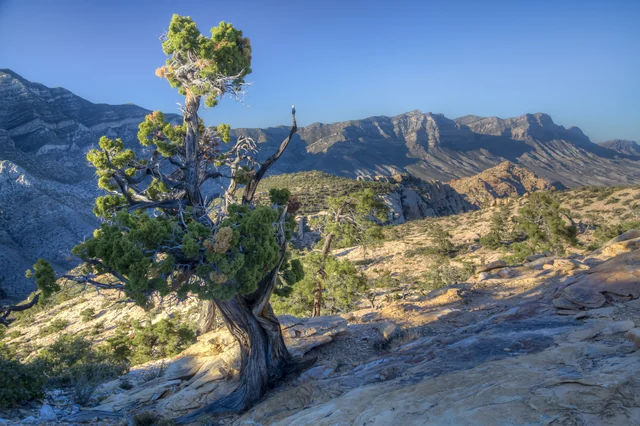
A twisted tree stands on pale sandstone above a rugged desert mountain landscape.
Rocky ridges at Red Rock Canyon National Conservation Area near Las Vegas, photographed in September 2016. · Photo: Red Rock Canyon National Conservation Area (32273681251).jpg — BLM Nevada / Bureau of Land Management, CC BY 2.0 · CC BY 2.0 — image and resized versions · Full-frame proportional Lanczos resizing and WebP compression; no crop, retouching or generative change. Source ICC profile retained where present; original EXIF stripped, credit/license/provenance retained in XMP and manifest.

A little less driving. A little more time outside.

Las Vegas makes a useful promise to an outdoor traveler: you can spend the day looking at rock, light, and the long line of a desert horizon, then come back to the same room. The strongest short trip takes that promise seriously. Head west for Red Rock Canyon, stay in town to understand the springs, and turn southeast for the railroad corridor above Lake Mead. Each day asks a different question of the landscape.

The important planning decision is when to be outside. A modest path can become a serious undertaking in desert heat, and an attractive map cannot tell you whether a trail is closed. This itinerary favors a cool-weather visit, short walks with adjustable turnarounds, and enough space to change course. There is no reward for finishing a route after the conditions stop making sense.

Choose where to linger

Choose what you want to return to.

Las Vegas holds the three-day plan together. Choose Boulder City instead when Lake Mead and dam-building history are the main reason for coming.

01

Las Vegas

For a varied first visit

Keep your lodging here for the core trip. Red Rock Canyon supplies the westward outing, while Springs Preserve gives a city day real substance. Pick accommodation around the practicalities of your stay: parking, a manageable departure, and somewhere you will enjoy returning after an early start. There is no need to change rooms to make each day feel different.

A city base also makes it easier to shorten an outdoor plan without losing the day. Reserve time for a meal and rest instead of filling every afternoon with another trailhead. Arrange reliable return transportation before leaving town.

02

Boulder City

For a separate lake-and-history stay

Boulder City is the stronger alternative when you want the trip to revolve around Lake Mead and the history of Hoover Dam. Its downtown art and museum offer a reason to stay after an outing rather than merely pass through. Give that combination a separate stay instead of transferring hotels in the middle of this sampler.

The city’s visitor information points to the museum in the original Boulder Dam Hotel, while its destination guide connects downtown with the Historic Railroad Trail and Lake Mead. Choose established lodging and verify the details directly; this guide makes no room or availability recommendations.

Ways into the landscape

A different desert each day.

01

Let the sandstone set the scale

Red Rock Canyon’s 13-mile Scenic Drive is a paved, one-way route. Treat its overlooks as the backbone of the outing, then choose a walk that matches the day rather than promising yourself a full circuit of trails. The visitor center is a useful first stop for current advice.

For a lower-barrier alternative, consider Red Spring Boardwalk outside the Scenic Drive. BLM describes the boardwalk as accessible to standard mobility devices; the main Scenic Drive trails do not carry that same assurance. An overlook visit and a backcountry hike are different commitments.

02

Read the valley through its springs

At Springs Preserve, follow the connection between water, native habitats, and the people who have lived in this valley. Give the interpretive trails and museums a real place in the trip: understanding how a desert city draws on its surroundings makes the next wide-open view more interesting.

The paved Exploration Loop offers a wheelchair-accessible outdoor route; other paths include loose gravel. Choose a manageable section, then spend time indoors. Outdoor areas may close early during extreme heat, so the museum-and-trail combination should stay flexible.

03

Walk the old supply line above Lake Mead

The Historic Railroad Trail follows part of the route used to supply Hoover Dam construction. Tunnels and lake views give an out-and-back walk a natural rhythm. Set your own turnaround rather than treating the dam as a compulsory destination; the complete return route is a substantial outing.

NPS describes hardpacked fine gravel and short ramps in two tunnels. That is useful accessibility information, but heat exposure and current surface conditions still matter. There is no shade for the first 1.5 miles, and NPS does not recommend the trail in summer.

04

Give Valley of Fire a separate day

If red sandstone is the priority, substitute Valley of Fire for one core day. Start with park information and choose one currently open outing. Do not pair it with Red Rock Canyon or promise yourself every named formation.

This option needs a particularly careful date check. The park lists an annual December 1–14 full closure and seasonal closures on several trails from May 15 through September 30. A separate construction notice also affects the West Entrance in 2026; review the access note below before routing.

A suggested journey

Three days, without moving rooms.

Use this order as a starting point. Move the museum day to match opening days, and the outdoor days to match conditions and confirmed entry.

  1. Day 1

    Day 1: Look west

    Use your confirmed Red Rock entry to shape the day. Visit the center, take the Scenic Drive at an unhurried pace, and choose one modest walk only after checking conditions. If the loop is unavailable, consider an open Red Rock Overlook or Red Spring visit rather than improvising a longer route. Return to Las Vegas with the afternoon still flexible.

    Stay in Las Vegas
  2. Day 2

    Day 2: Understand the oasis

    Spend a substantial part of the day at Springs Preserve, combining an appropriate outdoor section with museum time. Arrange this day for an operating day: the published regular schedule is Thursday through Monday, with holiday exceptions. Keep the remaining hours in town; this is a deliberate slower day between outings, not an invitation to add a distant park.

    Stay in Las Vegas
  3. Day 3

    Day 3: Follow the railroad, then pause in Boulder City

    In suitable cool weather, make a short out-and-back on the Historic Railroad Trail, turning around with enough energy and water for the return. Continue the history theme in Boulder City, checking the museum schedule separately. Head back to your Las Vegas base. In unsafe heat or a closure, replace the trail with an indoor plan; do not turn the day into an improvised canyon hike.

    Stay in Las Vegas

Plan for the elevation

Plan around the sun, not just the calendar.

Spring

Spring can suit walking, but warming weather is a reason to reduce the ambition of an exposed route. Wildflowers are a possibility, not a booking guarantee. Choose the cooler part of the day and keep a city alternative available.

Summer

Rebuild this itinerary around indoor visits and conditions, rather than simply starting the same hikes earlier. Skip the Historic Railroad Trail in summer. Check every trail closure; a short route or an early departure does not make extreme heat safe.

Autumn

Autumn brings a more workable walking season, but September can remain very hot. Check the actual forecast. The return of Red Rock’s timed-entry season means a pleasant day still needs advance planning.

Winter

Bring layers for cold mornings and leave room before darkness for the return. Winter can offer a satisfying low-desert trip without long hikes. Valley of Fire’s December 1–14 closure rules out that option during those dates.

Make the trip work

Plan the details that matter.

Entry and reservations

BLM requires Scenic Drive timed entry October 1–May 31 for arrivals from 8 a.m. to 5 p.m.; admission is separate. That also affects access to the visitor center. Valley of Fire currently lists no day-use reservation requirement, while its campsites require reservations. NPS lists no reservation for the Historic Railroad Trail but does identify it as a fee-area outing. Verify current charges and rules at the official links.

Choose the surface before the destination

Red Rock’s visitor center and several overlooks provide accessible facilities; that does not make its hiking network accessible. Red Spring Boardwalk and Springs Preserve’s paved Exploration Loop are more specific starting points. For the railroad route, ask about current gravel, ramps, and any tunnel restrictions, and discuss your own mobility needs with staff before setting out.

A date-sensitive Valley of Fire approach

A Nevada State Parks notice dated July 28, 2026 says the West Entrance closes Monday–Thursday beginning August 3 for construction expected through the end of 2026. It directs visitors to the East Entrance via State Route 169 or 167; the West Entrance remains open Friday–Sunday under normal hours. Verify the notice before choosing a route, and treat the park’s specific full-closure notice as overriding generic year-round wording.

Keep a real indoor alternative

Springs Preserve is a useful indoor-and-outdoor pairing only when it is operating. Its regular schedule leaves Tuesday and Wednesday unavailable, and extreme heat can restrict outdoor activities. Move days around that schedule or choose another independently verified indoor plan. Do not use a closed museum as a reason to attempt an exposed hike in unsafe conditions.

Before you settle on a plan

A few useful questions.

Do we need to change hotels?

No. The suggested three days all return to Las Vegas. Boulder City is an alternative for a separate, more Lake Mead-focused stay.

Can we include Zion?

Give Zion its own trip and planning time. This guide deliberately stays with Las Vegas and nearby desert outings rather than building a long-distance parks circuit.

Is this a summer hiking itinerary?

No. In summer, replace exposed walks with indoor plans and follow closures and heat warnings. NPS specifically discourages the Historic Railroad Trail in summer.

Before you go

Check the day’s conditions.

Recheck BLM entry guidance, NPS Lake Mead alerts, Nevada State Parks closures, and the forecast before each outing. Published information describes planning conditions, not confirmed access on your travel date.

Keep the essentials simple.

  • Plan a reliable vehicle or prearranged return for desert outings. Valley of Fire specifically warns that rideshare visitors can be stranded without a return ride. Do not assume a phone signal or an available car at a remote trailhead.
  • Carry drinking water for the whole outing, sun protection, food, and downloaded navigation. Choose a turnaround before leaving and shorten the walk as conditions demand. Desert washes can flood from rain elsewhere; avoid them when storms threaten.
  • Keep off protected cultural features and leave artifacts and rocks in place. Use designated paths and parking, and treat an access barrier as a firm limit.
  • Red Rock timed entry, park admission, trail access, and camping permissions are separate questions. Check the specific destination rather than assuming one pass or reservation covers the whole trip.
Sources & editorial scope

Research checked 2026-10-17. An independently researched planning guide, not a firsthand account or live access report. Official sources were checked October 17, 2026; verify restrictions again before departure.