The Adventure Collective Journal · Regional guide

Maine Coast & White Mountains

Salt-marsh walks, lighthouse headlands, and a southern Maine weekend with room to breathe. Choose a separate mountain or lake stay when the inland country calls.

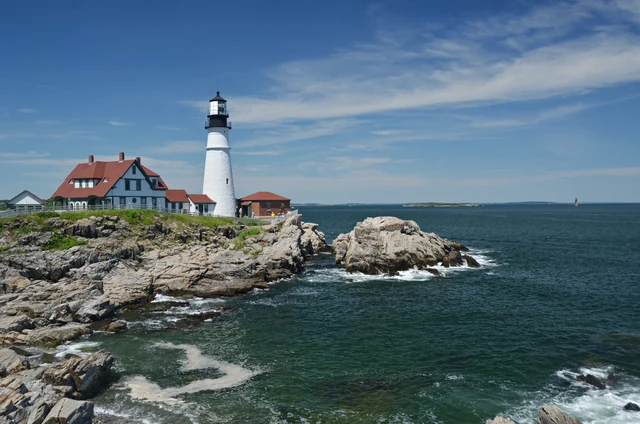
Portland Head Light and its red-roofed keeper’s house above a rocky Maine shoreline, with a distant lighthouse offshore.
Portland Head Light in Cape Elizabeth, with Ram Island Ledge Light offshore, photographed in 2014. · Photo: Portland Head Lighthouse Ocean Horizontal.JPG — Derek Ramsey (Ram-Man); © 2014 Derek Ramsey (source-page notice); © 2012 Derek Ramsey (embedded notice); CC BY-SA 4.0, via Wikimedia Commons · CC BY-SA 4.0 — image and resized versions · © 2014 Derek Ramsey (Commons source-page notice) · (C)2012 Derek Ramsey (embedded user comment; EXIF copyright field (C)2012) · Resized with Lanczos and encoded as lossy WebP; aspect ratio and full frame retained. No crop, generative edit or content removal.

A little less driving. A little more time outside.

At Fort Williams, the lighthouse is the landmark, but the space around it is the reason to linger: ocean-facing paths, grass for a picnic, and a horizon that changes with the weather. Farther along the southern Maine coast, the scale becomes quieter. A pine-wood trail opens onto a salt marsh; a wooded peninsula offers glimpses of Casco Bay. A satisfying visit can be built around those changes without collecting a new town every few hours.

Start by choosing the landscape you want to return to each evening. Portland makes a useful coastal base, with Freeport and the Kennebunkport area as separate outings. North Conway belongs to a mountain trip, while Meredith suits a lake-and-woodland stay. They share this regional guide because they offer complementary ways into northern New England, not because a daily circuit between ocean and mountains makes a good holiday. For three days, commit to the coast. For a longer trip, move inland once and settle in again.

Choose where to linger

Choose the place you want to wake up

Portland anchors the three-day plan. The other bases help you build a different trip or add a deliberate second stay.

01

Portland

Choose Portland if you want a town-based coastal trip and the freedom to change plans without moving hotels. Make Fort Williams in neighboring Cape Elizabeth your exposed-coast outing, then give Freeport’s woodland shore and the southern salt marshes their own days. Lodging with workable parking matters when your walks begin outside the city; check that detail before assuming a central address simplifies every excursion.

02

Kennebunkport

Stay here when the southern coast is the whole point. The Carson Trail at Rachel Carson National Wildlife Refuge, in nearby Wells, provides a focused nature outing without turning the day into a major hike. Keep time for the town itself. Beach access and parking are separate arrangements from refuge access, so choose an actual beach and check its town rules rather than assuming every stretch of shore welcomes parking.

03

Freeport

Freeport works for a trip that puts coastal woods ahead of a city schedule. Wolfe’s Neck Woods is the outdoor anchor: a place to study the shoreline, pause beneath pines and make a modest walk feel substantial. Stay here if you would rather repeat a favorite section in different light than spend each morning leaving Portland. Shopping can fit around the walk without becoming the organizing principle.

04

Portsmouth

Portsmouth offers a compact waterfront alternative on the New Hampshire seacoast. Prescott Park brings gardens and river views into the same town day; it is particularly useful when someone in the group wants shorter outdoor intervals. Choose it for a Portsmouth-led stay or an arrival-night stop. Do not add it to every Portland day simply because both places have a harbor.

05

Boothbay Harbor

Give Boothbay Harbor a separate stay if wooded coves and tidal water are the priority. Ovens Mouth Preserve supplies a good reason to get beyond the harbor: connected peninsulas, forest paths and water visible through the trees. It belongs to a Boothbay-focused day. Combining it with Freeport, Kennebunkport and a mountain transfer would leave little room for the actual walking.

06

North Conway

North Conway is the inland choice for a mountain-centered visit. Start with Echo Lake State Park and the Cathedral Ledge outlook rather than treating a high summit as the price of admission. Stay several nights if hiking is your priority, allowing the forecast to decide which day gets the bigger outing. This is the eastern mountain alternative; Lincoln and Franconia deserve their own planning rather than being folded into a coastal weekend.

07

Meredith

Meredith suits travelers who want lake views and woodland walks to carry the trip. Pair a town waterfront pause with Waukewan Highlands instead of filling the day with mountain driving. Public access differs between lakes and individual beaches: the town specifically requires a valid facility-use parking permit at Leavitt Beach. Pick the access point first, then choose lodging and activities around it.

Ways into the landscape

Give each landscape its own outing

01

Meet the open coast at Fort Williams

Use the park paths and established viewpoints to explore Portland Head Light’s setting. An exterior lighthouse visit and a tower climb are different propositions: the tower is ordinarily closed, with a special annual opening identified by the park. Keep the day worthwhile without it. Pack a picnic and leave room to sit rather than treating the lighthouse as a quick photograph.

The cliff edge and exposed shore require judgment even on a short outing. Stay away from wet ledges and breaking waves; a low tide does not remove surf risk. Choose an inland path when wind or spray makes the waterfront uncomfortable. Park walks vary in surface and grade, and the operator specifically cautions that its walking tours are unsuitable for some mobility needs.

02

Follow the woods to Casco Bay

At Wolfe’s Neck Woods, use the park map to choose a manageable route before setting out. The appeal is the meeting of forest and tidal shore, with time to notice what changes between sheltered trees and open water. There is no need to cover the entire network to understand the place.

For step-free planning, ask specifically about White Pines Trail. Maine’s accessibility guide lists that trail as accessible while distinguishing it from most other trails in the park. Confirm current surface conditions, restroom access and the route from your parking space; a park-wide accessibility label would conceal important differences. Keep to designated shore access and leave intertidal plants and animals where they are.

03

Read the salt marsh from the Carson Trail

The refuge’s older general brochure describes the Carson Trail as a one-mile, universally accessible loop through woods with tidal-marsh views. Treat that as a useful route description, then ask refuge staff about present surfaces and any storm damage if access is critical. The reward is a slow walk with pauses at overlooks, not a route down into the marsh.

Most refuge habitat is closed to public entry. Follow designated trails and posted boundaries even where the ground appears easy to cross. Carry binoculars if you have them, leave feeding wildlife undisturbed and make this the main nature stop of a Kennebunkport-area day. The current visitor page allows leashed pets only on the Carson Trail, not across the refuge generally.

04

Keep a mountain day within the valley

From North Conway, choose a lakeside walk at Echo Lake or the Cathedral Ledge outlook according to conditions and mobility needs. These are related options, not identical routes. A hike climbing to the ledge involves a different commitment from reaching the summit area by the auto road when it is open.

New Hampshire identifies an accessible trail from the Cathedral Ledge summit parking area to a valley view. Confirm that the road and parking are available before relying on it. Echo Lake has limited parking and offers advance day-use reservations; an open park does not guarantee an available space. This is Echo Lake near North Conway, not the lake at Franconia Notch.

05

Watch tidal water from the wooded bank

For a Boothbay stay, choose the east or west side of Ovens Mouth using the land trust’s map. The two peninsulas connect by a pedestrian bridge, but their trails differ: the east side offers shorter options, while the west side is more demanding. Decide how far to go before crossing simply because another path is visible.

Watch the passage from land. Moving tidal water is part of the interest here, not an invitation to launch an improvised paddle trip. The land trust requires leashed dogs. Bring what you need for a forest walk, keep your return within daylight and avoid turning a small loop into an unplanned circuit of the whole preserve.

06

Make Meredith a woods-and-water stay

Waukewan Highlands offers a network of woodland routes around Hart’s Pond, with an interpretive trail as another way to structure a walk. Select the route that suits your group, rather than interpreting the word park as a promise of pavement. A short woods outing and a lakeside afternoon make a complete day.

For swimming or paddling, verify the particular beach or launch and its rules. Waukewan Beach and Leavitt Beach have different parking arrangements; access at one does not establish permission at the other. Check water-quality notices and weather before entering a lake. A warm afternoon is not a reliable guide to water temperature.

A suggested journey

Three days around Portland and the southern coast

Stay in Portland for all three nights. Swap the outdoor days around wind, rain and your group’s energy; each day has one main landscape rather than a string of distant stops.

  1. Day 1

    Day 1: Portland and the lighthouse headland

    Begin with Fort Williams in Cape Elizabeth, choosing established paths and viewpoints that match the day’s wind. Take the lighthouse view, then keep walking only while the footing and exposure feel comfortable. Make time for a picnic rather than attaching another distant headland to the same morning.

    Return to Portland for an unhurried afternoon and dinner. If rain or strong wind makes the coast unappealing, keep the town portion of the day and move Fort Williams to another morning. The itinerary does not depend on entering the tower or finding a particular seasonal museum open.

    Portland
  2. Day 2

    Day 2: Freeport’s wooded shoreline

    Give Wolfe’s Neck Woods the main outdoor block. Read the map together, choose a route and stop at the bay views without hurrying toward a mileage target. If anyone needs a more predictable surface, confirm White Pines Trail access in advance and build the outing around that specific option.

    Spend the rest of the day in Freeport or return to Portland with time to spare. Resist extending north to Boothbay just to add another coastal name. A second short walk, a long lunch or an early finish will usually serve this day better than another transfer.

    Portland
  3. Day 3

    Day 3: Salt marshes and the southern coast

    Head south for the Carson Trail in Wells, then give Kennebunkport the afternoon. On the trail, pause to watch the marsh from established overlooks and keep wildlife observation quiet. Check the refuge’s current visitor information before leaving, especially if the group needs dependable accessibility.

    Choose one additional town or shore stop only if time, parking and conditions make it easy. Otherwise, end with Kennebunkport and return to Portland. A southbound departure can continue toward Portsmouth as a change of base, but do not combine that move with a North Conway detour. Finish the coastal visit before beginning the inland one.

    Portland, or a separately planned onward stay

Plan for the elevation

Four seasons, different expectations

Spring: start low and keep the plan flexible

Favor town walks and coastal routes while assessing mud, lingering ice and storm damage on wooded trails. An inviting afternoon can still sit beside very cold water. Choose shore-based exploration unless you have the equipment and experience for immersion conditions. In North Conway, check roads and facilities separately from the existence of a trail.

Summer: reserve the scarce part of the day

Build the day around the place with limited access, then leave the remainder loose. At Echo Lake, consider a day-use reservation before arriving. On the coast, start with the walk that matters most and let parking conditions decide whether an optional second stop happens. Keep an alternative on land for any planned water outing; wind and marine conditions can change the plan.

Fall: leave daylight for the return

Give a woodland walk enough daylight to finish comfortably, especially when photography keeps stopping the group. Pair forest time with a town afternoon instead of adding a distant sunset viewpoint. Seasonal museums and staffed facilities may close before the surrounding park does. Check dates directly rather than carrying a summer schedule into an October visit.

Winter: choose a winter outing deliberately

Snowshoeing or skiing at Waukewan Highlands can anchor a Meredith stay when conditions support it. Coastal walking may mean ice, wind and limited shelter. Shorten the route, carry traction appropriate to the surface and know where you can get warm. An unstaffed state park may have closed gates and unavailable facilities; winter mountain travel needs its own preparation, not a summer itinerary with an extra layer.

Make the trip work

Plan the details that matter.

Add an inland chapter only when you have time

If the mountains are the real goal, reverse the priorities: stay in North Conway and use Echo Lake and Cathedral Ledge as an introduction, then plan any larger hike separately around route conditions and experience. If the lake is the goal, stay in Meredith and give Waukewan Highlands and a permitted waterfront outing their own days. Neither requires returning to Portland each night.

Likewise, Boothbay Harbor can replace the southern coastal outing for a different stay, rather than being added on top of it. Acadia and the Camden–Rockland coast are another journey. Keeping those choices separate gives each place enough time to become more than a view through the windshield.

Before you settle on a plan

A few useful questions.

Can I see the coast and White Mountains in three days?

Choose one for the three-day stay. This plan stays coastal; add North Conway as a separate overnight chapter when you have more time, rather than commuting between the two landscapes.

Which walks offer clearer accessibility information?

Start with White Pines Trail at Wolfe’s Neck Woods, the Carson Trail in Wells, and the Cathedral Ledge summit-area trail. Their managers describe accessible features, but confirm current conditions and the entire route from parking before relying on them.

Before you go

Check the day’s conditions.

Recheck park gates and facilities, refuge notices, tide and marine conditions, and the rules at your chosen beach or launch shortly before travel. This draft does not certify current openings, water quality or safe conditions.

Keep the essentials simple.

  • Treat tide predictions as one planning input. Use NOAA’s location-specific tide and current information alongside weather, posted closures and observation on arrival; a prediction does not guarantee safe footing or a safe crossing.
  • For paddling, wear a properly fitted life jacket and dress for the water. Choose a qualified local guide if you lack coastal navigation or cold-water experience. No self-guided launch or tidal crossing is prescribed by this itinerary.
  • Ask about the complete accessible journey: parking, the path to the trail, surface, slopes, toilets and the return. A short trail can still contain obstacles, and an accessible viewpoint may depend on a seasonally open road.
  • Check charges and permits with each manager. Fort Williams parking, Maine park admission, New Hampshire day-use reservations and Meredith facility parking are different systems. Do not assume one pass or booking covers them all.
  • Carry out food scraps and rubbish, keep dogs under the site’s specific rules, and use signed trails. Give tidal marshes and nesting habitat room; an empty-looking shore is not automatically public access.
Sources & editorial scope

Research checked 2026-10-17. Official park, refuge, municipal and land-manager information reviewed October 17, 2026. Older maps support route context, not current operating promises. Recheck conditions before departure.