The Adventure Collective Journal · Regional guide

Red Rock Country (Northern Arizona)

Stay close to Sedona: sandstone paths, creekside shade and a slower way into northern Arizona.

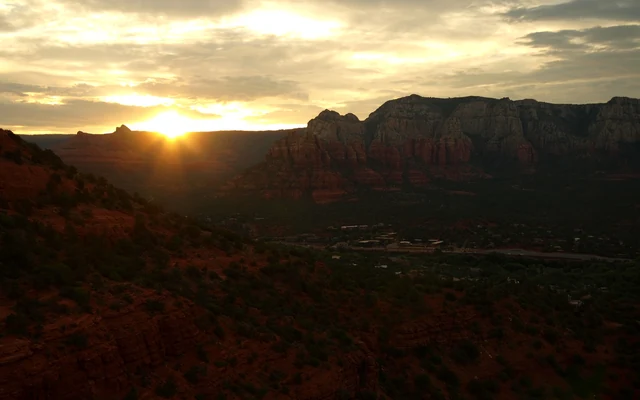
Sun rising over Sedona’s red-rock formations and wooded valley.
Sunrise over Sedona, viewed from Airport Mesa. · Photo: Ken Thomas / Wikimedia Commons · Resized with Lanczos and encoded as lossy WebP; aspect ratio and full frame retained. No crop, generative edit or content removal.

A little less driving. A little more time outside.

In Sedona, the scenery does not wait for the trailhead. Rock towers rise beyond the traffic lights, and a turn toward the next errand can put another sandstone wall across the windshield. That abundance creates an odd planning problem: when almost every direction looks like the beginning of an adventure, it becomes easy to spend the whole trip choosing the next one.

Give this landscape three days and a small radius. Walk beneath Bell Rock rather than making a summit the price of admission. Follow Oak Creek through a protected habitat where looking and listening are the activities. Reserve time at Palatki to encounter a place shaped by human lives as well as stone. The variety comes from changing the scale of attention, not from changing hotels every evening.

Northern Arizona also contains the pine-country possibilities of Flagstaff and Williams and the granite country around Prescott. Those are reasons to return, or to add another stay. They are not unfinished business at the end of a Sedona afternoon. This guide keeps its three-day trip local and gives the other bases their own purpose.

Choose where to linger

Choose the landscape you want to wake up in.

Sedona anchors this trip. The other catalog bases offer different journeys, with their own access checks and travel days.

01

Sedona

The base for this three-day trip

Choose Sedona when the red-rock walks are the reason for coming. Staying here lets you return for lunch, change plans after a weather warning and enjoy another look at the same formations in different light. Locate your accommodation relative to the actual walks and shuttle pickup you intend to use; a Sedona address alone does not make every trail accessible without a car. Build each day around one area rather than several famous trailheads. Parking is part of the plan, not a puzzle to solve on a residential shoulder.

02

Flagstaff

A higher-country alternative

Flagstaff suits a separate stay that puts the higher country and Walnut Canyon ahead of Sedona’s trail circuit. At the monument, the canyon rim offers context before any decision to descend. Make space for interpretation rather than treating ancestral homes as scenery on the way to somewhere else. Check the forecast for the place you will visit, especially in winter. An agreeable morning down among the red rocks does not tell you what awaits on higher roads.

03

Prescott

Granite, water and a different walking day

Prescott changes the visual language from red towers to the rounded granite of the Dells. Watson Lake gives a stay here its own center of gravity: plan a lakeside visit or investigate a paddle, and choose a walking route that matches the group. Nearby Peavine and Iron King offer relatively level options; that does not make every rocky lakeshore route equally gentle. Swimming is prohibited at Watson Lake. Keep Prescott as a separate overnight choice rather than a long detour between Sedona hikes.

04

Williams

A separate forest-country stay

Williams works for travelers who want a forest-oriented stay around the southern Kaibab. Investigate the Dogtown Lake area and its walking options, then select the exact route with current forest advice. Davenport Hill is a dedicated hike, not an automatic add-on to a lakeside stop. If the Grand Canyon is the main reason for choosing Williams, make a separate canyon plan with its own travel and park checks. A name on the same regional map is not a promise that everything belongs in one weekend.

05

Scottsdale

A southern extension, outside the core itinerary

Scottsdale is retained here because it belongs to the existing regional catalog. Editorially, treat it as a distinct arrival-night or Sonoran Desert extension, not as the place to sleep for this Sedona itinerary. The McDowell Sonoran Preserve supplies a different desert experience and deserves its own heat-aware plan. Consult the city’s current trailhead notices before selecting a walk. Leave a real transfer day or generous travel window when moving north; do not book an outdoor objective that depends on an optimistic arrival.

Ways into the landscape

Walk closer. Look longer.

01

Let Bell Rock be the backdrop

Use Bell Rock Pathway for a first encounter with the sandstone country. Decide on an out-and-back distance at the start, using the current map, the temperature and the least enthusiastic walker as guides. There is no obligation to turn a walk beneath a formation into a climb up it. Pause often enough to notice how the outlines change. Carry your own water and navigation, and remain on the established route even where an informal track appears to offer a better photograph.

02

Follow the creek without entering it

Red Rock State Park rewards a slower day. Choose the Smoke Trail for the riparian setting or consider Eagle’s Nest for a higher perspective, using the park’s current map and advice. The contrast between creekside vegetation and the surrounding rock is the point. This is a protected habitat, not a swimming stop: wading and swimming are prohibited. Check the naturalist program if interpretation appeals, but confirm its timing rather than organizing the morning around an old schedule.

03

Give Palatki the time a place deserves

At Palatki Heritage Site, a guided visit brings dwellings and rock imagery into a human story. Arrange the timed ticket beforehand and check the separate vehicle-pass requirement. The approach uses gravel roads, and weather can close the site. Tours involve uneven steps; ask about the exact route if those present a barrier. Follow the site’s etiquette and guide instructions, and keep hands away from fragile surfaces. Make this the day’s appointment rather than something squeezed between trailheads.

04

Read Walnut Canyon from the rim

For a Flagstaff stay, begin Walnut Canyon at the visitor center and rim. The Island Trail descends a substantial stairway and requires the climb back out; it should be an informed choice rather than the default because it is the best-known route. The rim has its own reward in seeing how homes fit into the canyon walls. Interpretation here concerns ancestral places with continuing Indigenous connections. Let that context guide how you look and behave.

05

Find a gentler line through granite country

On a Prescott trip, use the Peavine corridor near Watson Lake as a walking option before committing to a more uneven lakeshore circuit. Choose a turnaround that leaves time to sit and look across the Dells. A paddle is a separate undertaking: confirm access, equipment and weather rather than assuming a rental will be waiting. The lake’s presence changes the view, but it does not turn the park into a swimming destination.

A suggested journey

Three days without moving your base

Three full days around Sedona, with arrival and onward travel outside the plan. Swap the Palatki day to match an available reservation.

  1. Day 1

    Bell Rock, then an unhurried afternoon

    Begin with a selected stretch of Bell Rock Pathway. Set a modest turnaround and finish while the group still has energy for the rest of the day. Use the ranger district’s map to understand what you have seen rather than chasing another summit. Return to Sedona for lunch and a real pause. If conditions remain suitable, spend the later part of the day looking again from an established public viewpoint or taking a short second walk. Leaving that choice open is intentional: arrival fatigue and heat do not follow an itinerary.

    Stay in Sedona, Arizona.
  2. Day 2

    Red Rock State Park at a smaller scale

    Give Red Rock State Park the morning, starting with the current trail map and any program information at the visitor center. Choose a creekside walk, or add a viewpoint if everyone wants more. Carry a picnic, respect park hours and keep out of the water. Spend the afternoon back in Sedona rather than turning a gentle day into a race up Oak Creek Canyon. A nature-focused day works because you leave time to stop; it does not need a celebrated summit to justify its place in the trip.

    Stay in Sedona, Arizona.
  3. Day 3

    A reserved visit to Palatki

    Make your Palatki reservation the organizing point, allowing the approach and check-in margin specified by the operator. Confirm access before driving onto the gravel roads, particularly after rain or snow. After the visit, return to town with time for lunch and packing. If the site closes or no suitable ticket is available, choose a previously researched local walk that remains open and suits the weather. Do not improvise an archaeological-site hunt. Swap this day with another if reservations require it, and keep the onward transfer outside the three full days.

    Stay in Sedona, Arizona, or arrange onward travel separately.

Plan for the elevation

Let elevation and weather set the terms.

Spring

Plan flexible walking days with layers and an alternative to a crowded trailhead. Use the shuttle calendar where it fits, but preserve room for a later start or a different walk. Higher-country excursions need a separate snow and road check. Spring on a booking calendar is not a guarantee of dry paths throughout northern Arizona.

Summer

Keep effort short and early when heat warrants it, and build in a substantial indoor break. Summer storms introduce lightning and flash-flood hazards as well as rain; a shaded creek is not a reliable refuge from storm risk. Consult warnings before leaving and identify proper shelter. Cancel the outing if the conditions do not support it. Moving to a higher base changes the forecast, not the need to read it.

Fall

Leave time for creekside observation as vegetation changes, but do not promise yourself a particular color peak. Birding and a short walk can fill a satisfying morning without a distant destination. As daylight contracts, choose a turnaround that gets everyone back comfortably. Check the actual forecast rather than treating autumn as a permanent mild-weather setting.

Winter

Northern Arizona has real winter travel. Elevation matters, and roads or shaded paths can require a different plan after a storm. Check highway conditions before transfers and ask the destination about its surfaces. Favor a verified open visitor-center visit or a shorter route when appropriate. Do not substitute an unfamiliar forest road for a closed highway, or a summer hiking plan for a winter decision.

Make the trip work

Plan the details that matter.

Separate parking, entry and reservations

A regional parking pass is not a universal admission ticket. Read the rule for the exact destination. Palatki’s timed tour ticket and vehicle pass are separate requirements; state-park entry follows its own system. For shuttle-served trailheads, check the route and operating day before leaving your accommodation, including the last return and any parking restrictions. Avoid copying a saved screenshot of a timetable into the next season.

Ask about the whole route

An accessible bus does not establish that the trail beyond its stop will suit a wheelchair user. At Walnut Canyon, NPS identifies the first Rim Trail overlook, 150 feet from the start, as accessible; beyond it, grades do not fully meet ADA standards. The visitor center also offers a captioned film. Ask about temporary surface conditions, toilets and the return journey. Palatki’s uneven steps warrant a specific conversation before booking.

Respect different lands and permissions

The core itinerary does not include Navajo Tribal Parks. If you extend toward them, start a new plan with the tribal authority’s rules for that specific destination. Navajo Nation Parks & Recreation lists permits and guided-access requirements; permission for a national-forest walk does not transfer to tribal land. Photography and filming can require additional permission. Do not assume the same rules apply across distinct tribal jurisdictions, and follow any local restrictions on where to go or what to photograph.

Check conditions before choosing the day

Use official forest-closure information, the local forecast and ADOT highway reports together. A route can be inappropriate even when its approach road is open. Carry water, food, layers, sun protection and offline navigation, and tell someone your plan. If warnings, smoke or closures undermine the trip, change the activity rather than trying to find a way around the restriction. Leave archaeological materials, vegetation and rock surfaces as you find them.

Before you settle on a plan

A few useful questions.

Can I include Flagstaff, Prescott and Williams in these three days?

This itinerary stays around Sedona. Choose one of the other bases for a separate stay, with time for its own activities and the transfer. Scottsdale is a distinct southern extension.

Is Red Rock State Park a swimming stop?

No. The park prohibits swimming and wading to protect its habitat. Plan a walking and nature-observation visit.

Does a Palatki ticket cover everything?

The official listing requires a timed tour ticket and a qualifying vehicle pass. Check the current details and access conditions before visiting.

Before you go

Check the day’s conditions.

Recheck official closures, the forecast, highways, park rules and shuttle schedules before travel and before each outing. Source consultation is not confirmation that a route is currently open.

Keep the essentials simple.

  • Keep arrival and onward travel outside the three full days.
  • Check the exact trail, forecast and access rules before leaving each morning.
  • No accommodation, tour availability, pricing or commercial inventory is verified by this guide.
Sources & editorial scope

Research checked 2026-10-17. A researched planning guide, not a firsthand account or live access report. Official sources were consulted October 17, 2026; conditions and operating details need a fresh check before travel.