The Adventure Collective Journal · Regional guide

Savannah & the Lowcountry

Walk the squares, follow the marsh edge, and give this broad coastal country room to breathe.

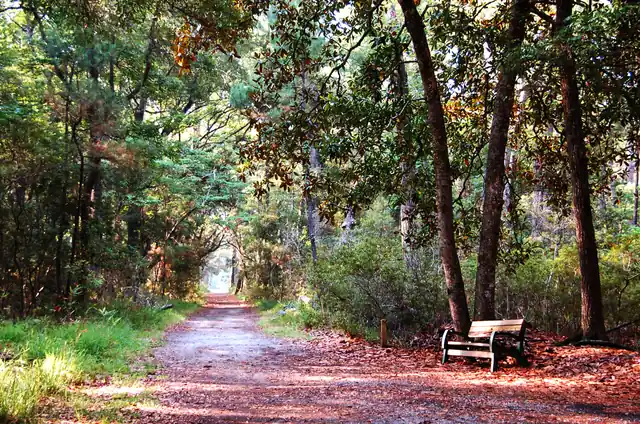
A sandy path recedes through green woodland beside a wooden bench.
A shaded woodland path at Skidaway Island State Park near Savannah, photographed in June 2011. · Photo: Britt Reints / Wikimedia Commons, CC BY 2.0 · CC BY 2.0 — image and resized versions · Copyright (c) 1998 Hewlett-Packard Company (ICC profile notice, not photo copyright) · Full-frame proportional Lanczos resizing and WebP compression; no crop, retouching or generative change. Embedded ICC profiles converted with Pillow ImageCms to sRGB before resizing where present, output sRGB ICC embedded; original EXIF stripped, credit/license/provenance retained in XMP and manifest.

A little less driving. A little more time outside.

Savannah makes a persuasive case for slowing down. A city walk can unfold one shaded square at a time; beyond the streets, a boardwalk brings the horizon down to creek level. The pleasure is in that change of scale: from brick and doorways to water threading through grass, with enough time left to notice what moves.

The wider journey has several centers of gravity. Hilton Head Island puts refuge walks within reach of an island stay. Beaufort offers a deeper encounter with Reconstruction history. Aiken changes the landscape altogether, trading tidal country for an inland woodland visit. Choose the setting that fits the trip rather than collecting place names through a windshield.

Choose where to linger

Choose your pace and place

Savannah anchors the itinerary below. Treat the other towns as distinct overnight choices, each with its own reason to stay.

01

Savannah

Stay here for the easiest balance of city wandering and distinct outdoor excursions. The historic district lets an evening continue after the day’s drive is finished: choose a few squares, settle into a meal, and leave the next morning open for marsh or refuge country.

For this itinerary, prioritize lodging that makes your daily needs easy. Confirm step-free access, parking arrangements, and the actual room entrance directly rather than assuming a historic building will suit every traveler.

02

Hilton Head Island

Choose an island stay when you want Pinckney Island’s wildlife walks to be a principal outing rather than an extra stop on a Savannah day. The refuge lies between Hilton Head and the mainland; plan a dedicated morning and return to your lodging afterward.

This is a separate holiday rhythm. Do not add Hilton Head to the three-day Savannah itinerary simply because the names share a map.

03

Beaufort

Give Beaufort its own nights if the trip centers on the Lowcountry’s human history. Reconstruction Era National Historical Park connects the area with the struggle to build political, economic, and civic life after emancipation.

The park has multiple sites rather than one all-encompassing campus. Start with its current visit information and choose a manageable set of stops; leave space for interpretation instead of treating the history as scenery.

04

Aiken

Aiken is the inland alternative, with Hitchcock Woods as its outdoor anchor. It changes the trip from salt-marsh observation to time on wooded paths shared with equestrians. Make this a separate stay, or a deliberate next chapter after the coast.

Take the Foundation’s map and respect posted closures. Bikes and motor vehicles are prohibited in the Woods, and overnight use is not allowed. This is a walking or equestrian destination, not a trail-cycling substitute.

Ways into the landscape

Where the landscape opens up

01

Read the marsh from Sandpiper

At Skidaway Island State Park, the one-mile Sandpiper loop moves between maritime woods, salt flats, and tidal creeks. Pause where a boardwalk opens the view: the small details are the point of this walk, not a distant summit.

The park describes the level trail and boardwalks as ADA accessible. Confirm their current condition before relying on that designation. As checked October 17, the Avian Trail and observation tower are closed; neither is part of this route.

02

Give the refuge a patient morning

Laurel Hill Wildlife Drive offers a vehicle-based way into Savannah National Wildlife Refuge’s wetland landscape. Use the drive as the main experience, stopping only where permitted and leaving room for other visitors. Binoculars reward stillness more than a hurried circuit.

The refuge’s earthen-dike trails are a different undertaking from a paved promenade. Decide on any walk at the trailhead, with ground conditions and your group’s mobility in mind. Keep a wide margin around wildlife and never approach an alligator for a photograph.

03

Meet the coast at Fort Pulaski

Fort Pulaski is a day for moving between built history and open sky. Begin with the visitor center and the fort’s ground level, then decide whether an outdoor trail fits the conditions and your energy. Let interpretation lead the visit rather than making the fort a quick photo stop.

The paved approach includes wooden bridges and an incline; brick and stone can be uneven or slippery. The upper level requires stairs. Grass-and-shell trails should not be assumed wheelchair accessible, even though the terrain looks flat.

04

A self-contained Pinckney outing

From a Hilton Head stay, choose Pinckney Island for a deliberate wildlife walk. Beyond the parking area, travel is on foot or bicycle. There is no drinking water, restroom, or weather shelter, so arrive prepared and turn around while the return still feels comfortable.

Check hunt closures before setting out. An October 16, 2026 closure was posted with reopening scheduled for sunrise October 17; a published schedule is not an on-the-ground confirmation.

05

Follow the wooded paths in Aiken

Hitchcock Woods invites an entirely different kind of attention: listening for an approaching horse, reading a trail junction, and resisting the temptation to turn every outing into a mileage target. Stay on marked routes and carry out everything you bring.

Stop in a visible place when horses approach, speak to the rider, and wait until they pass. Hunt-related restrictions affect dog walking; official pages give differing seasonal details, so use posted notices and confirm with the Foundation. Groups of ten or more should arrange registration in advance.

A suggested journey

Three days from Savannah

Keep one room for all three nights. Give each outing a generous half-day or more, with slack for weather, closures, and an unhurried meal back in town.

  1. Day 1

    Day 1: Savannah on foot

    Begin with a modest walk through the historic district. Use Johnson, Madison, and Monterey squares as pauses rather than checkpoints, then continue toward Forsyth Park if your group wants more walking. Choose lunch and an indoor visit according to energy and opening hours.

    Keep the afternoon deliberately light. This is the day to settle into the city, verify the next two outings, and discover whether the planned walking distance suits everyone. Eat in Savannah and sleep in the same lodging tonight and throughout the trip.

    Savannah, Georgia
  2. Day 2

    Day 2: Skidaway, with time to look

    Drive to Skidaway Island State Park for the Sandpiper loop, subject to the day’s trail check. A short walk can fill a morning when you stop to watch creek water move and look closely at the border between woods and marsh. Do not extend the outing onto the closed Avian Trail or toward the closed observation tower.

    Bring a picnic or return to Savannah for lunch. Leave the afternoon for rest and another short city walk. If the park route is closed or thunderstorms threaten, substitute a town-based indoor visit rather than trying to recover the day by driving farther.

    Savannah, Georgia
  3. Day 3

    Day 3: choose refuge or fort

    Make Laurel Hill Wildlife Drive the default final outing. Bring your own vehicle or arrange reliable private transportation in advance: the refuge specifically cautions against rideshare visits. Return to Savannah for a final relaxed afternoon rather than combining distant South Carolina towns.

    If your interests lean toward history, substitute Fort Pulaski for the refuge rather than doing both. Check park notices, begin at the visitor center, and select a ground-level visit or a longer walk according to surface conditions. Either choice ends back at your Savannah base.

    Savannah, Georgia

Plan for the elevation

Four ways to time the trip

Spring: watch the edges

Make room for birding as well as city walks. The refuge identifies spring migration as a useful time for woodland songbirds. Choose one outdoor focus each morning and keep the rest of the day loose enough to linger when something catches your eye.

Summer: make the morning count

Start outdoor outings early, carry water, and keep a cool indoor alternative ready. Summer refuge visitors may see species such as purple gallinules or swallow-tailed kites, but wildlife is never a promise. Treat thunder, oppressive heat, or a deteriorating forecast as reasons to shorten the plan.

Fall: flexible dates, flexible routes

Autumn rewards birdwatching, but a calendar alone does not make a safe forecast. Atlantic hurricane season continues through November 30. Check coastal alerts and land-manager notices before traveling, and keep reservations and routing flexible enough to respond to a disruption.

Winter: leave room for quiet

The refuge is a worthwhile winter focus, with wildlife watching highlighted by its managers. Pack layers for stationary viewing and allow daylight to set the scale of each outing. On an inland Aiken stay, check equestrian and dog-walking restrictions before committing to a route.

Make the trip work

Plan the details that matter.

Check the rules for the actual outing

At Savannah refuge, general visitation is daylight-only; camping and drone launching or landing are prohibited. Pets must remain in the vehicle on the wildlife drive rather than accompanying a trail walk. Check separately with staff about disability-related access needs.

For Aiken group outings, contact the Hitchcock Woods Foundation before arrival. General visitor guidance requires registration for groups of ten or more; do not assume an informal gathering escapes group rules.

Read the notice before the trail description

Skidaway’s general trail descriptions still describe Avian, while the main park page posts its closure. Follow the closure. Partial campground renovation was scheduled to begin February 2, 2026 for approximately a year; confirm any affected stay directly.

Fort Pulaski’s conditions page did not expose a populated live alert feed in the retrieved text. That is a reason to check again or contact the park, not evidence that every facility is open.

Before you settle on a plan

A few useful questions.

Can I see all four towns in this three-day trip?

Choose one overnight base. The itinerary stays in Savannah, with separate outdoor outings. Hilton Head Island and Beaufort deserve additional nights; inland Aiken is a distinct stay rather than an addition to a coastal day.

Is this a good trip without long hikes?

Yes. Short city walks, a condition-checked Sandpiper outing, or vehicle-based refuge viewing can anchor the visit. Confirm the precise access features you need; flat-looking ground and historic buildings can still have barriers.

Do I need to kayak to experience the marsh?

No. The suggested trip uses established land routes and viewpoints. A separate paddling excursion needs its own local conditions, launch, equipment, and permission checks.

Before you go

Check the day’s conditions.

Checked October 17, 2026: Skidaway lists Avian Trail and the observation tower closed, with a partial campground renovation in progress on its published schedule. Check refuge hunt notices, park access, tides, and weather again before each outing. Retrieved pages do not establish real-time access.

Keep the essentials simple.

  • Plan around land access first. Tidal creeks, mudflats, and channels are not walking shortcuts. Use established paths and boardwalks, and never use an exposed low-tide strip as a promise that the return will remain dry.
  • Check NOAA tide predictions for the appropriate station and date, plus weather and local notices. A tide table alone does not establish a safe paddling window. This itinerary does not require a boat; if adding one, use a qualified local operator and confirm launch access, equipment, conditions, and any required permissions.
  • Bring sun protection, insect protection, water, and footwear that handles damp ground. Stay out of wetland vegetation and give animals space. Wildlife viewing is observation, not an invitation to feed or follow.
  • For step-free travel, ask the site about the exact route, restrooms, parking, and current surface damage. Sandpiper’s accessibility designation and Fort Pulaski’s paved approach do not imply that every nearby trail or historic room is accessible.
  • Check current entry or parking requirements directly with each park. Reserve any lodging or guided activity separately. Refuge hunting and fishing have their own rules; ordinary sightseeing access must not be interpreted as permission for those activities.
Sources & editorial scope

Research checked 2026-10-17. Official land-manager, destination, and weather sources were checked October 17, 2026. Recheck local notices before departure; conditions can change after a page is reviewed.