Bear Lake by Kayak: Paddling to Sols Creek Falls in Western North Carolina

Bear Lake by Kayak: Paddling to Sols Creek Falls in Western North Carolina

A quiet-season paddle to a hidden waterfall—with just enough challenge to make it memorable.

Continue Reading

Dawn peels away the last of the night as the van crests a ridge, the forest thinning to a glassy shimmer of water cupped by dark-green mountains. Bear Lake—locals call it Bear Creek Lake—holds still like it’s listening. In spring and fall, when boat wakes are scarce and the air carries the clean bite of the Southern Appalachians, the lake seems to inhale on your behalf. The guides slide sea kayaks to the shoreline, paddles catching early light like wings. You push off, and the lake nudges you forward, the bow slicing a quiet V into an empty morning.

This guided paddle traces a five-mile out-and-back route across one of Western North Carolina’s most pristine reservoirs, a 500-acre basin stitched into the folds of Pisgah and Nantahala National Forests. Your destination is the hidden cove where Sols Creek pours into the lake via a veiled waterfall. When the coves are cool and the hardwoods start showing their cards—fresh leaf in April, flame in October—Bear Lake feels more private than a secret.

You settle into a steady cadence, shoulders loosening to the rhythm. On your left, rhododendron thickets lean over the shore, their limbs draped like curtains. Water oaks stand watch; a kingfisher scolds your intrusion, then relents, pacing you along a rocky point. The lake was born in the mid-20th century when the East Fork of the Tuckasegee River was dammed to generate hydroelectric power, creating 13 miles of indented shoreline and a pocket world of sheltered coves. Today, the North Carolina Wildlife Resources Commission keeps the fishery healthy, and the water remains remarkably clear. It’s the kind of place where an osprey announces itself by shadow alone.

Headwaters Outfitters runs this trip for all skill levels, and you feel that in the coaching—quiet, precise cues to refine your stroke, a reminder to rotate from the torso, a quick demo of sweep turns to ease you through tight corners. The pace is friendly but purposeful, long enough to feel like a journey without turning into a test. In summer, the lake can buzz with motor traffic, so the outfitter smartly keeps this experience to the shoulder seasons, when wind is more likely to be your only antagonist and the coves behave like sanctuaries.

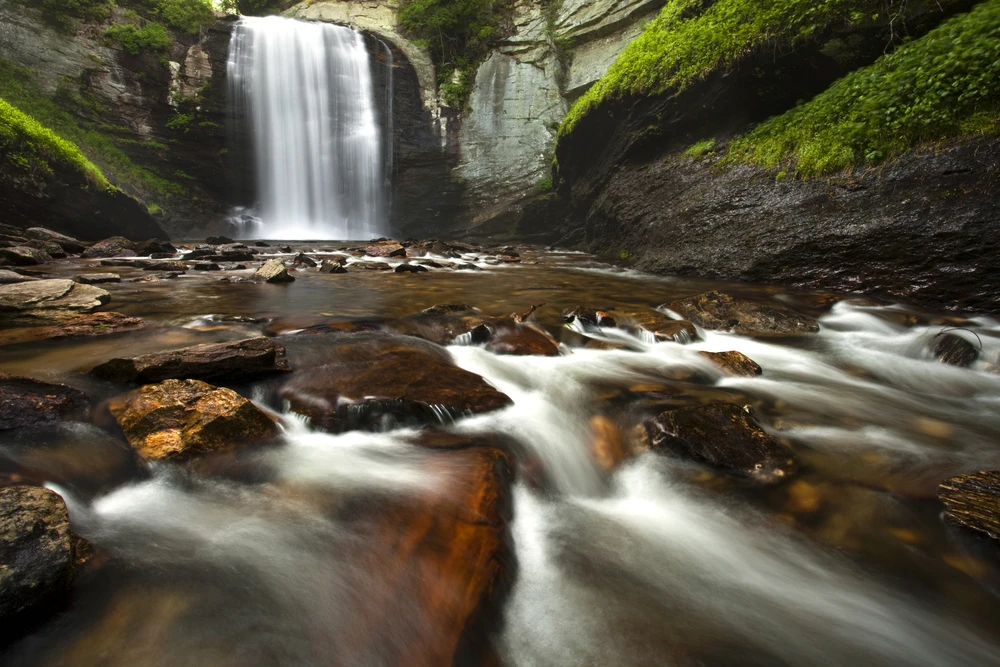
You glide into Sols Creek’s arm, the lake narrowing, the surrounding hills stepping closer, the water slipping from cobalt to green. A thread of sound rises above paddle drip—the waterfall calling from its amphitheater. The cove dares you to keep it quiet, as if conversation might scatter the mist. You beach the kayaks on a tidy gravel fan and, if conditions allow, lace up for a short but punchy 15-minute hike to the base of the falls. It’s not technical, but it is uneven—roots twist, rocks hold their slick in the shade—so you’re glad you wore shoes that can pull double duty.

Lunch lands like a small celebration: an island or lakeshore picnic set under open sky, the mountains shouldering the horizon. Guides share local notes—where the morning fog holds longest, which coves host shy otters, the stretches of shoreline where early settlers forged homesteads before the dam rose. That backstory deepens every stroke. Bear Lake’s water was engineered for power, yes, but today it quietly feeds something softer: respite.

Geology shaped the mood here long before paddles sketched tracks across the surface. These are ancient mountains on a slow timeline; granite shoulders and metamorphic ridges funnel wind, deflect weather, and cradle the lake in a bowl that feels made for reflection. The current barely whispers beneath you. Even so, you pay attention to the details that matter: staying close to shore when winds rise, tracking boat wakes at a 45-degree angle, giving anglers a respectful berth in skinny water. This is the pragmatism that keeps the serenity intact.

Trips meet at Headwaters’ base, with a 45-minute shuttle to the lake and a return by late afternoon. Reservations are required, group size is capped (three to eight), and lunch is included—mention dietary needs when you book. If you want to extend your time in the region, base yourself in Brevard or Sylva and let the rhythm of the Blue Ridge set your schedule. For planning help and local intel, tap into regional expertise here: https://app.advcollective.com/local-experts/undefined. It’s a smart way to match conditions with ambition.

Why choose Bear Lake over the area’s bigger-name waters? The answer is scale and season. Spring and fall bring stillness, migratory birds, and clean lines of sight through hardwood forests. The lake doesn’t demand bravado; it invites attention. The waterfall rewards consistency, not speed. This is a trip that stretches beginners in all the right ways and lets seasoned paddlers downshift into a quieter gear.

By the time you turn for home, the lake has warmed to the day. Sun skims the surface. You’re paddling with the memory of the falls—a silver curtain framed by hemlocks—and a sense that the mountains approved of your visit. Back at the van, you towel off, stow the boat, and trade a look that says it all: That was exactly what we needed.

When you’ve rinsed the lake from your arms, make your way to Headwaters’ Forks Of The River Taproom, where a cold beer fields the day’s stories. Western North Carolina does this well: play hard, then sit still. Plan your next paddle, explore other quiet-water classics, and lean on people who know the backroads and wind patterns. Start with these local experts: https://app.advcollective.com/local-experts/undefined. Because in the mountains, knowledge is always an advantage.

Duration6–7 hours door-to-door (about 2.5–3 hours paddling)
Plan your visit

Trail Wisdom

Layer for cool mornings

Spring and fall start crisp—wear quick-dry base layers and a light shell to cut wind on open water.

Footwear that crosses over

Choose closed-toe water shoes or grippy sandals that can handle wet decks and the short, slick hike to the falls.

Manage wind and wakes

Hug shorelines if wind picks up and take incidental boat wakes at a slight angle to stay stable.

Pack personal hydration

Lunch is included, but carry at least 1–2 liters of water per person; shaded coves can still dehydrate you.

Local Knowledge

Hidden Gems

  • Quiet side coves along the Sols Creek arm where rhododendron forms a natural tunnel
  • A small gravel bar near the waterfall cove that’s perfect for a snack and photos if the main landing is busy

Wildlife

Osprey and bald eagles, River otters and hooded mergansers

Conservation Note

Rinse and dry gear to prevent invasive species spread, give nesting birds wide berth, and avoid trampling fragile shoreline vegetation when landing.

Bear Lake (Bear Creek Lake) was created in the 1950s by damming the East Fork of the Tuckasegee River for hydroelectric power; today it’s maintained as one of WNC’s cleanest lakes and is regularly stocked with fish.

Seasonal Guide

spring

Best for:Calm water paddling, Wildflower and bird viewing
Challenges:Cool water temps, Changeable weather and wind

April–May delivers quiet coves, mild temps, and clear views through the trees with fewer motorboats.

summer

Best for:Family lake days nearby, Warm swims on non-guided visits
Challenges:Heavier motorboat traffic, Heat and afternoon thunderstorms

Guided trips typically pause in summer due to traffic; if you visit, start early and expect wakes and heat.

fall

Best for:Peak color paddling, Glass-calm mornings
Challenges:Shorter daylight, Crisp mornings requiring layers

September–October is prime: stable weather, striking foliage, and fewer crowds on the water.

winter

Best for:Solitude on shore hikes, Photography from overlooks
Challenges:Cold air and water, Limited access and potential closures

Not a typical paddling season here; if you’re exploring, stick to shoreline walks and watch for icy patches.

Photographer's Notes

Start with low ISO in calm coves to capture mirror reflections, then switch to a fast shutter near the falls to freeze spray or go to 1/8–1/4 sec with an ND filter for silky water. Polarizers cut glare on the lake and deepen fall colors. Frame kayaks in the foreground to convey scale, and aim for first light when the water is glassy.

What to Bring

Lightweight waterproof shell

Essential

Cuts wind on open water and sheds the occasional spring shower.

Quick-dry insulating layer

Essential

Keeps your core warm during cool starts and shady coves.

Closed-toe water shoes with traction

Essential

Useful for slick landings and the optional short hike to the waterfall.

○

10–15L dry bag

Protects your phone, camera, and spare layer from paddle drip and splashes.

Common Questions

Do I need prior kayaking experience?

No. This is suitable for beginners, and guides provide instruction on basic strokes, steering, and safety.

How far is the paddle and how long does the trip take?

The route is about 5 miles round trip. With shuttle, shore lunch, and the optional short hike, plan for 6–7 hours total.

Is lunch included and can you accommodate dietary needs?

Yes, a shore lunch is provided. Notify the guides at booking of any dietary restrictions or preferences.

What should I wear for the paddle?

Dress in quick-dry layers with a light shell. Bring footwear that can get wet and handle a brief hike.

Is swimming allowed at the waterfall?

Swimming conditions vary with temperature and flow; ask your guide on the day of the trip and follow their safety call.

What happens in bad weather?

Guides monitor conditions and may adjust timing or cancel if necessary. If a cancellation occurs, they will work with you on options.

What to Pack

Quick-dry layers for cool mornings; closed-toe water shoes for landings and the short hike; 1–2 liters of water in a reusable bottle; a compact dry bag for your phone, extra layer, and camera.

Did You Know

Bear Lake—also known as Bear Creek Lake—was formed in the 1950s when the East Fork of the Tuckasegee River was dammed, creating a 500-acre reservoir with approximately 13 miles of shoreline.

Quick Travel Tips

Book early—trips run Thursdays in spring and fall and group size is limited; Arrive layered and ready to paddle so you can launch quickly in calm morning conditions; Expect limited cell service near the lake—download maps and confirmations beforehand; Tell your guide about dietary needs at booking so your shore lunch is dialed.

Local Flavor

After your paddle, head to the Forks Of The River Taproom for a post-trip pint. In Brevard, refuel with wood-fired pies at Pi-Squared or seasonal Southern plates at The Square Root, then cap the evening with a stroll past live music on West Main. Coffee for the drive? Bracken Mountain Bakery has you covered.

Logistics Snapshot

Closest airport: Asheville Regional (AVL). Meeting point: Headwaters Outfitters near Rosman; approx. 45-minute shuttle to Bear Lake. Driving: About 1 hour from Brevard to the lake area. Cell service: Spotty around the reservoir—plan offline. Permits: Included with outfitter; no personal permits needed for participants.

Sustainability Note

This reservoir feeds regional ecosystems and recreation—pack out all trash, minimize shoreline impact during landings, and clean/dry gear to prevent invasive species transfer between waterways.

Topics