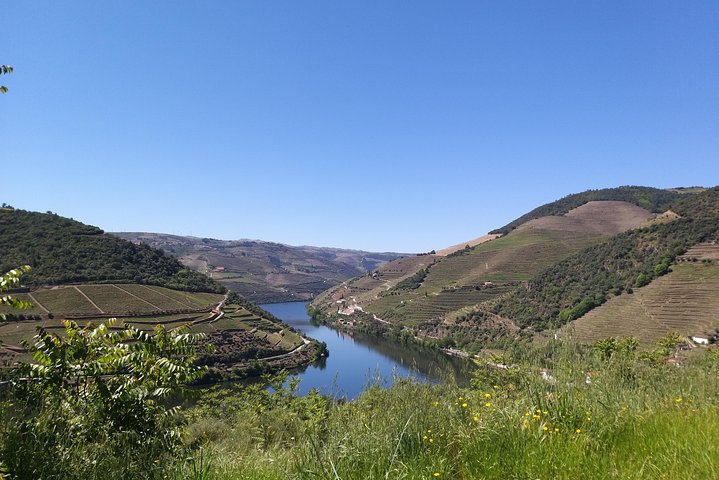
The Douro arrives like a long-held secret: slow, dark, and insouciant as it threads between steep terraces that rise like amphitheaters of vine and stone. Stand on the deck of a small sailboat as Porto slides aft—red-tiled roofs and the stacked façades of Ribeira give way to the wide estuary—and you feel the river negotiating two worlds. Upstream, the valley tightens into serried hills covered in low, twisted vines, each terrace a human answer to gravity and heat. Downstream, the Douro opens toward the Atlantic, a final, bracing inhalation of salt air. Between these moods the river dares you to slow down and pay attention.
The Douro Valley is both a landscape and a long-lived industry. It was the world’s first demarcated wine region, set apart in 1756 by the Marquis of Pombal to protect the quality—and taxes—of Port. The terraces you see are hewn from schist and shale, rock that flakes and traps warmth. That geology dictates everything: the soils retain heat for late-ripening grapes, water runs fast down tight slopes, and a mosaic of microclimates produces the concentration that made Port famous. The architecture of the valley—whitewashed quintas, old lagares where grapes were trodden, and tile-clad stations like Pinhão—reads like a ledger of local labor and craft.
Travelers arrive for different incentives. There are champagne sunsets and languid estuary crossings on vintage sailboats that open Porto’s skyline from a rare angle; you can taste three Port wines while gulls wheel and crew stories about Vila Nova de Gaia’s cellars unfurl. There are daylong routings inland—private or small-group drives along the National Road 222 which clings to the valley’s spine—punctuated by vineyard visits, winery lunches, and short Douro River cruises from Pinhão. These are complementary modes of knowing the landscape: you taste the soil in a glass, photograph the terraces from a river angle on a 45-minute cruise, and learn the human history in cellar tasting rooms where centuries of stored weather and technique are distilled into a bottle.
The valley’s human scale is intimate. Many producers are family-run quintas where the tasting menu reads like genealogy—old vines of Touriga Nacional and Tinta Roriz, fortified Ports alongside growing lines of DOC table wines that have elevated the region’s global standing over the last four decades. The food matches that intensity: slow-cooked stews, grilled meats, and river fish, all meant to be shared and to lengthen the afternoon. In Porto, the riverside lodges of Gaia offer a different education; their cellars—some dating to the 18th century—house the slow transformations of Port made from those same terraces upriver.
Practicalities matter here: the best boat experiences are small-group or private charters, where the river is a living room and the guide a storyteller. Morning departures from Porto take roughly 1.5–2 hours to reach Pinhão by vehicle; many full-day valley tours begin around 8:30 a.m. and combine two or three vineyard visits with a short cruise and a traditional lunch. River cruises vary—45 minutes for panoramic passages around Pinhão, up to an hour for private min-cruises that linger at viewpoints. Sunset sail options from Porto are shorter but magical: the mouth of the Douro is where river meets sea and light sharpens.
Timing is everything. Harvest (late August through October) is theatrical: tractors and pickers move like clockwork through terraces, and the valley is at its richest color and busiest tempo. Spring is green and flinty, summer is hot and parched on the slopes, and winter brings low clouds and pruning silence, when many quintas close for maintenance. If you want warm light and active cellar rooms, aim for September. If you prefer quiet terraces and discounted tours, winter offers solitude—but bring layers.
Logistics and comfort: the best boat-charters run with experienced crews who know tides, wind, and the quieter eddies where photography is best. On land, National Road 222 is picturesque but twisty; book a driver if you prefer not to navigate narrow hairpins. Respect winery schedules—many family quintas operate by appointment—and come hungry: vineyard lunches are as much about place as they are about flavor.
Sustainability is woven into the valley’s future. Terraces were built by hand; maintaining them is costly labor. Many quintas are adopting organic practices, reducing irrigation and protecting terrace walls. Small-boat operators and local guides are increasingly conscious about limiting passenger numbers, avoiding noise pollution, and encouraging guests to support family producers rather than just large lodges.
Why go? Because the Douro is a rare compound: geology that tastes like wine, a river that moves you through history, and a landscape shaped by human hands that still feels stubbornly alive. Whether you cruise from Porto at sunset, taste through family cellars in Pinhão, or drive National Road 222 with a guide who knows the backroads and the best viewpoints (Casal de Loivos, São Cristóvão do Douro), the Douro asks for the same thing of every visitor—slow down, listen, and bring a good pair of shoes. The reward is immediate: the river offers a perspective you cannot get from a map, and the valley gives a lesson in how place is made over centuries of work and weather.