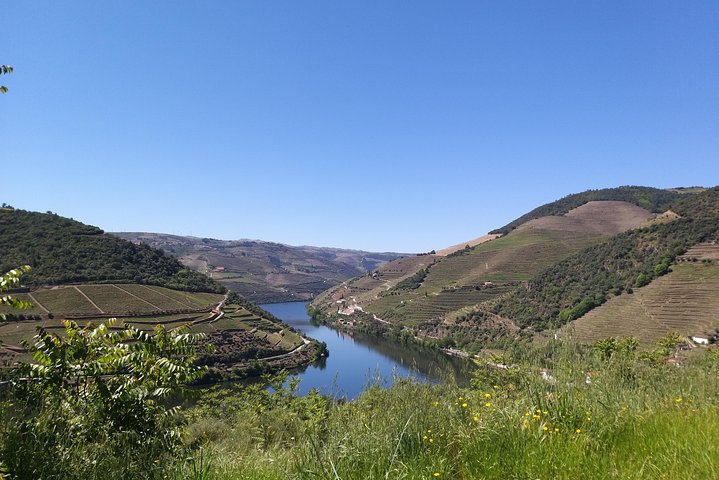
Morning collects along the Douro like a secret, cool and hushed as the river slides past the quay in Pinhão. The village wakes in clinks of coffee cups and the low murmur of vineyard trucks switching through the gears. You step off the cobbles and onto schist—that dark, flaky rock the valley is built on—and the path tilts upward. Vine rows gather like ranks of green, the terraces shouldering each other up the hillsides. The river doesn’t rush; it persuades, curving through the folds, daring you to climb a little higher and see what it sees.
This private hike is the Douro distilled: an intimate half-day on the valley’s ancient slopes, with 370 meters of elevation gain that unfurls the landscape in crisp layers. Underfoot, the schist crunches. Wild rosemary and cistus swing a resinous note into the air. The guide sets a comfortable rhythm, translating the olive trees, cork oaks, and slim cane fences of the old socalcos—hand-built terraces stacked stone by stone to keep soil from slipping away. The path threads vineyard tracks and farm lanes, pausing at walls streaked with lichen and the occasional chapel whitewashed against the blue.
History walks beside you here. This is the world’s oldest demarcated wine region, protected since 1756 to safeguard the character of the wines that leave these slopes. For centuries, rabelo boats shouldered barrels downriver to Vila Nova de Gaia. Today, the river is quieter, but the work remains visible: pruned canes, the black slate glint of schist exposures, the names of quintas painted in bold letters across hillsides. You’ll hear how the rock stores heat, how vines root into stone seams, how the Douro’s switchback of sunlight and shadow shapes the grapes.
The route’s target is a ridge-line lookout worthy of the climb—the kind of viewpoint where the river unspools in an S-turn and mountains roll away like waves. On many days, that’s the celebrated Miradouro de Casal de Loivos, a balcony over Pinhão where terraces gather into a tapestry and the railway line gleams far below. From up here, the valley seems alive and deliberate: the wind slides along the vine rows; swallows sew the air; a distant tractor chugs and the slope answers with echo. This is why you hike the Douro—not just for the view, but to feel the geometry and grit that make it possible.
The descent is a study in restraint. Gravity tugs, but the guide slows the pace, pointing out laurel and strawberry tree, coaxing scent from crushed leaves. The trail falls back toward the river, where a picnic waits in the shade: crusty bread, queijo and presunto, olives slick with oil, seasonal fruits, and a careful pour of local wine. Lunch by the Douro is unpretentious and proud—a small, traditional celebration of where you’ve been walking. The current keeps its own metronome; your legs hum with that good fatigue earned on honest terrain.
This is a private experience by design, paced to your group and tuned to conditions. Expect about five hours moving and pausing, with stretches on uneven ground and steps cut into the hillside. Distances vary by route, but the effort sits squarely in the moderate range. What you get in return is context: a guide’s read of the weather, the vineyards’ annual rhythm, the difference between field blends and single-varietal plantings, and the story of the Douro’s rebirth from working river to UNESCO-listed landscape.
Practicalities matter here. The schist can be slick with morning dew or dust-dry and marbly by late afternoon—good footwear keeps you sure-footed. The sun, especially in summer, bounces off rock and water with intent. Start early when you can. Spring and autumn bring kinder temperatures, soft light, and the valley at work. Harvest (vindima) paints the region in motion, but trails may host crews—be courteous and give them space. Your guide will thread the quieter lines.
Beyond the hike, Pinhão rewards lingering. The 19th-century railway still brings passengers upriver from Porto, and the station’s azulejo tiles tell vineyard stories in deep cobalt and white. Wander down to the riverfront after lunch and you may see a rabelo replica nosing downstream, a nod to an era when the Douro ran barrels to the Atlantic. Tasting rooms at nearby quintas invite another layer of discovery, but this walk keeps the lens close: feet on stone, vines in reach, history woven into the climb.
In a travel era obsessed with superlatives, the Douro doesn’t push; it persists. It lets the terraces speak, the river carry its quiet. The hike above Pinhão folds you into that conversation—a half-day where landscape and labor share the trail, and where the valley, old and steady, sets the pace.
Planning notes: The tour runs as a private outing, with a knowledgeable local guide, a traditional picnic lunch with wine, and a low-impact approach that respects farm roads and terraces. Bring 1.5–2 liters of water per person, sun protection, and a light wind layer. Expect limited cell service on certain slopes. No permits are required for this walk, but you’re crossing an agricultural landscape—stay on the path, step carefully on terrace edges, and follow the guide’s lead. When the river says slow down, listen. It’s been shaping this valley longer than any of us.