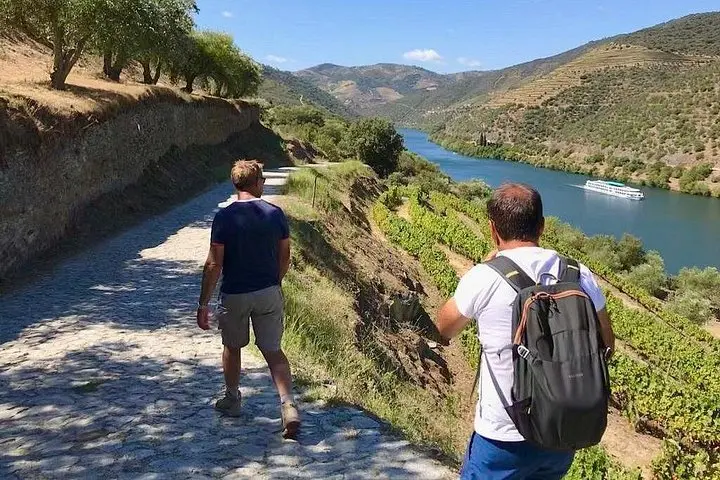
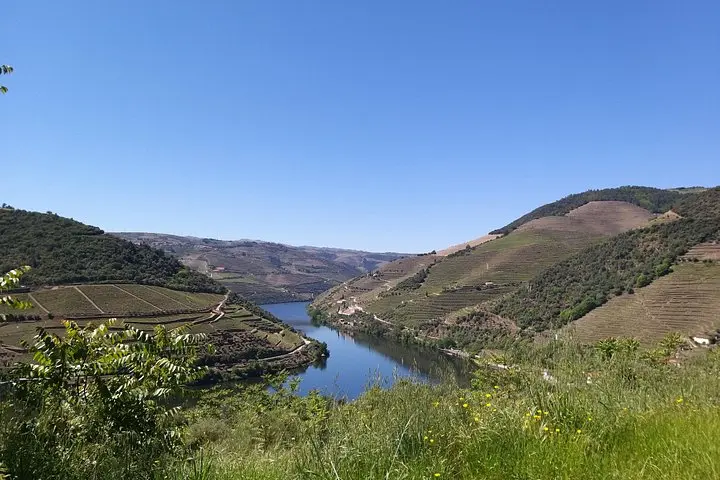
When the morning light first spills into the valley it cuts across terraces like a gilded comb—sheets of schist hold the vineyards in place, and the rows look almost stitched to the hills. The 4x4 grinds up a narrow track, tires biting into packed earth that smells faintly of citrus and crushed grape skins. Around each hairpin, the valley unfolds again—steep slopes, small stone walls, and a river running low and deliberate below. The Douro dares you to slow down, to listen to the land that has been shaping Portuguese wine culture for centuries.
This full-day private experience is an efficient, sensory-rich way to digest the Douro: a mix of off-road driving, close encounters with working quintas, a long lunch paired with sparkling and fortified wines, and a short boat passage that gives the valley a new perspective. For six to eight hours you’ll move through multiple vantage points—terrace lanes that the tractors barely fit through, a family-owned quinta where vines are pruned in ways passed down for generations, and a vantage that feels like the valley’s natural amphitheater.
Geology explains a lot of the Douro’s personality. The soil here is schist—thin, flaky rock that forces vines to send roots deep. That scarcity of fertile topsoil concentrates flavor into smaller berries; the result is a set of wines with focused minerality. Historically the region’s layout and these conditions led to the formal demarcation of the Douro in 1756, making it one of the world’s oldest regulated wine regions. Human ingenuity—stone terraces, small farm tracks, and the rabelo boats that once carried port downstream—has been entangled with geology and climate for centuries.
But the Douro is more than geology and grape science. It’s a working cultural landscape. Quintas are household names here, run by families who tend the vines and host meals where stories are as important as the food. You’ll learn about traditional production methods and taste DOC wines and Moscatel directly from producers who translate terroir into something you can sip. The boat trip on the river—brief, quiet, and placid—gives you the valley’s scale: those terraces are not a backdrop; they are the town’s mainspring.
For travelers, the practical appeal is immediate. You cover lots of ground without a strenuous hike or complicated logistics: the 4x4 allows access to trails and viewpoints that conventional vehicles can’t reach. The itinerary is private and flexible—perfect for families, photographers chasing light, or anyone who wants to pair mobility with tasting. Cost is clear up-front (bookings start at approximately $295.72 per person) and the tour is designed as an all-included day: guided drives, winery visits, lunch with paired wines, and the boat segment are wrapped together so you can focus on the experience rather than the details.
Planning-wise: expect a day of varied footing. You’ll get out of the vehicle to walk terraces and into wineries; comfortable, supportive shoes matter. Weather shifts quickly in the valley—mornings can be cool and the mid-day sun strong—so dressing in layers is practical. Photographer’s note: the best light is early and late; the boat passage gives low-angle water reflections at golden hour that are worth timing around if you can.
This is not a wilderness slog. It’s a cultural immersion with a clear tasting arc and a solid dose of scenic off-roading. Travelers who enjoy food and drink narratives, plus moderate outdoor movement—stretching legs on vineyard paths and stepping aboard a small river craft—will find it an efficient, meaningfully curated day. For people who love to pair place and palate, a Douro 4x4 outing supplies both: cliff-hugging views and a taste of why the world still reads port labels with the same reverence.
Practical tips: bring a reusable water bottle, sun protection, and a camera with a wide-angle for the valley and a longer lens for compressing the river and terraces. If you want a seat with a view, request morning departures to catch the valley unfolding with low light. Be ready to support small producers—these quintas depend on tourism—and to follow the guide’s instructions on private land. Finally, allow the boat ride to slow your rhythm; the Douro’s river has a different pace, and that’s the point.
Why go now? The Douro’s harvest and shoulder seasons are the richest times to be there—vineyards have character in every month, but fall adds color and bustle. You’ll leave with a clearer sense of how a landscape becomes a label, and why a bottle of Douro wine holds not just grapes, but an entire valley’s architecture and labor.
If you want a single-day offering that blends access, stories, and tasting with a little automotive grit, this 4x4 tour delivers: it’s an intentionally paced translation of vineyard, river, and people into a day you’ll remember long after the last sip.