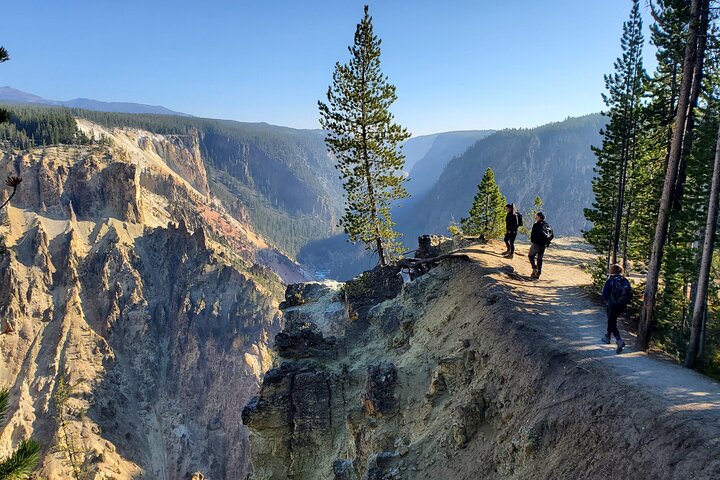
Edge of the Canyon: Standing Above Yellowstone’s Upper Falls

Edge of the Canyon: Standing Above Yellowstone’s Upper Falls

A close, practical look at the Grand Canyon of the Yellowstone’s dramatic upper cascade.

Continue Reading

You reach the rim at first light and the canyon answers with a low, constant roar—the river talking through rock. Mist wreaths the drop where the Yellowstone River narrows, hauling water over a ledge that has been working at the mountain for millennia. Up here, at Yellowstone Upper Falls, the canyon is a stitched ribbon of ochre and gold; the water, white and relentless, dares you to hold still and simply watch. The view clamps onto you quietly at first, then insists on being remembered.

The Upper Falls sit in the heart of the Grand Canyon of the Yellowstone, the park’s cathedral of shifting color and thermal history. Unlike the cinematic Lower Falls—308 feet and famously thunderous—Upper Falls is a shorter, tighter plunge (about 109 feet), but its power is intimate: the river constricts through basalt and rhyolite, picks up speed, and slams into the canyon like clockwork. Artist Point and the canyon rim trails frame the scene, giving hikers and sightseers the chance to study how fire, ice, and geothermal upwelling carved these walls into jagged bands of reds, yellows, and creams.

Geologically this place tells a classic Yellowstone story. The rock layers are a palimpsest of volcanic fallout and later hydrothermal alteration; sulfur-laden steam and acidic hot springs helped weaken the bedrock, allowing the Yellowstone River to slice unusually fast and deep. The canyon’s palette is not paint but chemistry—iron and silica reacting over centuries to create the rusted cliffs. Human history here is quieter but layered: U.S. Army engineers and early 20th-century park artists popularized viewpoints like Artist Point and Uncle Tom’s Trail, while Indigenous peoples’ ties to the landscape long predate the park’s establishment in 1872.

This is a place where tours and hikes converge into complementary ways of seeing. For travelers who want the sweep—a curated day that hits thermal basins, Old Faithful, and the canyon—the Yellowstone National Park Private Guided Tour - Full Day or the Full Day Yellowstone Nat'l Park Tour From West Yellowstone are efficient, educational options. They put the Upper Falls in a broader context of Yellowstone’s supervolcanic landscape and supply scopes and guides who can interpret the geology and wildlife.

If you want to slow down and feel the canyon in your legs, the Grand Canyon of the Yellowstone Rim and Loop Hike with Lunch is the natural fit. It straps you into the rim’s rhythms: forested switchbacks one minute, sheer outlooks the next, and mid-hike explanations about mud pots, meadows, and how to read the canyon walls. Guides can navigate confusing trail junctions and pick photo-friendly pauses for lunch with a view—the kind of little logistics that make a great day feel effortless.

For photographers and wildlife watchers, private Upper Loop and wildlife photo tours—like Yellowstone Private Upper Loop Tour with Lunch or Private Yellowstone Wildlife and Photo Tours from West Yellowstone—are tailored to light and animal movements. Guides with optics and local knowledge push the odds in your favor for elk at dawn, bison at a distant meadow, or a raptor spiraling in the thermal lifts.

Practical half of the story: getting here is straightforward but seasonal. Canyon Village is the nearest services hub inside the park; many travelers base in West Yellowstone or Gardiner (outside park gates) and take a day to approach the rim. Trails range from short, accessible viewpoints to multi-mile loops; the Rim Trail’s viewpoints are well maintained, but inner canyon trails can be steep and exposed. Bears and bison are always a possibility—carry bear spray where recommended and keep a wide berth from any wildlife.

Timing matters. Early morning or late afternoon light sculpts the canyon; mid-day can flatten colors and bring crowds to Artist Point. Spring runoff thickens the river and increases mist; fall mellows the crowds and gilds the aspens.

Where the practical meets the poetic: gear and planning. Solid trail shoes with tread for packed dirt and slick boardwalks are non-negotiable, and layers are essential—temperatures can swing dramatically between the canyon rim and sunlit meadows. Bring water, a wind shell, and a compact tripod if you aim to shoot long exposures of the falls. If you’re booking a guided tour, note whether meals, park fees, or optics are included; many full-day tours do offer binoculars and lunch, which streamlines a very full day’s logistics.

If the canyon’s colors and the river’s insistence call to you, plan for a relaxed pace. A full-day tour will let you sample Yellowstone’s essential geology and geyser basins; a focused hike along the rim will let you listen to the canyon. Either way, the Upper Falls is the kind of place that rewards attention: you’ll leave with muddy shoes, a cool neck from the mist, and a clearer sense of how one river can rewrite a mountain.

Duration1–3 hours (viewpoint visits) to 4–6 hours (rim loop hikes)
Plan your visit

Trail Wisdom

Beat the light and the crowds

Arrive at sunrise or late afternoon for better light and fewer people at Artist Point and rim overlooks.

Layer for microclimates

Temperatures can vary 20°F between shaded forest and exposed rim—bring a wind shell and insulating layer.

Respect wildlife distance

Use binoculars and stay at least 100 yards from bears and 25 yards from other large mammals; guides will enforce safe viewing.

Mind the boardwalks and rails

Rim viewpoints are often bordered by fragile hydrothermal ground—stay on trails and obey signage to protect safety and geological features.

Local Knowledge

Hidden Gems

  • Look for lesser-visited overlooks along the North Rim Trail for quiet views and sunrise compositions
  • Nearby Calcite Springs and smaller geothermal features on short boardwalks offer close-up geology without the crowds

Wildlife

Elk, Osprey and golden eagles

Conservation Note

Trail use and park visitation can erode fragile thermal-ground and riparian zones; stay on designated paths, pack out trash, and follow seasonal road and access advisories.

The Grand Canyon of the Yellowstone was popularized by early park artists and landscape painters in the late 19th century who helped promote Yellowstone as a national treasure.

Seasonal Guide

spring

Best for:water flow, wildflower displays, fewer crowded overlooks
Challenges:road openings vary, patchy snow on trails, cold mornings

Spring brings high river flows and vivid runoff but unpredictable access; check road openings and expect chilly starts.

summer

Best for:full access to trails and roads, warm temperatures, wildlife viewing at dawn/dusk
Challenges:peak crowds, limited parking at viewpoints, strong sun

Summer offers the fullest access to the park; arrive early to avoid crowds and mid-day heat.

fall

Best for:autumn color, lighter crowds, crisp, clear air for photos
Challenges:shorter daylight, earlier cold snaps, some services close seasonally

Fall smooths crowds and sharpens canyon colors—ideal for photographers who don’t mind cooler mornings.

winter

Best for:quiet solitude, snow-draped vistas, unique perspectives from snowshoe or snowcoach tours
Challenges:limited access, many roads closed, extreme cold

Winter transforms the canyon into a quiet, snow-sculpted scene; access is limited and requires planning or guided transport.

Photographer's Notes

Shoot the canyon at golden hour for warm side light; use a polarizer to deepen the sky and reduce glare on water, and bracket exposures to capture the high-contrast canyon; a neutral density filter helps create smooth waterfall effects without overexposing highlights.

What to Bring

Sturdy hiking shoes

Essential

Good tread and ankle support help on packed dirt, slick boardwalks, and rocky viewpoints.

Wind shell or light insulated jacket

Essential

Protects against sudden winds and canyon mist that cool the upper rim quickly.

○

Binoculars

Ideal for spotting distant wildlife in Hayden and Lamar valleys from rim overlooks.

○

Compact tripod

Allows longer exposures for silky-water photos or low-light canyon shots.

Common Questions

How tall is Yellowstone Upper Falls?

Upper Falls drops roughly 109 feet and sits upstream from the larger Lower Falls in the Grand Canyon of the Yellowstone.

Where is the best place to view Upper Falls?

Artist Point and the North Rim and South Rim viewpoints offer dramatic perspectives; each provides a different angle on the canyon’s colors and the falls’ flow.

Do I need a permit to hike near Upper Falls?

No special permit is required for the main rim trails and overlooks, but backcountry travel beyond maintained trails may require registration and bear-aware planning.

Can I see wildlife from the canyon rim?

Yes—elk, mule deer, and raptors are commonly seen; bison and bears are possible in surrounding meadows and valleys, so keep distance and use optics.

Are trails accessible for strollers or wheelchairs?

Some viewpoints have paved sections with railings, but many rim trails include stairs and uneven surfaces; check specific viewpoint accessibility before visiting.

What should I do in a bear encounter?

Make yourself large, speak calmly, back away slowly—do not run—and carry bear spray where recommended; follow National Park Service guidance.

What to Pack

Layered insulating jacket, sturdy trail shoes, 1–2 liters of water, bear spray (when recommended) - for comfort, traction, hydration, and wildlife safety.

Did You Know

Upper Falls plunges approximately 109 feet; the Grand Canyon of the Yellowstone’s vivid hues result from hydrothermal alteration of volcanic rock, not paint or mineral deposits alone.

Quick Travel Tips

1) Buy or display your Yellowstone entrance pass in advance to avoid lineup; 2) Plan morning or late-afternoon canyon visits to avoid tour-bus crowds; 3) Bring cashless payment options—some park concessions have limited card service; 4) Check the NPS park road and weather updates the morning of your visit.

Local Flavor

Base your trip in West Yellowstone or Gardiner to sample local lodge dining, smoky bison burgers, and ranger-led evening talks; nearby small towns preserve old-West hospitality and craft shops selling regional maps and guides.

Logistics Snapshot

Nearest services: Canyon Village (inside park). Park entrance fee: $35 per vehicle (7-day, as of 2024). Roads: open seasonally—check NPS travel advisories. Cell service: limited; download maps and emergency numbers.

Sustainability Note

Stick to trails and boardwalks to protect fragile geothermal soils and riparian vegetation; support local guides who prioritize leave-no-trace practices and contribute to local conservation initiatives.

Topics