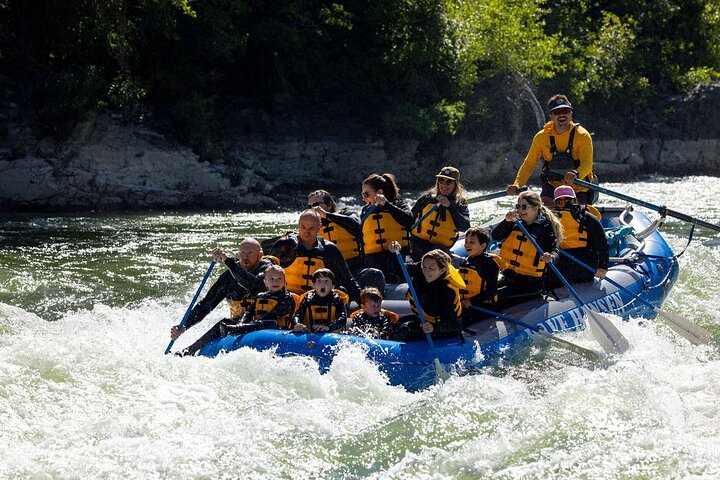
The raft slides off the gravel bar with a polite sigh and the river immediately takes the lead. You settle into a high-backed seat—more porch chair than whitewater bench—and the boat answers the river's slow request. Grand Teton peaks peel away from the horizon with the deliberate grace of an old cartographer revealing a map. Bald eagles pivot on thermals above; a beaver slips, polished and efficient, through cattails that dare the current. For three hours the Snake River does what rivers do best: it carries you through history, geology, and a living landscape without hurry or pretense.
This is not a rafting trip designed to test your mettle against rapids. It is a human-scale river experience—Teton Scenic Float Tours' signature chairs let you sit back rather than brace, which changes how you notice things. You hear the river's voice: an unforced gurgle beneath guide stories, the sigh of wind through sage, the soft slap of a trout crucially uninterested in being photographed. Guides point out the telltale scars of glaciation on the Tetons, the long sweep of alluvial fans, and the human histories braided into the riparian corridor—Shoshone presence, mountain men, and the slow arrival of tourism and conservation.
The Snake's story is geological and stubborn. The Tetons rose quickly, geologically speaking—blocks of crust shoved skyward while the valley to the east sank, leaving sharp relief that glaciers later sculpted into the knife-edge profiles we admire today. The river, a patient agent of erosion and deposition, has carved meanders and left behind oxbows and islands that create habitat diversity for moose, beaver, and migrating waterfowl. Human history is ruggedly layered as well: what you float past today was once travel corridor for Indigenous peoples, then fur-trade route, and now a corridor for people seeking the quiet connections wilderness offers.
Culturally the float is as much a Jackson Hole moment as a national-park one. Locals will tell you the river is part of the valley's backbone—working ranchlands, angling traditions, and a modern outfitters' scene all orbit it. Operators based in Jackson offer an easy-launch, hotel- and shuttle-friendly experience that makes this accessible to families, photographers, and anyone who wants sweeping landscape without strain.
Practicalities that matter: the trip runs roughly three hours, with gentle current and minimal technical challenge. Wildlife is plentiful but unpredictable—moose occasionally graze the banks, trumpeter swans paddle regal lines, and bald eagles hunt the same thermal drafts that photographers prize. Guides are skilled naturalists who layer local ecology and history into the float, transforming a passive float into a moving classroom.
Timing is part common sense, part strategy. Early morning and late afternoon deliver the best light and the quietest river; mid-day is warmer and livelier, with more boat traffic and bigger photographic challenges from overhead sun. Summer is peak season—soft breezes, full access, and busy parking. Shoulder seasons offer clearer skies and fewer crowds but cooler water and the occasional transient snow in late spring.
Gear and preparation are straightforward. Dress in layers, bring a brimmed hat, sunscreen, and a refillable water bottle; a compact binocular and a telephoto lens will pay for themselves with eagle and moose sightings. The chairs mean you won’t need to scramble for balance, but you should be able to sit comfortably for three hours. Hydration matters: even in cooler air, sun reflecting off water magnifies dehydration.
Book with an operator that runs smaller boats and prioritizes wildlife distance and river stewardship. Confirm cancellation policies—this tour offers free cancellation—and check launch logistics so you know where to meet and how long a shuttle might take. Expect intermittent cell service; if you rely on messaging or rideshare, download maps or agree on a meeting plan ahead of time.
Why do this float? It is an invitation to slow down without slowing the scenery. If you like landscape photography, wildlife viewing, or simply being outdoors without the strain of a summit attempt, the Snake River scenic float is a compact, high-return adventure. You leave the raft with a sense of place—the valley's geology, the river's temperament, and the region's history pressed into your memory like a leaf between pages. It is not escapism from civilization so much as a reminder that civilization and wildness in this valley share a thin, fascinating boundary.
If you go: arrive early for calm water and clearer photo light; keep a respectful distance from animals; and treat this as more than a checklist. The best moments come when you stop trying to see everything and let the river choose what it will show you.