From Mud to Mountaintops: The ATV-and-Heli Combo Out of Nadi

From Mud to Mountaintops: The ATV-and-Heli Combo Out of Nadi

Ride rough trails, visit an authentic village, and fly home with island views—an adrenaline-and-culture half-day out of Nadi.

Continue Reading

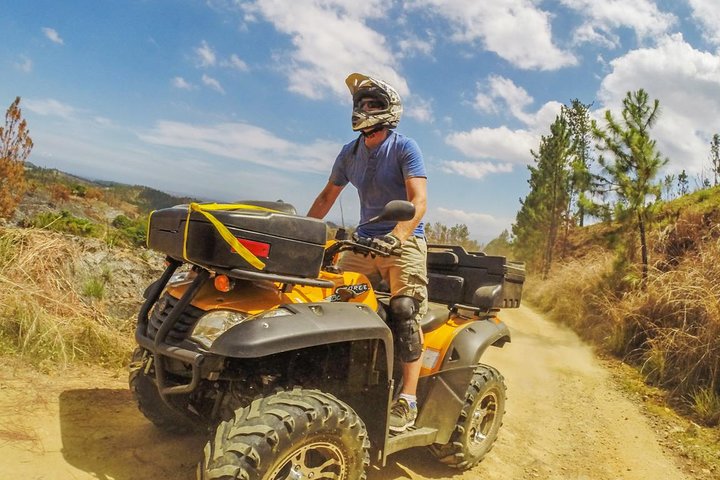
You feel the first judder through the handlebars before you see the view: a grit-slick track unspools between cane fields, then tilts up into a pine-scented slope. The quad surges, tires flinging sugarcane dust, and the island of Viti Levu rearranges itself behind you—flat lowlands giving way to a green shoulder of ridgeline, the Mamanuca Islands glittering like a memory on the horizon. The ride is short, sharp, tactile: mud that dares you into a grin, a creek that negotiates your line, the press-and-release rhythm of throttle and brake.

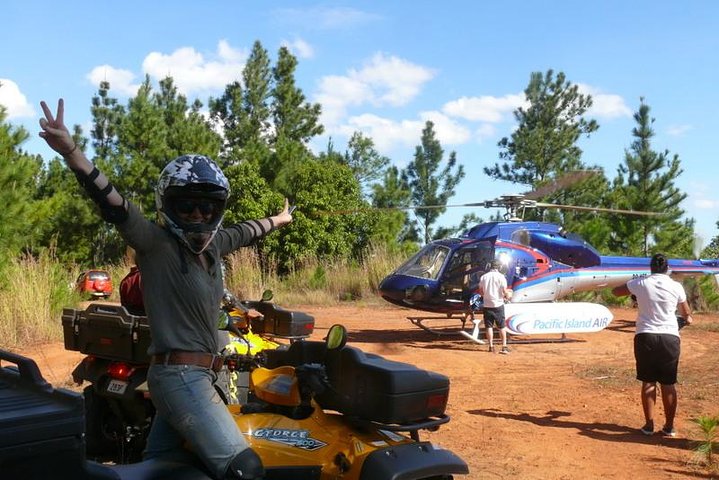
This is the Endgame Heli-Quad combo—three to four hours that pack a little of everything Fiji sells well: raw terrain, local hospitality, and a helicopter exclamation point. You begin in Nadi, thread the back road past the ornate Sri Siva Subramaniya Temple—the region’s colorful cultural anchor—and then go off-road into the Nakala Mountains. The quads climb, the air cools, and on a plateau you stop for a snack and the kind of view that feels like an affirmation: ocean islands, sugarcane geometries, and the soft curve of Viti Levu’s western coast.

The heart of the trip, though, is human. Driving inward another 11 kilometers, you arrive at a remote village. This is not a staged performance for tourists; it’s everyday life: children arriving at school, women preparing food, elders who remember the land before roads. Guides here are local—proud, fluent in story-telling—and your short visit is a bridge rather than a spectacle. If the school is in session (the tour omits weekends and holidays), you might meet students at recess and taste a home-brewed sweetness of root crops and fresh coconut.

A High-end and unique combination of adventure, beautiful scenery, and an introduction to the real Fiji.

Then the air shifts in a literal sense: your helicopter lands on the ridgeline to collect the group. There’s a small ceremonial noise—the rotor wash that rearranges leaves—and the island’s topography opens beneath the chopper like a pop-up map. The view back to Nadi and out to the Mamanucas is cinematic, and without the heli you’d never absorb that particular scale. The flight back is a tidy, exhilarating denouement to the off-road improvisation.

Geologically, Viti Levu is an eroded volcanic backbone—ridges and valleys carved by time and river. The Nakala Mountains aren’t dramatic alpine peaks; they’re the green vertebrae of the island, offering vantage points where the sea and shore meet in long, familiar ways. Culturally, the region is a mosaic: indigenous Fijian villages and Indian-Fijian communities who arrived in the 19th and early 20th centuries as laborers on sugar plantations. The Sri Siva Subramaniya Temple you pass is a vivid reminder of that history and one of the largest Hindu temples in the Southern Hemisphere.

Why go? Because this trip collapses distance and experience: in a morning you get a tactile taste of off-road adventure, a genuine village exchange, and a helicopter perspective that clarifies how Viti Levu’s human and natural geographies relate. It’s easy to overcook an itinerary where everything is staged; this combo feels calibrated—thrill for its own sake, yes, but balanced by moments that are quietly respectful and rooted.

Spend time in a local village and school - no show put on for tourists here, but instead an authentic 'real Fiji' experience.

Practicalities matter. The experience is three to four hours, departs from Nadi, and costs from roughly $414 per person. The terrain ranges from dirt tracks to narrow village roads; mud puddles are seasonal (wet season makes them more dramatic). Guides are local and the helicopter transfer is included. Bring sun protection, closed-toe shoes, and a sense of flexibility—village visits depend on school schedules and local rhythms.

For would-be adventurers: expect a physically easy but sensory-heavy outing. This isn’t a technical climb or daylong trek; it’s a layered experience that rewards curiosity. If you want to photograph the perfect rotor-shot, ask the pilot about window positions and keep a fast shutter. If you want to make the village visit meaningful, come with small, practical gifts—school supplies rather than candy—and ask before photographing children.

In short: this is the type of half-day that reorders travel priorities. Mud and throttle for the first act; people and culture for the middle; a helicopter’s perspective to close. It’s efficient, a little wild, and very much of place.

Length & Logistics: 180–240 minutes, small group, instant confirmation, includes guide and helicopter pickup. Best booked from Nadi—leave a morning or afternoon slot free and let the island do the rest.
Duration3–4 hours
Group Size1–5 Guests
LanguagesEnglish
Rating5.0 (23 reviews)

Not recommended for travelers with poor cardiovascular health

Not recommended for travelers with spinal injuries

Not recommended for pregnant travelers

Plan your visit

Trail Wisdom

Book morning slots

Mornings generally have steadier weather and clearer views for the helicopter segment.

Wear closed-toe shoes

Sturdy trail runners or light hiking boots protect feet on muddy, rocky sections.

Bring small gifts for the village

Practical items like pencils or notebooks are more useful than candy—ask your guide for guidance.

Protect your camera gear

Rotor wash is real—use straps and weather protection to keep lenses clean and secure.

Local Knowledge

Hidden Gems

  • A small ridgeline viewpoint beyond the main plateau that has unobstructed Mamanuca views
  • The nearby Nadi Market for local fruits and handcrafts after your tour

Wildlife

Fijian long-tailed fruit bats (flying foxes), Tropical forest birds such as the Fiji parrotfinch

Conservation Note

Tours support local economies—travelers should pack out waste, avoid single-use plastics, and ask before photographing children or private homes.

The route skirts communities shaped by Fiji’s sugarcane industry and Indian-Fijian migration; the Sri Siva Subramaniya Temple in Nadi reflects a long-standing Hindu presence.

Seasonal Guide

spring

Best for:Greener ridges, Fewer tourists
Challenges:Intermittent showers, Mud on lower tracks

Spring (Sep–Nov) bridges dry and wet seasons—trails are green but can get muddy; book flexible slots.

summer

Best for:Lush landscapes, Dynamic skies for heli shots
Challenges:Wet-season rainstorms, Potentially heavier mud puddles

Summer (Dec–Feb) is wetter—mud puddles are at their most dramatic and some sections may be slippery.

fall

Best for:Dry trails, Clear helicopter views
Challenges:Shorter daylight in late season, Occasional trade winds

Fall (Mar–May) tends toward the drier side with good flying conditions and solid off-road footing.

winter

Best for:Stable weather, Best visibility for aerial views
Challenges:Cooler mornings in the mountains, Higher demand from visitors

Winter (Jun–Aug) is Fiji’s dry season—ideal for quads and heli flights with crisp light and limited rain.

Photographer's Notes

Use a fast shutter (1/500s+) during the helicopter segment to freeze rotor-induced motion; bring a polarizer for saturated ocean colors, and keep a microfiber cloth handy for dust and rotor wash on lenses.

What to Bring

Sturdy trail shoes

Essential

Protects feet and provides traction on muddy and rocky tracks.

○

Light rain shell

Compact protection during sudden tropical showers—useful in the wet season.

Sunglasses with strap

Essential

Reduces glare during the heli flight and keeps eyes clear from dust on the trail.

Small daypack with water

Essential

Carry water, sunscreen, and a few snacks—guides provide light refreshments but you’ll want personal access.

Common Questions

How long is the ATV and helicopter experience?

The tour runs about 3 to 4 hours from pick-up to return and includes off-road riding, a village visit, and the helicopter leg.

Is prior ATV experience required?

No—guides provide instruction and the route is suitable for beginners, though basic comfort with handling a quad helps.

Can children join the tour?

Age and weight limits vary—check with the operator, but most companies restrict solo driving to older children and require child seats or passengers for younger riders.

Are village visits staged for tourists?

This particular tour emphasizes authentic visits; your guide will explain local customs and any photography etiquette required by residents.

What happens in bad weather?

Helicopter flights are weather-dependent; the operator will reschedule or refund for significant weather cancellations as per booking terms.

Are refreshments provided?

Light snacks are included on the mountain plateau; it’s wise to carry a bottle of water for the ride.

What to Pack

Sunglasses (reduce glare and dust), Water bottle (stay hydrated in the tropics), Small cash/gifts (for village purchases and school supplies), Light rain shell (sudden showers possible)

Did You Know

The Sri Siva Subramaniya Temple in Nadi is among the largest Hindu temples in the Southern Hemisphere, reflecting the island’s significant Indo-Fijian community.

Quick Travel Tips

Closest airport: Nadi International Airport; Expect about 20–45 minutes drive to trail start depending on traffic; Cell service can be spotty on mountain ridges—download maps offline; Bring sunscreen and mosquito repellent

Local Flavor

After the ride, head to Port Denarau or the Nadi Market for fresh kokoda (Fijian ceviche), grilled seafood, and cold local beers—both spots are good for meeting locals and sampling island flavors.

Logistics Snapshot

Closest airport / trailhead: Nadi International Airport; Driving distance from Nadi town: 20–45 minutes depending on exact departure point; Cell service: intermittent on mountain plateaus; Permits/passes: none required—tour is fully booked and operated with local permissions

Sustainability Note

This experience engages remote villages—respect local customs, avoid single-use plastics, and consider bringing practical school supplies to donate through your guide rather than candy.

Topics

Included

  • All activities - including village and school visit + helicopter flight
  • Local guide
  • Bottled water
  • Free tour photos
  • All Fees and Taxes
  • ATV Safety Equipment - e.g. use of helmet, safety glasses and safety gear
  • Hotel pickup and drop-off (selected hotels only)
  • Light refreshments and snacks

Good to Know

  • Not recommended for travelers with poor cardiovascular health
  • Not recommended for travelers with spinal injuries
  • Public transportation options are available nearby
  • Not recommended for pregnant travelers
  • Suitable for all physical fitness levels
  • Children must be accompanied by an adult and will share a quad bike (2 seater bikes) with their adult driver
  • Minimum age to drive is 18 years and/or showing a valid Drivers License - only select YOUTH option if a 16 - 17 year old is licensed and intends to drive their own quad, otherwise they can be put through as a child who will share a 2 seater quad with an adult driver
  • All drivers, regardless of age, must show valid drivers licence before commencing tour - DO NOT FORGET TO BRING THIS WITH YOU ON THE DAY! No drivers licence = no tour or refund.
  • Please advise any specific dietary requirements at time of booking
  • A minimum of 2 people per booking is required/A maximum of 6 people per booking for a non-group booking
  • We operate in most weather conditions. If canceled due to extremely poor weather, you will be given the option of an alternative date
  • Bring with you on the day: Driver’s Licence, Credit Card (or cash) [for insurance requirement], comfortable closed-toe shoes, Sunscreen, Sunglasses, Camera, Change of Clothes, and a Towel.
  • Safety procedures and rules from helicopter company, e.g. weight limits, may also apply