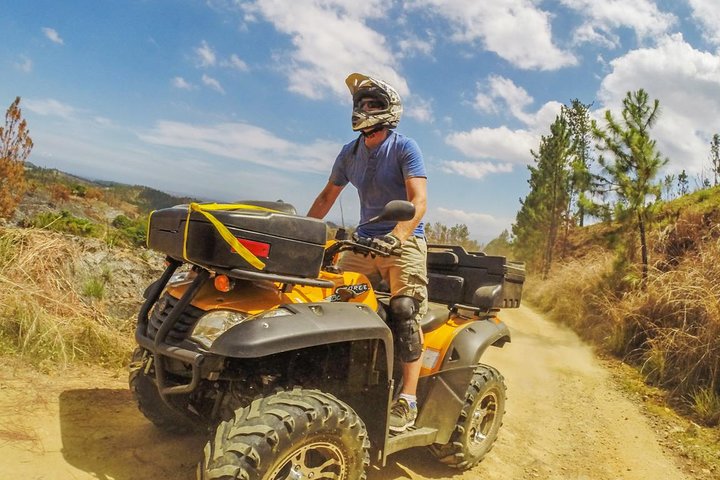
You kick the engine and the world answers in a chatter of gravel and rooster calls. The quad lurches forward, a small machine carrying you across basalt ridges and through belts of coconut palms that shoulder the coastal breeze. In the rearview the airport runway and modern Nadi blur into a sliver of the present; ahead the road narrows and the island’s deeper clock takes over — slower, older, patient. This is a half-day that folds contemporary adrenaline into a quiet cultural heartbeat: an ATV run to Viseisei, a walk through a village that locals call Fiji’s first settlement, and a percussive, ridiculous, therapeutic dip in geothermal mud pools and hot springs that feel like the island itself reaching up to massage your aches away.
The tour starts early — 8 a.m. — when the air is still cool and the mud is forgiving. Your guide briefs you beneath the shade of a breadfruit tree: how to handle the quad, where to slow, the respect owed to a village. On the trail you’ll negotiate ruts and red dust, thread through sugarcane margins, and crest ridgelines where the sea pries the horizon open. Those moments between throttles — standing on footrests as the machine noses down a slope, breathing salt and soil — are where the trip becomes less about speed and more about presence. The land nudges you into conversation.
Viseisei’s claim to fame lives in local tradition: it’s held as one of Fiji’s earliest places of settlement, where ancestral voyages met shore. That history is not presented as a museum case but as a living rhythm — church bells, communal fale (meeting houses), and craftspeople working with tapa cloth and woven lauhala. Your guide will walk you through clan stories and introduce you to artisans, explaining how motifs carry memory from canoe to cloth. It’s short, unsentimental cultural immersion: you learn not by signage but by sharing space and time.
After the village comes the mud. The Sabeto hot springs and mud pools — geothermal pockets tucked into the island’s near interiors — are both playful and restorative. People smear warm gray mud across their arms and faces, let it dry under the sun, then wash in mineral-rich springs that steam like a small, friendly volcano. The mud is literal: sulfide-rich, reputed for soothing muscles and drawing out stress. The ritual is low-key and communal; tourists and locals alike emerge laughing and softer.
Geology and culture intersect on this trip. Viti Levu’s volcanic past made the hot springs possible and shaped the soils that sustained early gardens. The islands’ social geography — villages that form around kinship and customary land — explains why a respectful approach is part of the itinerary. Guides will remind you that this is someone’s home; photography and conversation happen with permission.
Practicalities are elegant by design: the tour runs about four hours, and it’s priced from approximately USD 179 per person. Skill demands are low — basic ATV handling, an ability to ride uneven terrain, and a willingness to follow local rules. The machines do the heavy lifting; you provide curiosity and a sense of humor (mud will find crevices).
Timing matters. Early morning means cooler temperatures and better traction. Rain can turn trails into traction tests, so during the wet season some stretches feel more adventurous than intended. Bring closed-toe shoes that can be rinsed, a change of clothes, sunscreen, and a small towel. Expect brief pockets of cellphone service near Nadi but not on all stretches of trail; if you need to be reachable, let your guide know in advance.
Safety and respect are woven into the experience: helmets, a short safety briefing, and a moderate pace through village zones. The cultural portion is brief but meaningful; listen, ask questions, and refrain from photographing people without permission. When you’re in the mud pools, use the facilities provided and avoid introducing soaps or chemicals into the springs.
Why do this tour? Because it compresses a broad island education into a single morning — physical exertion and ease, history and geology, a tangible sense of place and a silly, wonderful dip in the mud. It’s an accessible way to move off the resort grid, meet local voices, and come away with something the photo can’t capture: the sensation of island heat, the grit under your nails, the well-timed laughter after a failed attempt to smear mud attractively across your face.
For planners: book the tour for a dry morning, wear quick-drying layers, and plan to refuel afterward in Nadi or at Port Denarau. Respect the village’s rhythms, tip your guide if they’ve earned it, and carry your trash out. This is the kind of short adventure that rewards openness and a light packing list — prepare, but don’t over-plan. Let the quad put you where the island’s stories gather, and let the mud be the punctuation at the end of a small, perfectly arranged sentence of adventure.