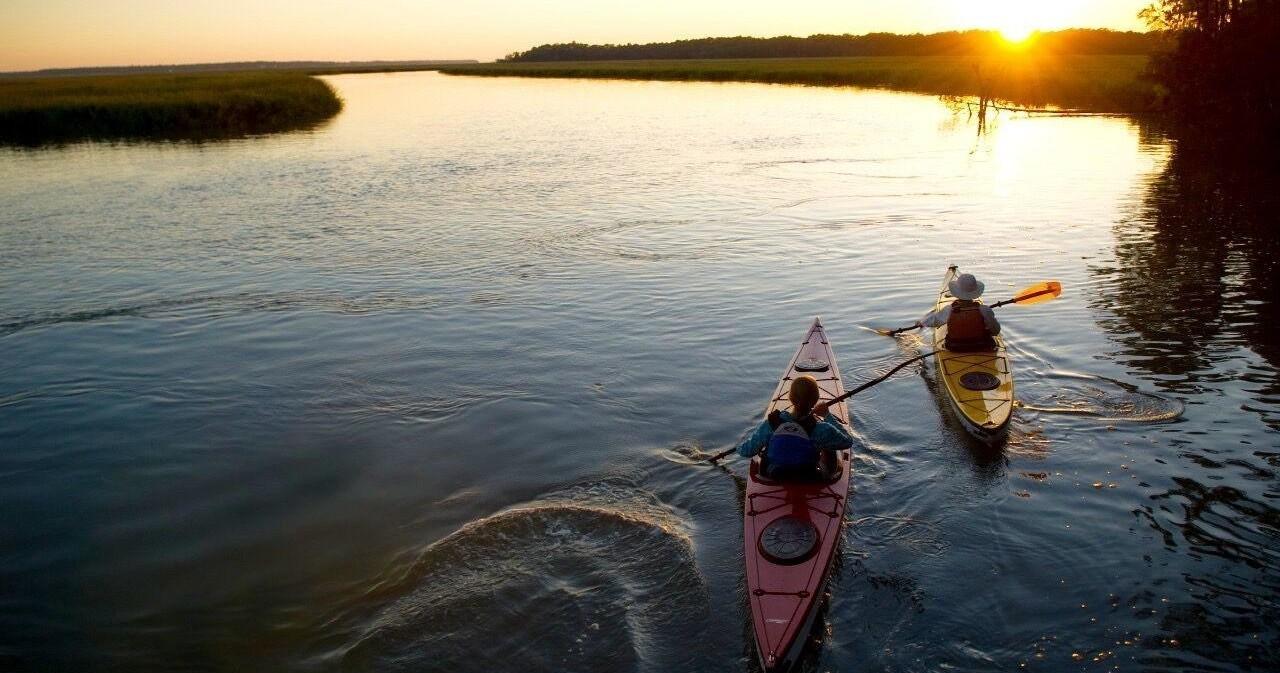
Tides, Marsh, and Quiet Miles: Private Kayak Tours on Hilton Head

Tides, Marsh, and Quiet Miles: Private Kayak Tours on Hilton Head

Two hours of tidal serenity and technique—custom kayaking across Hilton Head’s living marsh.

Continue Reading

The marsh wakes before the island does. At first light, the grass stands like a million green quills, and Broad Creek inhales with the tide. An egret tiptoes the slick bank, the wind holds its breath, and your kayak whispers out from the dock. This is Hilton Head at eye level: low, quiet, tidal. On a calm morning, the water seems to pull you forward, as if the creek is curious to see where you’re headed.

That’s the beauty of booking Private Kayak Tours on Hilton Head—your route is written by the tide and your interests. With a guide setting the pace, two hours is enough to slip into the labyrinth, slide along oyster beds, and cross the open shimmer of Broad Creek toward the green silhouette of Pinckney Island National Wildlife Refuge. The creek gives you rhythm: long glides with the current, short bursts to skirt a sandbar, idle pauses to watch dolphins push a V of ripples as they herd mullet toward the shallows.

Out here, every element has an opinion. The spartina grass sways in agreement or shakes its head in gusts. The fiddler crabs rattle their shells like tiny maracas. The current nudges you to read it correctly, then rewards you with effortless yards when you do. Guides blend instruction and interpretation as naturally as the tide blends salt and river: efficient forward stroke, how to feather a blade in wind, why oysters stack like cities, and when to steer wide of a bar studded with shells.

On a private tour, the itinerary bends to your group’s energy. First-timers often keep to the calm arms of Broad Creek and edge the refuge boundary, picking up the basics: wet exits, sweep strokes, and how to pivot without spooking a heron. Paddlers with more miles in their shoulders can range farther—tracing the rim of Pinckney Island NWR on a flood, or exploring the folds and feeder creeks where the marsh feels endless. Conditions dictate how far you go in two hours, but expect an easy 2–4 miles when the tide is friendly. The guides watch the clock and the water so you don’t have to.

Pinckney Island holds its own stories. Once a Sea Island cotton plantation, it became a refuge in 1975 and now protects a matrix of salt marsh, maritime forest, and brackish ponds that attract egrets, ibis, and peregrine falcons in the right season. From a kayak, conservation isn’t a concept; it’s a presence. The oysters glue the shorelines together and clean the water as they filter it. The marsh catches each wave’s energy and hands it back like a soft pass. You don’t move through a set; you join a system.

The Lowcountry’s geology is subtle but decisive. These are drowned river valleys, a coast born of longshore drift and slow sinks and uplifts, with a tidal range big enough to rewrite routes twice a day. Slack water is a breather, but the ebb means business—it wants to move, and it expects you to respect that. Local guides read that body language. They’ll coach you on ferry angles and how to quarter a beam wind so your kayak feels steady and in control.

Culture is just as tidal here. Pockets of Gullah Geechee heritage remain across the sea islands, with foodways, basketry, and stories tied to land and water. After the paddle, it’s not a stretch to connect the dots: the creek as highway, the marsh as pantry, the tides as timekeeper. A private tour can layer in more than technique—it can be a primer on how people have always lived with this water.

The practical edge of these Private Kayak Tours is straightforward: two hours of guided paddling tailored to your goals, from first strokes to tide-savvy refinements. Instruction from American Canoe Association–certified leaders covers the essentials—launching and landing, efficient strokes, assisted/self-rescues—while keeping eyes up for dolphins, ospreys, and the satisfying geometry of a salt marsh at mid-tide. If your group wants to push the envelope, you can build a skills-focused clinic or pick a target—circumnavigating parts of the refuge, or exploring nearby rivers like the Okatie or Colleton on longer sessions. It’s custom paddling, Lowcountry-style.

Timing matters. Morning tours dodge summer heat and often catch calmer winds. Shoulder seasons bring migratory birds and thinner crowds. Winter can deliver glassy water and crystalline air; you’ll just dress smarter. No matter the month, polarized sunglasses cut glare and reveal the underwater story—oyster bars, grass edges, the dart of a redfish tail.

And then there’s the simple pleasure of small moments: the gentle clack of shells when a boat wake tickles a bank, the hush of a cloud slipping over the sun, the sudden exhale of a dolphin surfacing 30 feet off your bow. On Hilton Head, the grand view is wide, but the intimacy is what lingers. Two hours is enough for both.

Curious what a tailored session could look like for your crew? Explore options and availability through these Private Kayak Tours in Hilton Head, and let the tides write the day’s plan.

Duration2 hours (customizable)
Plan your visit

Trail Wisdom

Ride the Tide

Ask your guide about timing the tour with a flood or ebb to save energy and see more. Tidal planning can turn a 2-hour paddle into an effortless glide.

Sun Smart Strategy

Wear a sun hoodie, hat, and polarized sunglasses—Lowcountry glare is real even on cloudy days, and the reflection off the water adds up fast.

Footwear That Works

Closed-toe water shoes protect against sharp oyster shells at launches and landings—flip-flops won’t cut it here.

Pack Light, Pack Dry

Bring only essentials in a small dry bag—water, phone, and a snack. Extra clutter makes the cockpit cramped and paddling sloppy.

Local Knowledge

Hidden Gems

  • Quiet backwaters behind Pinckney Island at mid-tide for birdlife and reflections
  • The narrow feeder creeks off Broad Creek that glow gold near sunset

Wildlife

Bottlenose dolphin, Tricolored heron

Conservation Note

Oyster beds stabilize shorelines and filter water—give them space and avoid dragging boats over shells. Stay off sensitive marsh banks to protect habitat.

Pinckney Island was once a Sea Island cotton plantation and became a National Wildlife Refuge in 1975, protecting thousands of acres of marsh and maritime forest.

Seasonal Guide

spring

Best for:Birdwatching, Mild temperatures
Challenges:Variable winds, Strong spring tides

Wildflowers pop and birds migrate through Pinckney Island. Expect comfortable temps and lively tides that reward good timing.

summer

Best for:Calm morning paddles, Family outings
Challenges:Heat and humidity, Afternoon thunderstorms

Aim for early starts to beat heat and wind. Afternoon storms can develop quickly; guides monitor radar and adjust accordingly.

fall

Best for:Clear air, Migratory bird activity
Challenges:Occasional tropical systems, Shorter daylight

Crisp mornings, warm afternoons, and fewer crowds make fall a standout. Watch forecasts during hurricane season.

winter

Best for:Glassier water, Quiet waterways
Challenges:Cooler temps, Wind chill on open reaches

Dress in layers and enjoy serene creeks with better visibility. Cold snaps are brief but plan for wind protection.

Photographer's Notes

Use a polarizer to tame glare and pull detail from the water; shoot in burst mode when dolphins surface; keep a fast shutter (1/1000) for birds in flight; low-angle shots from the cockpit emphasize marsh scale—wipe drops from the lens and watch your horizon line.

What to Bring

Polarized Sunglasses

Essential

Cuts glare, helps you read shallow oyster bars and spot wildlife just below the surface.

Sun Hoodie or UPF Shirt

Essential

Lightweight coverage keeps the sun off without overheating in humid Lowcountry weather.

Closed-Toe Water Shoes

Essential

Protects feet from sharp oyster shells and provides better traction at launch sites.

○

Small Dry Bag (5–10L)

Keeps phone, keys, and snacks dry while freeing up space in your cockpit.

Common Questions

Do I need kayaking experience?

No. Guides provide on-water instruction for all levels, from first-time paddlers to those seeking technique coaching.

How far will we paddle in two hours?

Distance varies with tide and wind, but most groups cover roughly 2–4 miles at an easy pace with breaks.

Will I see dolphins?

Dolphin sightings are common in Broad Creek, but they’re wild animals—your guide will look, but sightings can’t be guaranteed.

What should I wear?

Quick-dry clothing, a sun layer, and closed-toe water shoes. Avoid cotton and bring a light wind layer in cooler months.

Are children allowed?

Yes. Private tours can be tailored to families; ask about tandem kayaks and appropriate ages for your group.

Where do tours launch from?

Launch sites vary by conditions and itinerary, often from Broad Creek near Shelter Cove. Your confirmation will include specifics.

What to Pack

Polarized sunglasses for glare control; Sun hoodie and hat for UV protection; Closed-toe water shoes for oyster shells and slick ramps; Small dry bag with water, phone, and a snack for streamlined storage.

Did You Know

Pinckney Island National Wildlife Refuge spans approximately 4,053 acres and was established in 1975; much of it is salt marsh that supports abundant birdlife and nursery habitat.

Quick Travel Tips

Book morning departures in summer for calmer winds; Check parking and launch details in your confirmation to streamline arrival; Bring a reusable bottle—many guides can refill before launch; Plan extra time after the tour to explore Shelter Cove or nearby beaches.

Local Flavor

After paddling, grab shrimp tacos at Hudson’s Seafood House on the Docks or a sunset table at Skull Creek Boathouse. For a cultural detour, visit the Gullah Museum of Hilton Head to connect the waterway you just paddled with the island’s deeper story. Coffee and a pastry at Watusi Café is a quick refuel before beach time.

Logistics Snapshot

Closest airports: Hilton Head Island (HHH) and Savannah/Hilton Head (SAV). Typical launches are near Broad Creek/Shelter Cove, a short drive from most island resorts. Expect good cell service near town; coverage can dip in backwaters. No permits needed when touring with a licensed outfitter; follow refuge rules and guide instructions.

Sustainability Note

These creeks are part of a sensitive estuary. Pack out all trash, avoid disturbing oyster beds and marsh banks, and keep respectful distances from wildlife—especially feeding dolphins and nesting birds.

Topics