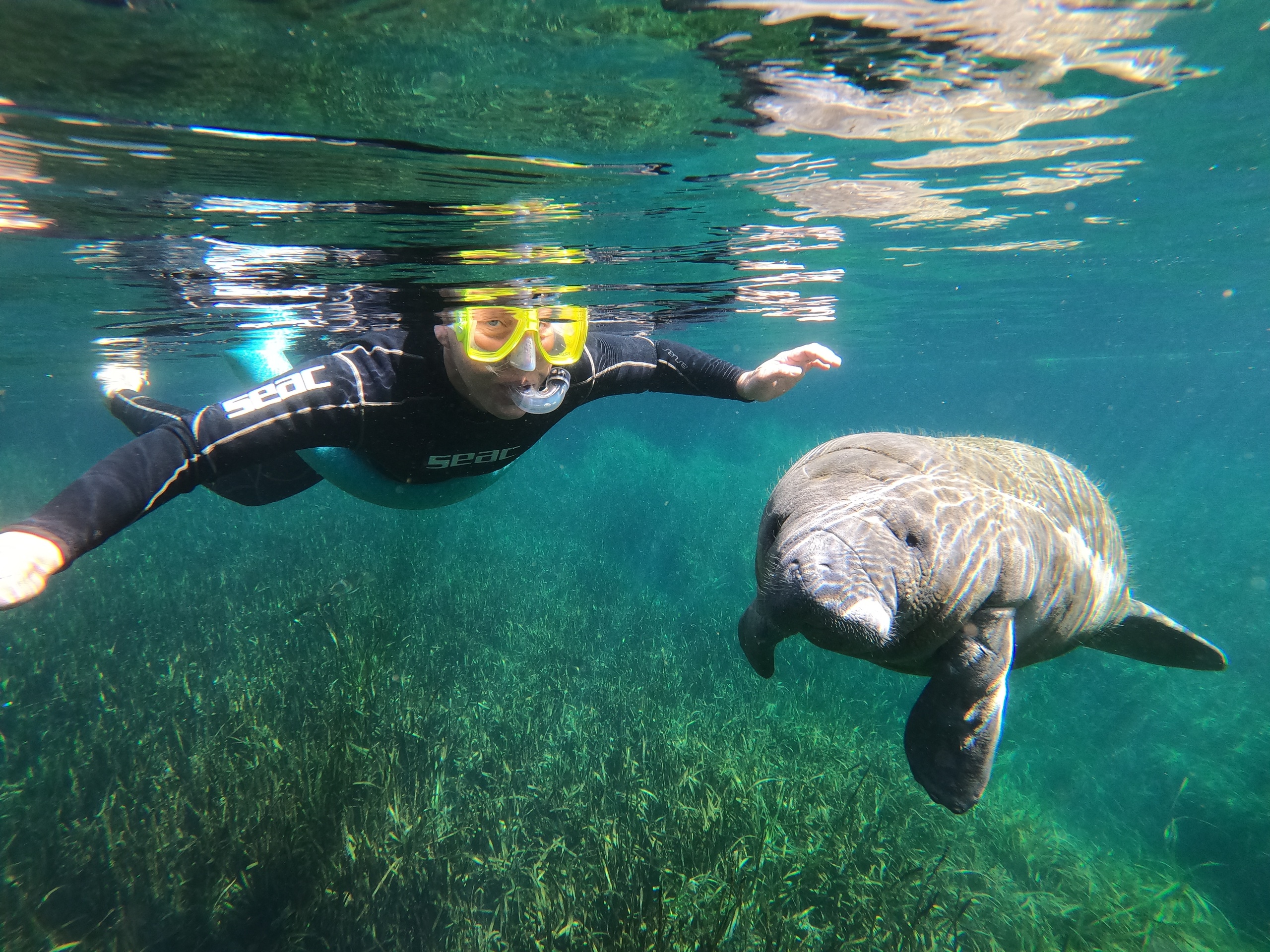
The boat slips away from the low-slung docks of Kings Bay before the sun burns off the ribbon of fog hugging the water. A hush falls over the passengers; the motor is a polite murmur as the captain eases toward the mouth of the springs. Beneath the surface, freshwater pours from limestone vents into a deep, teal bowl. The water smells faintly of peat and damp leaves. Then you see them: gray, barrel-shaped forms rising slowly to the surface for a breath. They are ungainly and graceful at once, indifferent to human awe. One lifts its snout, exhales with the soft, rasping sound of an animal used to cold Florida mornings, and slips back to the warm spring outflow to feed on native vegetation. You don a mask, feel the current nudge you like a courteous tide, and slip into a scene that's equal parts theater and sermon about the fragility of wild places.
Crystal River is where Florida's temperate springs meet an unexpected intimacy with wildlife. For decades the sheltered springs and the adjacent Kings Bay have been a winter refuge for the West Indian manatee, a species that searches out constant-temperature springs when Gulf waters chill. The bay system is fed by dozens of springs that punch up from the Floridan aquifer, a karst landscape of limestone and caverns that filters the aquifer and delivers crystal-clear, 72-degree pockets of water year-round. That geological stability is what makes this place uniquely hospitable to manatees when temperatures elsewhere dip.
The human history here is layered, too. The area around Crystal River was a hub of indigenous life long before it became a tourist draw; the name itself conjures the river systems that supported Native communities and later commercial fisheries. Today the town is a low-key gateway to Florida's Nature Coast: seafood shacks, modest marinas, and old-Florida storefronts that make room for wildlife refuges and conservation efforts. Guided snorkeling tours have been operating here for decades, and licensed operators follow strict rules designed to protect these gentle giants while offering visitors a chance to observe them at close range.
What the experience does best is balance awe with restraint. Guides demonstrate how to enter the water quietly, where to float, and how to hold your position while a manatee decides whether to investigate. The animals set the terms of engagement. They are curious but can be skittish, and mother-calf pairs demand extra space. Touching, chasing, or feeding manatees is both illegal and harmful; the best encounters are those where humans are small and still and let the animals choose to approach.
On a three-hour tour you get a rhythm: a short boat ride to a cluster of springs, a guided briefing, two or three in-water sessions, and time to dry off and swap stories on the ride back. In winter months—when the Gulf drops and manatees concentrate in the springs—visibility is usually excellent and the density of animals can be startling. Outside of the peak winter window you can still meet manatees that live in the bay year-round, but the congregation is less dramatic.
Practicalities matter. The tour is beginner-friendly and family-oriented, but you should still be comfortable in open water and able to swim with a mask and snorkel. A wetsuit or thin neoprene top is wise from November through March; in summer, a rashguard is often enough. Bring reef-safe sunscreen, a towel, and a dry bag for electronics. Guides provide life jackets and masks, but if you have well-fitting gear you prefer, bring it. Expect close encounters but not guaranteed poses; wildlife is wild.
Beyond the snorkeling, there are reasons to linger. Crystal River is a micro-region of conservation wins and pressures—boating speed zones, habitat protection, and local education programs all shape visitor behavior. Learn a little before you go: know the no-touch regulations, arrive with minimal single-use plastics, and listen when guides ask you to stay downwind or avoid blocking a spring run. Those small choices matter to animals that rely on these springs to survive winter.
For photographers, the light on a calm morning is kind: low sun slants through steam, surface glare softens, and manatees often loaf near the spring vents where visibility is best. Underwater cameras—and an underwater housing if you plan to get wet—can capture intimate profiles, but keep movement slow; sudden splashes send animals slipping away.
Why do travelers make the trip? Because Crystal River offers a rare combination: easy access to an iconic species, a short, interpretive outing that rewards minimal effort with maximum emotional return, and a reminder that conservation and tourism can coexist when managed thoughtfully. Whether you are traveling with kids or you are a seasoned animal-lover who has seen a lot, the experience is quietly transformative. You come for the manatees and stay for the story they tell about place, temperature, and care.
If you go, treat the encounter as a privilege rather than a spectacle. Stand with your feet in the water or float in a guided group, listen to the instructions, and let the manatees decide the terms of curiosity. Dirt, tide, human schedules—none of it matters in the thin, brilliant space where a gentle giant lifts its face to breathe and you remember how large the world of animals remains, beyond our reach but not out of our hands.