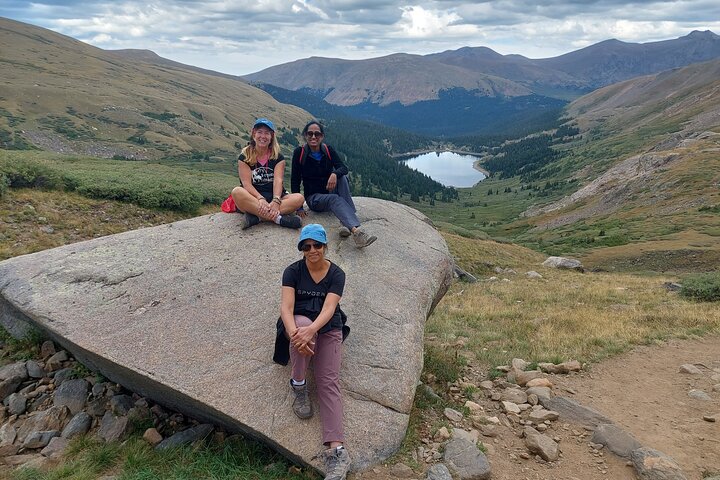
By mid-morning the trail breathes warmth into cold stone. You step through a tunnel of spruce and aspen, sunlight speckling the ground, and the air tastes like pine and rain—clean enough to make you slow your pace and listen. The first tarn appears without fanfare: a glassy bowl cupped in a saddle, reflecting a patchwork of sky and mountain. Keep walking and the trail threads higher, opening to two more bowls—each lake with its own personality: one winkingly small and secretive, one broad and blue, the last edged with talus and a wind that dares you to sit still. This is a half-day in the Colorado Rockies that rewards curiosity more than stamina: three alpine lakes, sapphire and silver, on a route built for discovery. The guided outing advertised from Denver is short on pretension and long on precise, mountainous beauty—ideal if you want alpine clarity without a full-day commitment.
Geology and history are the unobtrusive teachers here. These lakes are classic glacial tarns, scooped by ice during the last glaciation and left to hold the meltwater as the glaciers receded. The mountains themselves are older—products of the Laramide orogeny that pushed up the Rocky Mountains some 70 to 40 million years ago—then sculpted by ice and time into the serrated ridges you’ll look up at from the lake shores. Culturally, the high-country around Denver has long been a place of transition: seasonal grazing and mining history give way to modern conservation and recreation. Trails are used by generations of residents who value access and stewardship equally, and the guided hikes you’ll find here often make a point of blending interpretation—plant ID, bird calls, geology snaps—into the walking rhythm.
The hike itself is straightforward but purposeful. Expect about 4–5 miles round-trip and roughly 800 feet of elevation gain concentrated in the middle section of the route; terrain alternates between hard-packed singletrack, a handful of steep switchbacks, and some rocky talus near the upper lakes. The guide paces the group for steady arrival at each lake, allowing time for photos, quick exploration, and a compact snack. In three hours you’ll cover distance and altitude without slogging; the guided format means you can ask questions about local flora—alpine forget-me-nots and lupine are common—and fauna: marmots and pikas chorus from rock piles, and water-thrushing trout sometimes reveal themselves in quiet shallows.
Practical bits matter in thin air. Altitude is the quiet variable—Denver sits at 5,280 feet, and the trail climbs into classic subalpine elevation where exertion feels heavier and dehydration happens fast. Start hydrated, pace conservatively, and let the guide set a tempo that accounts for variable conditioning in the group. Footwear should be light to midweight boots with grippy soles; though the trail is well-used, the upper sections can be exposed and rocky. Dress in layers: mornings are cool, afternoons can flip to sun, and afternoons in the mountains are notorious for sudden showers or lightning. A small daypack with water, snacks, wind layer, and sunscreen is your best single piece of gear.
What the guided format buys you is efficiency and local knowledge. Guides know where the light hits the best shorelines for photos, how to avoid tenuous scree, and which micro-ecosystems to step lightly around. If you’re curious about extending the outing, ask about connecting trails—the area hosts several routes that become full-day loops or overnight backcountry camps for those carrying permits and the right gear. For a half-day, though, this hike hits the high note: alpine vistas without excessive commitment, a sense of being off the main tourist drag, and a manageable dose of Colorado’s high-country soul.
For photographers, the late-morning to early-afternoon window often yields the cleanest water reflections and the warmest light on the western slopes. For wildlife-watchers, move quietly along the lake edges and you may see trout or a marmot surveying its rock. For families and mixed-ability groups, the route’s steady climb and frequent viewpoints make it easy to break the hike into satisfying sections.
This Guided Hike to Alpine Lakes is priced sensibly and runs as a half-day—about three hours—making it a great complement to a weekend in Denver: get your alpine fix in the morning and be back in town for lunch or a brewery tour. The experience rewards travelers who want high-country contact without a full backcountry commitment and who appreciate a small-group, interpretive approach. In every mirror-smooth lake you see the value of accessible wilderness—places that promise richness without excess, and trails that welcome questions as readily as they demand steps.


