Three Hours to the Horizon: A Private Charleston Harbor Charter with Dolphins, Sand, and a Lighthouse

Three Hours to the Horizon: A Private Charleston Harbor Charter with Dolphins, Sand, and a Lighthouse

Dolphins, shifting sandbars, and a close-up look at Morris Island Lighthouse—Charleston’s best angles are from the water.

Continue Reading

The harbor wakes first—marsh grass combed smooth by a light breeze, shrimp boats yawning off their lines, and the soft clink of rigging echoing across the Cooper. When Captain Dan throttles the engine and slides the bow into the morning’s easy chop, Charleston unfurls in layers: church spires behind seawalls, pelicans winging low like skimming stones, and the open sweep of water that always seems to invite you farther. Three hours is nothing and everything here. On a private charter, it’s enough time to thread the city’s maritime story, step onto a beach etched by tides, and share a bow wave with a dolphin that seems to nod hello.

This is Charleston the way locals love it—by water. A private Charleston harbor boat tour gives you range and choice: swing east past the Battery and Castle Pinckney, or slip south toward the quiet shallows behind Morris Island where porpoising bottlenose dolphins often travel in loose, social groups. The tides set the rhythm. The current nudges you toward pockets of still water where wading birds spear breakfast and toward open channels that carry a briny breeze straight off the Atlantic. Nature takes the lead; you follow.

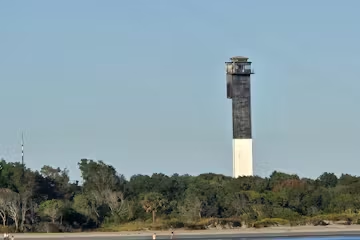
With Captain Dan at the helm, the route is a conversation. You tell him what calls to you—dolphins, beaches, or history—and he threads a course that keeps the morning yours. Some trips clip past Fort Sumter, the brick sentinel that watched the Civil War begin and now stands surrounded by swirled greens and blues. Others arc toward Lighthouse Inlet, where the Morris Island Lighthouse, decommissioned in 1962, still guards a shifting shoal like a stoic sentry. On a calm day, the water is glassy and reflective; on a breezy one, it slaps the hull with a playful hand, urging you to lift your face to the salt air.

Charleston’s water tells its own story. The Cooper, Ashley, and Wando Rivers meet here, stirring tides that can rise and fall six feet in a cycle, reshaping sandbars and carving channels overnight. The harbor’s dynamism keeps boaters attentive and wildlife well-fed. Bottlenose dolphins move with purpose in these inlets, sometimes corralling baitfish tight to the marsh edge. If you’re lucky, you may witness the Lowcountry’s signature spectacle: strand feeding, when a coordinated pod surges fish onto the mudflat, slides after them, and wriggles back with dinner in tow. It’s rare, strictly natural behavior—observe from a distance, savor the moment, and let the dolphins work. A respectful captain like Dan honors the guidelines so the scene remains wild and unscripted.

History rides every ripple. Beyond Fort Sumter’s brickwork lies a palimpsest of eras: indigo and rice fortunes, Gullah Geechee traditions, and a busy maritime economy that built the city’s skyline of steeples and cupolas. The Morris Island Lighthouse—a slim, 161-foot tower completed in 1876—once stood well inland, framed by dunes and palmettos. Erosion, driven by storms and altered currents, marched the shoreline away, and the lighthouse now rises from the sea itself, hemmed by breaking waves and the chatter of terns. Its survival is a testament to community care and coastal grit.

If you go ashore at a quiet beach—often a highlight of a private harbor charter—the sand greets you with a shell scatter that changes by the tide. Olive shells glint like river-polished stones. Whelk shells spiral stories tight as a fist. You might see horseshoe crabs, living fossils that look half alien, half artifact, crawling the edge as if on some ancient errand. The inlet is honest about its moods: the wind can frisk, the sun can press down, and the tide will always decide how long you linger. But the place rewards attention. Watch the water’s mirror; it hints at where dolphins travel. Watch the sky; it maps where pelicans glide. The marsh whispers with hidden life.

Practicalities matter. This is three hours on open water, so pack like a local: sun protection that actually stays put, a light wind layer even when the forecast says calm, and shoes you won’t mind getting wet. A Charleston boat charter can be as relaxed as a hammock or as focused as a wildlife watch. Families with kids will like the dolphin-rich channels near the harbor’s mouth and the possibility of a beach walk; photographers may want the low-angled light of morning or late day. If you’re chasing the Morris Island Lighthouse, plan around the tides—a lower tide often reveals more beach and a clean foreground of glistening flats.

The craft of the day is a conversation, too: Captain Dan is quick with Charleston history and knows when to let the moment breathe. He’ll pick a Sirius channel that matches the ride’s mood. He’ll idle the engine when a dolphin surfaces nearby, keeping a respectful distance but giving you the pause you were hoping for. And he’ll read the marsh like a book, quietly steering you into a quiet pocket where the city’s bustle fades to a hush and the only calendar that matters is the tide chart.

Plan for more than water time. After your trip, tap into the city’s shore life: shrimp and grits that taste like tide and smoke, a cold beer under string lights, and the kind of walk where history looks back at you from every brick. But let the harbor have the final word. As you step off the boat, salt on your skin and a bit of wind still in your hair, the water feels as if it’s still tugging at your sleeve, insisting there’s always one more inlet, one more sandbar curve, one more lighthouse angle you haven’t met yet. That’s the promise of a customizable charter—you’ve seen a slice, and the rest is waiting just beyond the bend.
Duration3 hours
Plan your visit

Trail Wisdom

Time Your Tide

Ask Captain Dan to plan around lower tide if you want more beach at Lighthouse Inlet and cleaner lighthouse compositions.

Footwear That Gets Wet

Non-marking sandals or deck shoes are best; beach landings can be shallow and sandy, and docks may be damp.

Sun Smart Strategy

Use reef-safe sunscreen, a brimmed hat, and UV sunglasses—the harbor reflects light and intensifies exposure.

Protect Your Tech

Bring a small dry bag and a microfiber cloth; spray and salt creep up fast when wind picks up.

Local Knowledge

Hidden Gems

  • Lighthouse Inlet at lower tide for mirror-like flats and wide lighthouse reflections
  • Quiet back creeks behind Morris Island, where egrets hunt inches from the grass

Wildlife

Bottlenose Dolphin, Brown Pelican

Conservation Note

Observe NOAA’s dolphin-viewing guidelines—stay at least 50 yards away, never feed wildlife, and minimize wake near marsh edges. Pack out all trash; nesting birds use these sandbars in spring and summer.

Fort Sumter sits at the harbor’s mouth, where the first shots of the Civil War were fired on April 12, 1861. The Morris Island Lighthouse, completed in 1876, was decommissioned in 1962 and now stands offshore due to shoreline erosion.

Seasonal Guide

spring

Best for:Mild temperatures, Active wildlife
Challenges:Variable winds, Occasional thunderstorms

Spring brings comfortable temps and lively bird and dolphin activity. Showers can roll through quickly—pack a light shell.

summer

Best for:Beach time, Warm water
Challenges:High heat and humidity, Afternoon storms

Expect hot, bright days and glassy mornings. Early or late departures avoid the harshest sun and common pop-up thunderstorms.

fall

Best for:Clear air, Fewer crowds
Challenges:Cold fronts with breezy days, Shorter daylight

Fall delivers crisp visibility, pleasant water temps, and excellent photography light—watch wind forecasts after fronts.

winter

Best for:Quiet waterways, Golden low-angle light
Challenges:Chilly wind on the water, Limited beach time

Layer up and bring a windbreaker. Wildlife viewing remains strong, and sunsets can be spectacular.

Photographer's Notes

Shoot early or late for warm, raking light on the lighthouse and marsh. Use a polarizer to cut glare and deepen sky/water contrast; keep shutter speed at 1/1000s or faster from a moving boat. For dolphins, switch to continuous AF and burst mode, pre-focus where you see surfacing patterns, and keep your horizon level by bracing against the console.

What to Bring

Lightweight Windbreaker

Essential

Blocks breeze on open water and doubles as a layer if clouds roll in.

Polarized Sunglasses

Essential

Cuts glare to spot dolphins, see into shallow flats, and reduce eye strain.

Dry Bag (10–15 L)

Essential

Keeps camera, phone, and a spare layer protected from spray and sand during beach stops.

Non-Marking Deck Shoes or Sandals

Essential

Provide grip on wet decks and won’t scuff the boat while hopping ashore.

Common Questions

Where do we meet for the tour?

The exact dock location is confirmed after booking and may vary based on tide and route to optimize conditions for wildlife viewing and beach access.

Are dolphins guaranteed?

Wildlife is unpredictable, but Charleston’s bottlenose dolphins are commonly seen in the harbor and inlet areas; Captain Dan follows responsible viewing guidelines.

Is there a restroom on board?

Most small charter boats do not have restrooms; use marina facilities before departure. Ask your captain about mid-trip shore stops if needed.

Can we bring food and drinks?

Yes. You may bring snacks and adult beverages; pack a small cooler and avoid glass to keep things safe and simple.

Is the trip kid-friendly?

Yes. All ages are welcome, and properly sized life jackets are provided. The calm backwaters and beach stop are great for families.

What about weather or rough water?

Trips run in light wind and gentle chop, but the captain may reschedule for storms or unsafe conditions. Your safety and comfort are the priority.

What to Pack

Polarized sunglasses for spotting wildlife; reef-safe sunscreen to protect skin and waterways; light windbreaker for breeze and spray; compact dry bag to keep phones and cameras safe during beach stops.

Did You Know

Charleston-area bottlenose dolphins are one of the few populations in the world known to strand feed—cooperatively herding fish onto mudflats before sliding back into the water.

Quick Travel Tips

Book morning or late-afternoon departures to avoid harsh midday sun; plan extra time for bridge and beach traffic on summer weekends; bring small bills for parking at some landings; confirm the meeting dock the day before in case of tide-related changes.

Local Flavor

Post-cruise, savor creekside oysters at Bowens Island Restaurant or head downtown for she-crab soup and fried chicken at Leon’s. For a local pint, try Revelry Brewing’s rooftop at sunset. If you’re near Folly Beach, stroll Center Street for laid-back surf-town energy and hushpuppies that taste like a Lowcountry evening.

Logistics Snapshot

Closest airport: Charleston International (CHS), ~25–35 minutes to most harbor and inlet launches. Meeting dock varies by tide and route; details provided after booking. Expect strong cell service near the harbor with occasional weak spots in back creeks. No permits needed; captain provides safety gear and follows NOAA wildlife guidelines.

Sustainability Note

This estuary is critical habitat for dolphins and seabirds. Keep voices low around wildlife, never feed animals, and stay off posted nesting areas. Choose reef-safe sunscreen and pack out all trash—including bottle caps and fishing line.

Topics