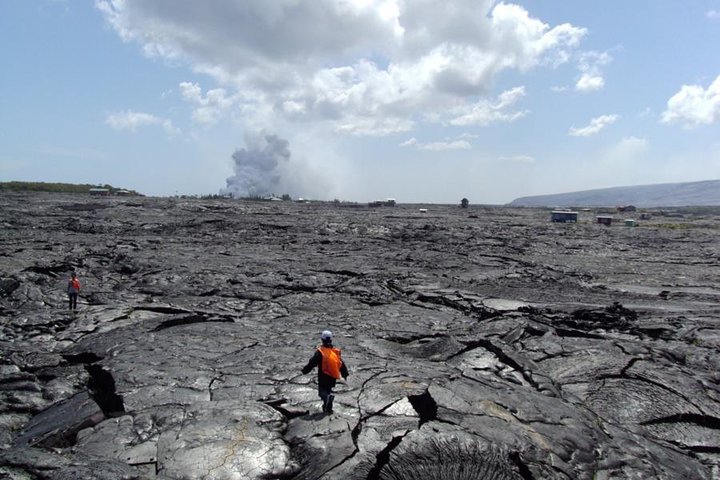
On a clear Hilo morning the road to Volcanoes National Park feels like an invitation: eucalyptus trees lean over the highway, steam rising from roadside gulches as if the island itself were exhaling. By the time you turn off toward Volcano Village, the world narrows to basalt and sky. The air shifts—drier, dusted with sulfur—and the landscape loosens its grip on the familiar. Lava fields, once molten and fast, now sit like black quilts patterned by their own slow cooling. They look solid, but the place still moves: steam vents huff, halemaʻumaʻu occasionally glares, and the ground keeps its history in layers you can walk across.
This private, seven-hour tour out of Hilo is designed for travelers who want to see the park on their terms. Instead of a bus shuffle, you get a local driver-guide who times the stops for light, mood, and crowd windows—checking viewpoints and short hikes, easing you into the park’s sharper edges and quieter crevices. It’s a day built for proximity: the Thurston Lava Tube’s cathedral of ferns, the sulfur-scented steam vents, the black apron of hardened pahoehoe and ʻaʻā fields, and the hush that can descend along a rainforest trail. With Kīlauea’s activity still part of the park’s living story, every stop hums with geological immediacy.
Geologically speaking, you’re stepping onto one of the most visible pages of plate tectonics. The island is born from hot-spot volcanism—magma rising, building mass until an island blooms from the sea. Kīlauea is a workhorse: frequent eruptions over the past century have carved new coastline and remade terrain within living memory. That churn shows in sharp contrasts: lush rainforest that hangs off the caldera rim, then a few minutes later, a moonscape of fresh black glass. Cultural context is equally layered. Native Hawaiian relationships with the land—respecting Pele, the volcano deity—shape how people approach the place. The park is both scientific laboratory and sacred ground, and your guide will often weave history and legend together in a way that explains why locals ask that you behave respectfully around certain sites.
The tour can be tailored to your appetite for walking. Expect short hikes that offer payoff without overcommitment: the Kīlauea Iki Trail (roughly 4 miles round-trip) crosses a cooled crater floor and leads up through crater walls for sweeping views. The Thurston Lava Tube is an easy, damp 20-minute stroll into a vaulted tunnel where ferns hang like chandeliers. Chain of Craters Road stretches toward the coast, revealing lava flows and the dramatic Holei Sea Arch if the ocean is rough that day. If visibility allows, a summit viewpoint looks into Halemaʻumaʻu—a reminder that the planet is not static.
Practical details fold into experience. The trip lasts about seven hours and typically starts from Hilo; plan on a 45–60 minute drive to the park entrance. National Park entrance fees apply (at the time of writing, the per-vehicle fee provides seven-day access). Weather is variable—sun, rain, and wind can arrive in quick succession—so layers and good footwear are non-negotiable. Your guide will monitor conditions; safety around active vents and unstable terrain is prioritized, and areas can close on short notice depending on volcanic activity.
Why take this private tour rather than striking out on your own? The value is local knowledge—route choices based on morning light, interpretive stops that connect geology to Hawaiian culture, and the agility to skip crowds when the park gets busy. You’ll leave with context as well as scenery: an understanding of the forces that shape island life and the etiquette for being a considerate visitor.
For planning: go early to catch the softer light and quieter parking lots; midweek is best if your calendar allows. Bring sun protection, a rain layer, and at least 2 liters of water per person. If you want a particular hike (Kīlauea Iki, Devastation Trail, or a viewpoint at Chain of Craters), tell the tour operator when you book. Photographers will find dramatic subjects in contrast shots—verdant forest against black lava—and long exposures at the sea arch during golden hours. Above all, move deliberately; the park rewards attention.
Volcanoes National Park is not postcard perfection at every turn—there are closed roads, shifting volcanic hazards, and the humbling reminder that landscapes are subject to forces out of human control. That’s the appeal. You’re not visiting a static monument; you’re witnessing geology in motion, holding a front-row seat to an island that invents and re-invents itself. A private day tour gives that access without the logistical friction, and leaves room for curiosity: for a lingering look, a quick smoke break at a safe viewpoint, or a quiet moment in a fern-filled cave where the world seems to hush itself.
In short: if you want your day at Volcanoes National Park to be personal, layered with context, and paced to the landscape, a private tour from Hilo is a practical way to turn an extraordinary natural classroom into a meaningful day. The island keeps changing, but a thoughtful guide helps you read the signs.


