The Adventure Collective Journal · Regional guide

Chesapeake Bay & the Capital Region

Annapolis mornings, creekside woods and an open-Bay afternoon. Stay by the water for three days, then choose a separate Potomac or inland escape.

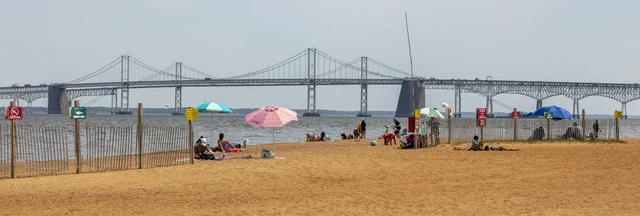
Beachgoers and umbrellas occupy a sandy beach beneath the long spans of the Chesapeake Bay Bridge.
The Chesapeake Bay Bridge beyond Sandy Point State Park’s beach near Annapolis, photographed in April 2021. · Photo: Sandy Point Beach and Bay Bridge MD1.jpg — Acroterion, CC BY-SA 4.0 · CC BY-SA 4.0 — image and resized versions · © 2018 Adobe Systems, Inc. (Adobe Color profile, not photo copyright) · Copyright 1999 Adobe Systems Incorporated (embedded Adobe RGB (1998) ICC profile; not photo copyright) · Full-frame proportional Lanczos resizing and WebP compression; no crop, retouching or generative change. Source ICC profile retained where present; original EXIF stripped, credit/license/provenance retained in XMP and manifest.

A little less driving. A little more time outside.

Annapolis rewards a trip with a small radius. The city gives you a maritime starting point; the nearby parks let you change the scale, from a creek edged with trees to the broad Chesapeake shore. You can make three quite different days without turning each morning into a hotel checkout. Begin with the stories of the Bay, walk beside its tributaries, and leave a full afternoon for simply looking across the water.

The wider region is a collection of different stays. Alexandria belongs to the Potomac and city life. Frederick offers an inland creekside base. Berkeley Springs and Harpers Ferry are West Virginia towns with their own springs, rivers and histories. Let those places suggest the next trip rather than lengthen this one into a five-town circuit. A map can connect them all; a satisfying weekend needs fewer arrows.

Choose where to linger

Choose the water you want to wake up near.

Use Annapolis for the itinerary below. The other four towns offer different trips, with their own lodging and travel days.

01

Annapolis

Choose Annapolis for a stay that mixes maritime history with time outdoors. Eastport’s Annapolis Maritime Museum makes a useful first stop before the park days. Decide whether your lodging suits town walking or driving to outdoor starts, then check the actual approach rather than relying on a waterfront label. City Dock construction makes that last step especially worthwhile: a harbor address does not promise an uninterrupted waterfront stroll.

02

Alexandria

Choose Alexandria for a separate Potomac stay, with Old Town and a chain of waterfront parks shaping the day. Walk a short section first and decide how much farther to go after a break. The city’s trail resources help distinguish walking routes from cycling connections. Keep this as its own urban chapter; you do not need to commute back to Annapolis each evening to make the two places belong in the same larger travel plan.

03

Frederick

Frederick suits an inland stay with Carroll Creek Linear Park as an easy organizing idea: follow the creek, stop in town, then return along a route you know. The city lists benches and walking and biking paths, but no restrooms within the park. Plan that practical detail before settling in for a long visit. Treat this as a change of setting from the Bay, rather than another waterfront stop on the Annapolis itinerary.

04

Berkeley Springs

Berkeley Springs is for a slower West Virginia stay organized around the state park’s public springs and bathhouses. Reserve a bath if that is the reason for coming; access to the grounds and a confirmed appointment are different things. Leave room on either side of it instead of filling the day with transfers. This is an inland springs town, and its appeal needs no borrowed Chesapeake scenery.

05

Harpers Ferry

Make Harpers Ferry a separate stay for the meeting of the Potomac and Shenandoah rivers and the history interpreted in Lower Town. Start with the visitor information and select the exhibits open on your dates. The setting invites walking, but historic streets and buildings bring steps and uneven surfaces. Plan a visit around your group’s mobility, and keep a hill hike as a distinct decision rather than an automatic extension of the town walk.

Ways into the landscape

A working Bay, wooded creeks and room to pause.

01

Read the Bay through its working waterfront

The Annapolis Maritime Museum occupies the former McNasby Oyster Company building. Give its interpretation of maritime heritage and Bay ecology time before seeking the next view. A waterfront becomes more interesting when you understand something of the work that happened there. The museum and its Park Campus are separate destinations; choose the museum address for exhibits, and save the other campus for an intentional outdoor stop.

02

Trade the harbor for trees at Quiet Waters

Quiet Waters Park brings paved woodland trails and a South River overlook into the Annapolis stay. Choose a route and turnaround from the park map, then let the walk remain the main event. You do not need to cover every branch of the network. For anyone planning to launch a personal kayak, the county warns of a nearly half-mile carry from the Blue Heron Center lot. Decide whether that carry suits the group and equipment before unloading.

03

Give the open Bay an afternoon

Sandy Point is the place in this itinerary to exchange creek-scale views for the Chesapeake’s wider horizon. Choose a shore walk and picnic, with swimming only if conditions and the designated area suit the day. Check beach advisories and actual lifeguard coverage before entering. A successful visit can stay entirely on land: bring something to eat, find a comfortable place to stop, and leave without having converted the shore into a checklist.

04

Take a separate walk beside Back Creek

The Maritime Museum’s Park Campus has clamshell walking trails and views of Back Creek. It offers another way to give water and woods equal time, particularly if you prefer several short outings to a long trail day. Confirm the campus hours and route conditions before going. Clamshell is a surface description, not a promise of smooth or step-free travel; ask about the particular path and shore access you intend to use.

05

Follow the Potomac on an Alexandria stay

Choose a short sequence of Old Town waterfront parks and turn around when you are ready, rather than making a distant landmark the day’s obligation. If cycling is the aim, use the city’s route information to plan crossings and connections in advance. Leave room to stop for the river itself. The waterfront can be the reason for an afternoon, with the rest of the city filling in around it.

06

Let Harpers Ferry begin at river level

Lower Town gives the river setting a historical dimension through its exhibits and streets. Choose currently open stops rather than assuming every museum door will be available. Maryland Heights is a separate, substantial hike, rated moderately strenuous to strenuous by NPS, with no drinking water or restrooms on the trail. Its usual footbridge approach is currently disrupted; check the newer conditions notice and ask the park about access before considering it. There is no need to make the overlook essential to a worthwhile stay.

A suggested journey

Three days with Annapolis as home

Keep the same base each night. Arrange the museum day around its opening schedule and the beach day around weather and entry requirements.

  1. Day 1

    Begin with Annapolis and the Bay’s stories

    Spend the first part of the day at the Annapolis Maritime Museum in Eastport, checking its opening day before setting out. Leave time to read and look rather than rushing through toward the outdoors. After lunch, explore a manageable part of Annapolis using current pedestrian directions near City Dock. Construction is part of the present-day setting; keep the waterfront section optional rather than designing a mandatory loop through the work area. Finish early enough to settle into your base and decide which weather window best suits Sandy Point.

    Annapolis, Maryland.
  2. Day 2

    Give the woods a full morning

    Make Quiet Waters the principal outing. Start with the park map, choose a paved-trail walk and include the South River overlook if the approach suits your group. Take a genuine lunch break. If everyone still wants more outdoors, make a separate visit to the Maritime Museum’s Park Campus for Back Creek views; otherwise leave that for another trip. Neither stop needs a boat to be worthwhile. Keep the evening in Annapolis, with no onward transfer hanging over the afternoon.

    Annapolis, Maryland.
  3. Day 3

    End with the open Chesapeake

    Head to Sandy Point only after checking entry requirements, opening hours and the day’s weather. Let a shore walk and picnic form a complete plan, adding swimming only when current advisories and supervision support it. If the beach day does not work, return to a favorite Annapolis outing or visit the museum if its schedule allows. Keep the afternoon light enough to enjoy the place instead of racing a departure. Alexandria, Frederick and the West Virginia towns belong to separate stays with travel time of their own.

    Annapolis, Maryland.

Plan for the elevation

Let the season set the pace.

Spring

Build a spring visit around short walks that can expand if the day is kind. Keep a dry layer available and choose a museum visit when shore weather makes lingering uncomfortable. Before launching any craft, assess conditions for the actual water and your experience; the existence of a public launch says nothing about whether today is suitable. A flexible shore-based plan removes pressure to force a water outing.

Summer

Make shade, water and a real midday break part of the plan. For Sandy Point, check the summer weekend and holiday reservation requirement before arranging the day. Swimming remains a separate decision: use current beach information, choose designated areas and confirm lifeguards rather than assuming a summer date guarantees coverage. On days that favor watching the water over entering it, keep the picnic and shorten the exposed walk.

Fall

Give the wooded parks more of the day and protect enough daylight for the return. Avoid promising a particular foliage weekend; the pleasure can be a walk at whatever stage the trees have reached. Fall 2026 travelers considering a separate Harpers Ferry stay need particular care with access: the current NPS notice expects the footbridge closure to continue into fall. Choose open town visits or manager-recommended alternatives instead of arriving committed to the familiar crossing.

Winter

Use short outdoor intervals with a warm indoor stop between them. Sandy Point posts shorter hours during part of the winter season, so check the closing time before making a late-afternoon plan. For a separate inland break, Berkeley Springs lists year-round bathhouse services, with reservations recommended. Ask about the exact facility and appointment; the seasonal outdoor pool is a different offering. Keep icy or uncomfortable walking conditions a reason to simplify the day.

Make the trip work

Plan the details that matter.

Check the notice that is newest

Checked October 17, 2026: Annapolis’s City Dock project lists phased street closures and changing waterfront access. Use its current directions and posted signs. For Harpers Ferry, the October 6 conditions page reports the entire Goodloe Byron footbridge closed for safety repairs, separate from staircase construction. That newer notice takes precedence over the older Maryland Heights page’s crossing instructions and shuttle description. This guide does not rely on that workaround.

Ask about a specific route

Quiet Waters’ paved trails, Sandy Point’s listed accessible amenities and Carroll Creek’s accessibility designation are useful starting points. Confirm the route from parking, gradients, surface condition and restroom arrangements for your own needs. Harpers Ferry requires extra attention to historic thresholds and uneven sidewalks. For a Berkeley Springs bath, ask staff about getting into the particular bathing facility before reserving. No park-wide label guarantees that every part of a visit is suitable.

Separate entry, reservations and activities

Sandy Point currently requires advance day-use reservations on weekends and holidays from Memorial Day through Labor Day; recheck the travel-year rule. Quiet Waters has a vehicle-entry pass system. Harpers Ferry National Historical Park requires an entrance pass and uses cashless payment. Bathhouse appointments, museum admission, paddling arrangements and any organized activity permissions are separate checks with their operators. Do not treat payment for one part of the day as permission for everything else.

Make water access a deliberate decision

A shoreline path, beach and boat launch are three different kinds of access. Quiet Waters’ cartop launch prohibits swimming and involves a long carry. Ask a paddling provider about weather, equipment, boat transfers and the return plan before committing; wear an appropriate life jacket. For swimming, check the official beach-health information and on-site directions. Keep clear of closures and barriers, and leave banks and vegetation as you found them.

Before you settle on a plan

A few useful questions.

Can I visit all five towns in this three-day plan?

Use Annapolis for these three days. Choose Alexandria, Frederick, Berkeley Springs or Harpers Ferry for a separate stay, or add travel days to a longer trip.

Are the West Virginia towns on Chesapeake Bay?

No. Berkeley Springs is an inland springs town; Harpers Ferry sits at the Potomac and Shenandoah confluence. Their stays have a different setting from the Annapolis Bay itinerary.

Must I swim or paddle to enjoy the itinerary?

No. The museum, woodland walks and shore views make a complete trip. Water activities require their own conditions and access checks.

Before you go

Check the day’s conditions.

Recheck City Dock works, Sandy Point entry and beach information, and Harpers Ferry closures before departure. No live opening or safe-water status is implied.

Keep the essentials simple.

  • Use current maps for transfers; this guide makes no drive-time, parking-availability or transport-frequency promise.
  • Keep Annapolis as the base for all three days, with extra travel days if adding another town.
  • Bring water, sun protection, layers and an offline route map; shorten an outing when conditions change.
Sources & editorial scope

Research checked 2026-10-17. A researched planning guide, not a firsthand account or live access report. Official sources checked October 17, 2026; recheck notices before traveling.