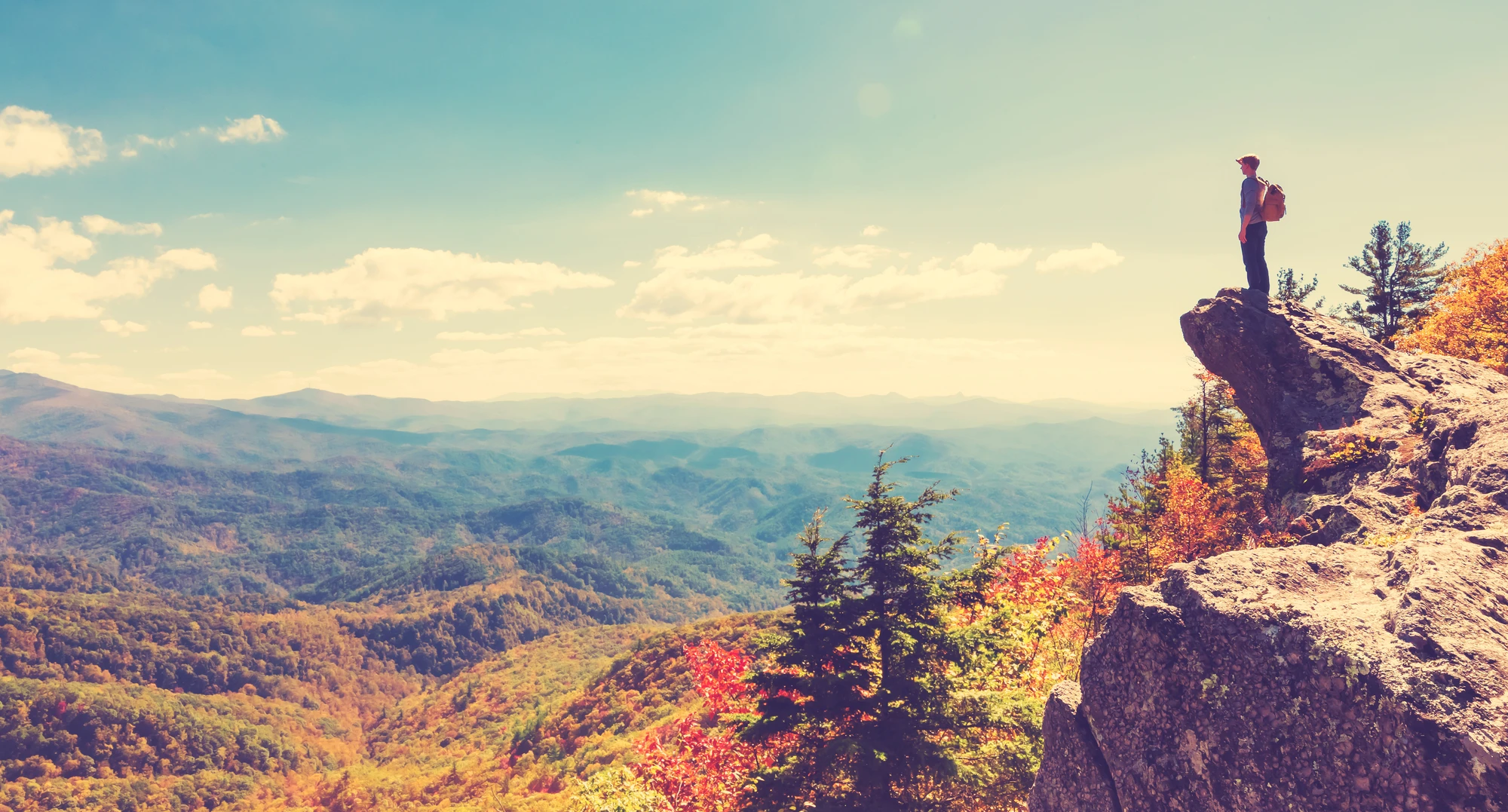
You arrive before dawn, when the mountains still wear their blue veil. Fog drapes the hollows like a slow tide, and the first rays sketch ridgelines into paper-thin silhouettes. A narrow trail curls away from the parking area—rooted, damp, and honest—and you step into a forest that feels alive in the way only ancient mountains do. The pines murmur; the oaks stand patient and deciduous. Somewhere uphill, a stream dares you to quicken your pace; somewhere below, a valley exhales. This is the Great Smoky Mountains, where trails are less a path than a conversation with the landscape.
Spread across the Tennessee–North Carolina border, the Great Smoky Mountains National Park is a study in layered time. Geologically, these are some of the oldest rocks in North America: folded, faulted sandstone and metamorphosed formations weathered over hundreds of millions of years. The park’s lush temperate rainforest—one of the most biodiverse in the eastern United States—tells its own story. Hemlocks and Fraser firs stand as silent witnesses to past climatic shifts; rhododendron tunnels hunker low, and a profusion of wildflowers erupts with seasonal zeal. Culturally, this is land shaped by Cherokee stewardship and Appalachian settlers who farmed, logged, and mined the valleys. The park’s creation in 1934 was as much an act of preservation as a reconciliatory nod toward those histories.
The hiker’s calendar here is generous. Trails unspool from gentle, family-friendly strolls to backcountry routes that demand a solid day of uphill commitment. For a classic half-day effort, Laurel Falls is a 2.6-mile roundtrip, relatively smooth with a paved section and a 300–400 foot gain—rewarded by the iconic 80-foot cascade. For a longer, steep day, the Alum Cave Trail to Mount LeConte is an 11-mile roundtrip with roughly 2,800 feet of elevation gain; expect exposed ridgelines, the sculpted alcove of Alum Cave Bluffs, and panoramic summit views that can feel cathedral-level in scale. If you want a short, sharp dose of altitude, drive to Newfound Gap and hike the paved half-mile to Clingmans Dome—at 6,643 feet, it’s the park’s high point and delivers a 360-degree platform for watching weather theatre unfold.
Wildlife retains agency here: black bears forage the berry-rich slopes, white-tailed deer move like punctuation marks along early morning ridgelines, and smaller creatures—salamanders, squirrels, warblers—compose the park’s quiet symphony. Respectful distance and proper food storage are nonnegotiable; the park enforces bear-safe practices, and your pack should honor them.
Practical navigation of the Smokies means marrying ambition with realism. Trails are often steeper and rockier than their distance alone implies. Expect exposed roots, sudden staircases of stone, and creek crossings that can become fast-moving after rains. Leave windows of daylight for return hikes; storms gather fast in the mountains, and summer afternoons can turn wet and electric. Plan for hydration: many trailheads don’t have potable water, so carry at least 2–3 liters for a full-day hike; more if you’re tackling a high-gain route. Footwear matters—sturdy trail shoes with aggressive tread or lightweight backpacking boots will save your knees and your mood.
Timing is everything here. Fall is showtime—maples and oaks embroider the ridgelines in oranges and crimsons; October draws peak color and crowds. Spring turns the understory into a riot of trillium and flame azalea, and the waterfalls are high from snowmelt and seasonal rains. Summer is hot and humid down in the lower elevations, but mornings are still prime for longer treks before thunderstorms roll in. Winter brings crisp clarity to the high summits and a thin, crystalline hush, but dress for wind and avalanche—well, not avalanche, but for biting wind and icy patches.
For overnight and backcountry adventures, the park offers front-country campgrounds and a network of backcountry shelters. The ground here is generous but uncompromising—expect boggy stretches in lowland basins and rocky campsites on ridge crests. Pack a lightweight tent, a warm sleeping system rated for local overnight lows (which can drop precipitously at higher elevations), and a reliable stove—open fires are limited in many areas.
Local towns frame the Smokies with craftsmanship and flavor. Gatlinburg and Townsend in Tennessee and Cherokee and Bryson City in North Carolina offer everything from classic Appalachian barbecue and whiskey to handmade baskets and storytelling sessions that keep regional memory alive. The Cherokee community, in particular, provides cultural context—museums and interpretive centers explain a presence that predates the park and persists today.
Leave no trace is not a slogan here; it’s how the place endures. Pack out trash, use established campsites, respect seasonal closures—especially on fragile high-elevation balsam zones recovering from pests like the balsam woolly adelgid. And if you come away with a single impression, let it be this: the Smokies ask you to slow. Walk, look, listen. The mountains will teach you patience, and return the favor with a view worth the effort.
Getting there is straightforward: major gateways—Gatlinburg and Townsend on the Tennessee side, Cherokee on the North Carolina side—anchor the park. Cell service thins quickly inside the valleys and on ridgelines, so download maps or carry a paper topo. Permit requirements vary for larger groups and backcountry camping; check the National Park Service site before you go. With a blend of accessible day hikes and real wilderness, the Great Smoky Mountains remains a rare place where the Appalachian past and active outdoor present meet—where every turn on the trail feels both familiar and slightly wild, and where the mountains, in turn, will make room for you to belong.


