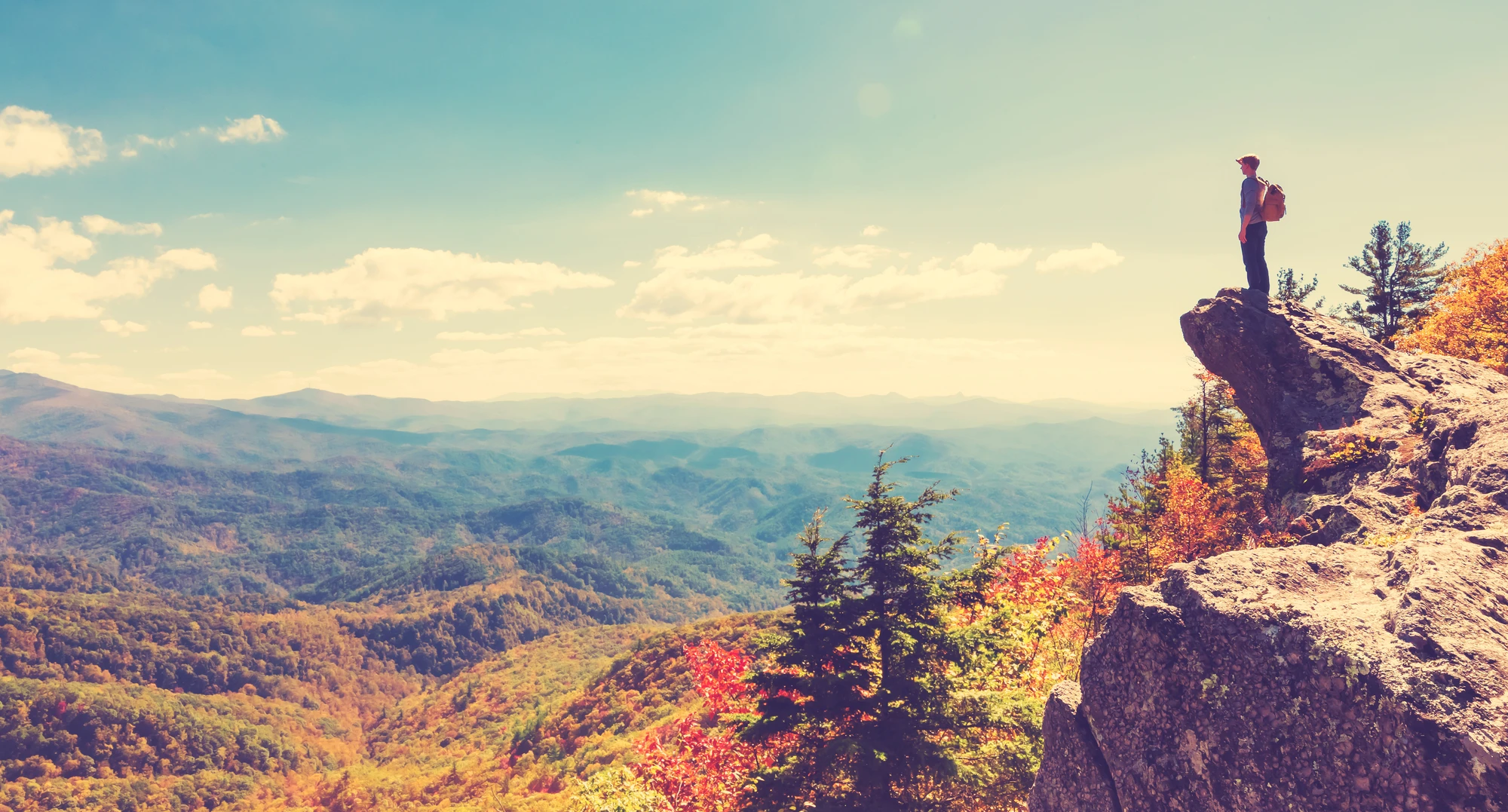
You step out of the high-top van into a cool, film-soft air and the mountains rearrange themselves around you. Mist threads the ridgelines like a slow exhale, and the highway—two lanes of ribboned asphalt—drops away into hardwoods that have been living in slow motion for millions of years. For three hours the world narrows to geology, history, and a guide’s steady, fact-laced narration: this is the Great Smoky Mountains in miniature, a place that can feel both intimate and enormous in the same breath. This is the promise of the Classic National Park tour—a compact orientation to a sprawling, living landscape.
The tour is efficient by design. You ride in a comfortable, executive-style van; the driver-guide breaks the journey into purposeful stops—Newfound Gap’s wide-open views, the Rockefeller Memorial that honors early conservation finance, an Appalachian Trail crossing where hikers pause and trade candy bars and stories, and the ghosted foundations of Elkmont, an old logging and resort town. Each stop feels curated, not rushed: there’s time to walk a few hundred yards, frame a shot, and let a river or forest do what it does best—demand your attention.
Geologically, the Smokies are an old story told slow. The ridges you drive along were pushed up long before the Rockies existed; erosion and time have rounded them into those smoky silhouettes that the Cherokee once called Shaconage, “place of the blue smoke.” The area’s human story is layered too: native Cherokee trails, 19th- and 20th-century logging scars, and then a 1930s push toward preservation that produced the park as we know it today. Roosevelt and philanthropists such as John D. Rockefeller Jr. played roles in stitching the park into federal protection—the Rockefeller Memorial at Newfound Gap is an overt symbol of that legacy.
For photographers, the tour is a series of micro-sunrises. Vistas and valley light change by the minute; low clouds can turn a panoramic into a minimalist monochrome. For naturalists, every pullout is a short field lesson: wildflowers along the roadside, hemlock and maple in the understory, and the near-constant possibility of a black bear, white-tailed deer, or peregrine falcon riding wind currents along cliff faces.
Practical value is baked into the experience. At roughly three hours and designed for first-time visitors as well as repeat travelers wanting a highlight reel, the tour reduces planning friction: no need to navigate confusing switchbacks or guess which trailheads will reward the morning. Guides point out the best short hikes for later, map out where to chase wildflowers, and explain seasonal patterns—where to find fall color and where rhododendron tunnels peak in mid-June.
Why travelers take this tour is simple: there is value in orientation. The Smokies are vast and, without context, it’s easy to misjudge where to spend time. This tour draws a clear line from the jumble of options to a handful of memorable, accessible places. It’s great for photographers on a tight schedule, families wanting a low-stress nature day, or curious visitors who want to understand the place before committing to a longer backpack or multi-day exploration. And because the tour departs from local towns like Gatlinburg, it threads your mountain morning back into local food, craft, and culture by midday.
Expectations and logistics are straightforward: bring layered clothing, decent walking shoes, and a camera with a mid-range zoom; most stops are short walks from parking. Weather can turn quickly—bluebird skies can become fogged vistas within an hour—so your guide will advise timing and where to sit out a storm. If you want to linger longer at a spot, the guides are usually helpful in pointing you to trails and trailhead locations for independent return visits.
There’s also an ethical dimension to this kind of tourism. The Smokies are the nation’s most visited national park, and a responsible visit means sticking to trails, packing out trash, and keeping a respectful distance from wildlife—especially bears. Guides on the Classic National Park tour typically include conservation context in their narration, which helps visitors understand how individual behavior scales in a busy protected landscape.
In short, this tour is a high-return half-day: big viewpoints, historical touchstones, and an easy physical rhythm that suits most travelers. It’s the kind of trip that gets you out of the car and into good questions: Where do you want to come back and spend a night? Which trail did you just glimpse that promises more solitude? With that, the Smokies transition from a one-day checklist to an invitation—one you can accept at the end of the tour over a local trout plate or a coffee in downtown Gatlinburg.
If you want the practical next step, the same resource that organizes this trip makes booking easy and transparent—click the Classic National Park tour listing for schedules, pricing, and specific departure points. Whether you come for the vistas, the stories, or the possibility of catching fall color at its peak, this three-hour primer will leave you with a clear sense of why the Smokies have held people’s attention for centuries.