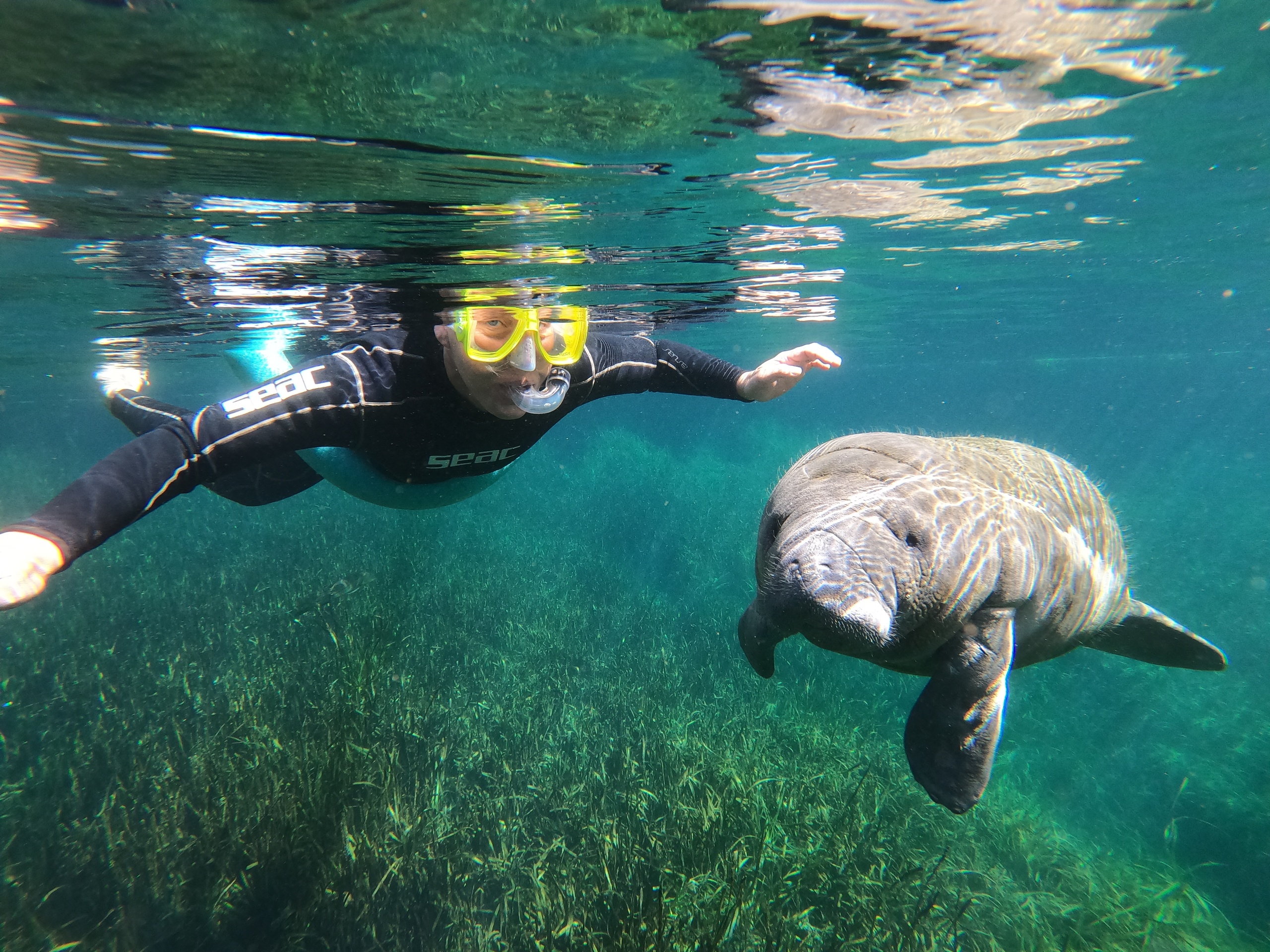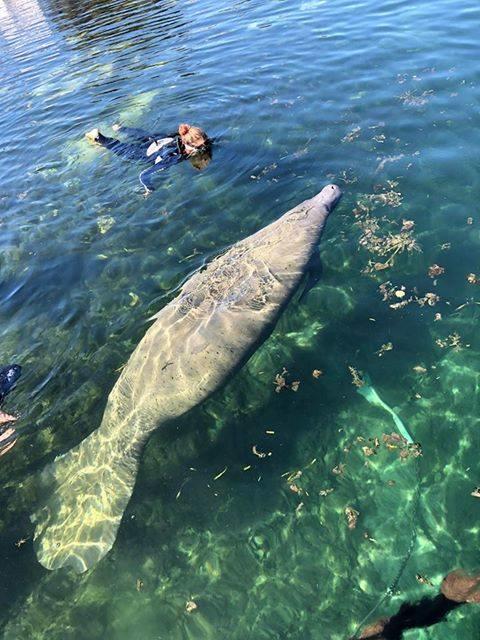
The morning light drifts across Kings Bay like a slow-breathing tide, and the water answers in a whisper—liquid glass at 72 degrees, steady as a metronome. Your captain cuts the motor and the bay hushes in return. A ring of bubbles rises beside the boat, then a whiskered muzzle breaks the surface, exhales, and vanishes with a push that feels more ancient river than animal. On a private boat with a small group of friends or family, the scene shrinks to the simple rhythm of the springs and the unmistakable presence of manatees—curious, unhurried, and larger than you imagined.
This is Crystal River’s Kings Bay, a 588-acre sanctuary where winter gathers Florida’s most iconic snowbirds—West Indian manatees—by the hundreds. The springs that feed the bay never waver much from 72°F, a warm refuge when Gulf waters turn chilly. In that steady temperature, time stretches. You slide from the swim platform, let your body become part of the water column, and the current nudges your fins forward like a friendly usher. The rules here are simple and non-negotiable: passive observation, no touching, and never encroach. The manatees lead—you follow at a respectful distance. The reward is a rare kind of encounter: unforced, intimate, and unforgettable.
With the Private Manatee Extravaganza 4 Hour Tour, the day begins on land with a briefing—how to float without kicking up silt, how to give space, what sanctuary markers mean—then transitions to the water with all the gear you need: wetsuits to keep you warm, mask, snorkel, and a noodle for comfortable buoyancy. The facility’s self-serve beverage bar is a welcome touch: hot chocolate for post-swim warmth, coffee or tea to shake off the road, and bottled water for the boat. Snacks keep energy steady over four hours that move quickly and quietly, like the manatees themselves.
Geology is the quiet architect of this experience. The Florida aquifer, sitting inside a Swiss-cheese matrix of limestone, pushes up through dozens of spring vents across Kings Bay—Three Sisters, Jurassic, House, and other names that locals say with a hint of pride. Those springs are the constant heartbeat of Crystal River. In winter, a cold front can turn this place into a marine version of a backcountry hut—mothers and calves tucked into coves, juvenile manatees practicing curiosity, elders drifting like submerged boulders framed in electric-blue spring water. In summer, the population thins but doesn’t vanish; resident manatees linger and the mornings can feel like a private gallery showing.
This refuge has a past—and a purpose. Established in 1983, the Crystal River National Wildlife Refuge protects manatees from the very pressures that draw us here: boats, crowding, and curiosity. The lesson is clear once you see the scarred back of a passing male: stay slow, stay soft. Passive observation isn’t just a rule—it’s a pact between visitor and animal. And that pact allows something remarkable to happen: an eye-to-eye moment when a manatee’s massive, paddle-shaped tail hovers and its gaze—dark, mild, inquisitive—meets yours for two long breaths. The bay seems to hold still around you.
The practical details are reassuringly simple. This is a private tour, up to six people, led by a seasoned captain who knows where conditions are best: where clarity holds, where crowding is light, where a spring run might be quietly blooming with life. You’ll spend up to four hours on the water, with time to rotate between swims, warm up on deck, and sip something hot. Non-swimmers do well with noodles and patient guidance; confident swimmers can drift at the edge of a spring boil and watch the scene assemble—schools of mullet, a cormorant torpedoing for a snack, and the gentle heave of a manatee rising to breathe.
For planning, think like water: earlier is often better. Dawn and early morning sessions typically find clearer water and calmer traffic. Winter is prime for encounters; January and February pack the most manatees into the bay as Gulf temperatures dip. Spring and fall are quieter and can be wonderfully clear in the wake of a cold front. Summer offers warm air, lush greens, and a slower pace—just fewer manatees overall. No matter the season, the water remains spring-fed and consistent at 72°F; you’ll appreciate the wetsuit and the chance to warm hands around a mug afterward.
Between swims, your captain shares the local lexicon: where to spot the teal window of a spring, how to read the tan lines of seagrass beds, why sanctuary ropes are more than lines—they’re boundaries that help manatees nurse, rest, and conserve energy. Even the boat becomes a lens. From deck you can read surface cues—a ripple that says someone just exhaled, a smudge of motion that becomes a shadow, then a shape, then the unmistakable silhouette of a manatee gliding beneath.
Crystal River invites lingerers. After the tour, walk the boardwalk at Three Sisters Springs to see the water’s clarity from above, or grab a seat at a local seafood spot and relive the hush of that moment when the bay seemed to breathe with you. This is a destination that rewards respect and tempo—unhurried, observant, and wholly present.
If you’re ready to experience it for yourself, reserve the Private Manatee Extravaganza 4 Hour Tour. For families, wildlife lovers, and travelers who prefer a thoughtful pace over a crowded boat, it’s a streamlined way to meet manatees in their living room rather than behind a velvet rope. Bring curiosity, leave expectations on the dock, and let the springs set the rhythm. The bay will do the rest.
Trip planning essentials at a glance: This four-hour private outing includes wetsuits, mask, snorkel, noodles, bottled water, and light snacks, with a full pre-tour briefing. The water is a consistent 72°F; winter mornings can feel chilly on the boat, so warm layers are smart between dips. The refuge is strictly managed; you’ll follow passive observation protocols and sanctuary boundaries. And because manatees are wild and free to do as they please—thankfully—the best approach is the simplest: go early, move gently, and let Kings Bay decide what to show you.
Ready to swim with gentle giants? Learn more or book the swimming with manatees in Crystal River experience and discover why this bay is a year-round haven for one of Florida’s most beloved residents.