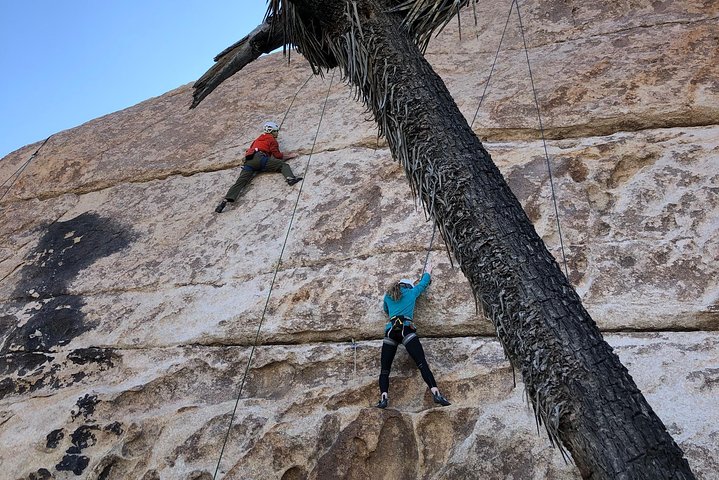
You step from the van and the desert greets you like a vast, patient audience—sun-bleached boulders stacked like someone’s private collection of giant, weathered dice. The air smells faintly of creosote and sage; a lone Joshua tree reaches toward the sky like a crooked sentinel. Guides sling harnesses and check knots with a steady calm. There’s a measured hush that comes before the first descent, as if the rocks themselves are holding their breath, daring you to answer.
Rappelling in Joshua Tree National Park is less about adrenaline for adrenaline’s sake and more about precise movement through a landscape shaped by millions of years of wind, water and volcanic forces. On a six-hour guided trip, professionally certified rock climbing guides from operators such as Stone Adventures walk you through the basics—rigging, safety checks, body position—then put you at the lip of granite faces where gravity becomes a tool rather than a threat. The rope becomes an extension of your senses; the ground recedes and the view opens into a quilt of joshua trees and distant ridgelines.
Geology fans will notice how the park’s signature monzogranite forms rounded domes and fractured faces. These rocks were born from molten intrusions deep underground and sculpted by exfoliation and chemical weathering into the domes and boulder piles that make the park a climber’s playground. Culturally, the landscape reads as both sanctuary and challenge. Indigenous peoples, including the Serrano and Chemehuevi, inhabited and traversed these lands long before the park’s 1936 designation. Today, small communities like Joshua Tree Village and the historic Pioneertown provide a low-key cultural counterpoint—artist studios, roadside cafés, and live-music venues where climbers swap beta over coffee or a beer.
On the descent, sound behaves differently. The wind threads through cracks and the rope sings softly against the rock. Nature feels animate: the granite seems to push you outward then accept your weight, the sun draws warm lines across the face, and the scrub below leans back as if to watch you go by. It’s intimate—each rappel is a private encounter between you and the stone.
Practicalities matter here as much as reverence. The trip runs about six hours door-to-door and usually departs from Palm Springs or a park meeting point. Guides supply harnesses, helmets, ropes and the technical coaching necessary for safe rappels. The route selection depends on conditions and group ability, ranging from moderate single-pitch descents to multi-pitch lowering that requires more time and composure. Expect a mix of scrambling, short approaches across rocky benches, and exposed verticals; most participants find the effort rewarding rather than punishing.
Timing is everything: spring and fall are prime, when temperatures sit in the comfortable 60s–80s°F. Summers bake the desert and can make longer approaches brutal; winters are cold, and early-season storms can leave slippy surfaces. Most operators cap group sizes and emphasize safety—commercial permits for guided activities are standard, and park entrance fees apply.
Who should book this? Casual hikers who aren’t averse to heights and want a guided, hands-on vertical experience will find this accessible. Seasoned climbers will appreciate the rock quality and opportunity to polish ropework under a guide’s eye. Physically, you should be comfortable on uneven terrain, able to hike short distances with a daypack, and ready to follow technical instruction.
What you’ll remember isn’t just the descent but the small things: the way sunlight thumbnails the cracks, a raven cutting across the horizon, the quiet satisfaction at the base when you unclip and look back up. For a half-day of focused movement in one of the Southwest’s most iconic parks, rappelling here is an efficient, sensory-rich way to connect with the rock.
If you go, plan deliberately: pick a reputable guide service, hydrate well, wear sturdy shoes with sticky rubber, and be ready to learn. The guides will build your confidence step by step—knot by knot—until the rope feels less like gear and more like a reliable companion. Joshua Tree asks for respect, not conquest. Give it that, and it will give you routes, views and a story you can retell for years.